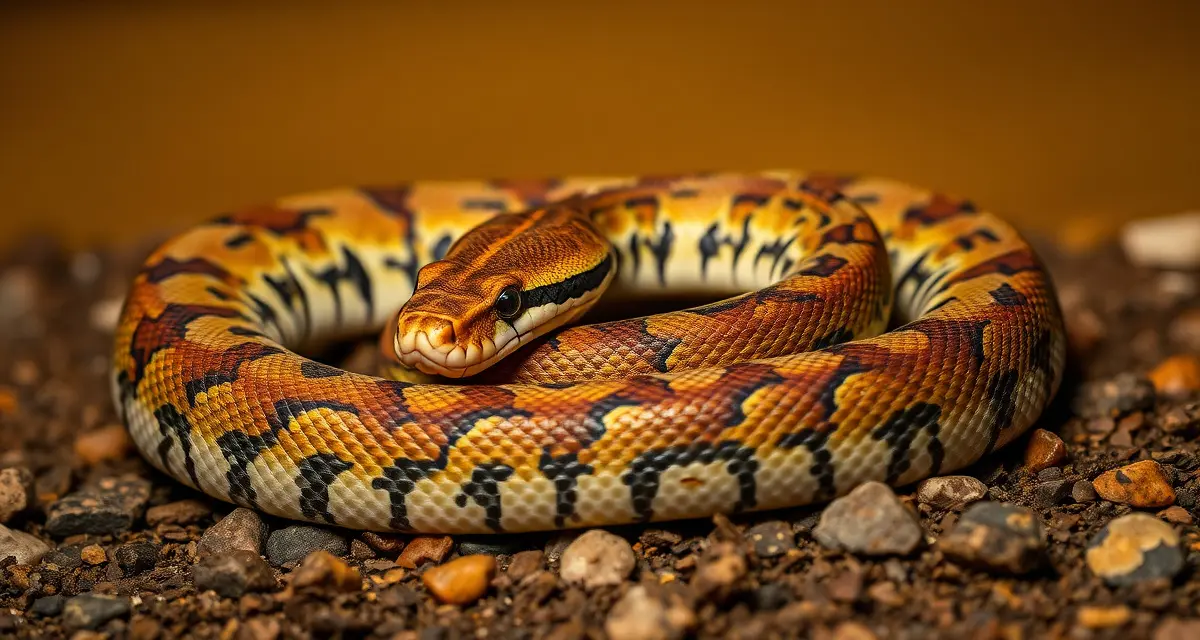
Reticulated Python Breeding Season Timing: Complete Breeder Guide
Reticulated pythons (Malayopython reticulatus) are the longest snake species in the world, and breeding them in captivity is a serious undertaking that requires substantial facility, experience, and planning. The breeding season timing for retics follows a similar pattern to other large tropical constrictors -- modest seasonal cycling rather than the dramatic temperature drops used for temperate-climate species. Breeders using integrated software report 30% less time on administrative tasks, which is critical when managing animals that require significant hands-on attention.
TL;DR
- Reticulated pythons (Malayopython reticulatus) are the world's longest snake species, with breeding females commonly exceeding 10-14 feet.
- Clutch sizes average 30-60 eggs, making retics one of the most productive large constrictors in captive breeding.
- Temperature drops of 5-8 degrees Fahrenheit over 6-8 weeks typically trigger breeding behavior without the longer cooling required by temperate species.
- Incubation runs 80-90 days at 88-90 degrees Fahrenheit, longer than most python species due to egg size.
- Super dwarf and dwarf locality animals are bred specifically for smaller adult size and command significant premiums over standard retics.
Natural Breeding Season
Reticulated pythons come from Southeast Asia, including Indonesia, the Philippines, and surrounding regions. Their natural breeding season corresponds to the cooler, drier months -- roughly November through March in their equatorial range. In captivity, Northern Hemisphere breeders typically target October through March as their breeding season window.
Unlike Burmese pythons or carpet pythons from temperate areas, retics don't need dramatically cold cycling. A modest temperature reduction of 5-10F and slight photoperiod reduction is often sufficient to trigger breeding behavior in well-conditioned animals.
Cycling Protocol
Begin your cycling protocol in October. Drop ambient temperatures from your normal maintenance range (82-88F) to approximately 76-82F over two to three weeks. Maintain warm-spot access at 88-92F throughout.
Reduce photoperiod from 12-14 hours to 10-11 hours. This complements the temperature drop in signaling seasonal change.
Reduce feeding frequency during cycling. Most retics will continue to eat during modest cycling, which is fine. If animals are refusing food, don't force-feed -- temporary fasting during cycling is normal.
Pairing Introductions
After four to six weeks of cycling, begin pairing introductions. Given the size and power of adult reticulated pythons (often 10-16+ feet for breeding females), introductions require two-person handling protocols and careful observation. Never manage adult retic introductions alone.
Introduce the male to the female's enclosure. Watch for the male's courtship behavior: active tongue-flicking along the female, pelvic spur stimulation, body alignment. Retic breeding events can last for extended periods and multiple copulation events should be targeted across the breeding season.
Males can often breed multiple females in a season but need rest periods and condition monitoring throughout.
Post-Ovulation to Egg-Laying
Once ovulation is confirmed (visible or palpable mid-body swelling moving posteriorly), egg-laying follows approximately 25-35 days later. A pre-lay shed typically occurs 2-3 weeks before the clutch is produced. Monitor the pre-lay shed carefully -- eggs are coming soon after it completes.
HatchLedger tracks cycling start, pairing records, ovulation confirmation, and expected lay dates for each breeding female.
HatchLedger connects breeding season records to clutch outcomes and financial performance.
Frequently Asked Questions
What is the best approach to reticulated python breeding season timing?
Use modest seasonal cycling (5-10F ambient drop, reduced photoperiod) rather than dramatic temperature changes. Begin cycling in October for a Northern Hemisphere fall-through-spring breeding season. Start pairing introductions after four to six weeks of cycling, always with two-person handling protocols. Log confirmed copulation events and monitor for ovulation. Prepare incubation setup ahead of the expected lay date. The complete cycle from cycling start to egg-laying spans four to five months.
How do professional breeders handle reticulated python breeding season timing?
Professional retic breeders plan their facility calendar around the breeding season from October through June. They document cycling protocol, introduction dates, copulation observations, and ovulation confirmation. Because retics are large and potentially dangerous, they never conduct introductions alone and have clear safety protocols. Their breeding records build over multiple seasons to help them predict each female's timing and refine their approach.
What software helps manage reticulated python breeding season timing?
HatchLedger tracks cycling records, pairing introductions, clutch documentation, locality lineage, and sale records for reticulated python breeders. With large animals, large clutches, and locality documentation all requiring careful records, having everything in one system reduces the risk of documentation errors at sale. Free for up to 20 animals.
What is the difference between standard, dwarf, and super dwarf reticulated pythons?
Standard reticulated pythons are the full-size animals from mainland Asian populations. Dwarf retics originate from island populations (Kalatoa, Kayuadi) and typically reach 8-12 feet. Super dwarf retics from Madu and Selayer islands often cap below 8 feet. These size differences are locality-based, and crossing localities produces intermediates. Locality documentation in your records is essential for accurate representation to buyers.
What are the legal considerations for keeping and breeding reticulated pythons?
Regulations vary significantly by state and municipality. Several US states restrict or ban large constrictors, and federal regulations under the Lacey Act apply to some populations. USARK maintains current regulatory information. Before breeding retics at scale, confirm that selling and shipping animals is permitted in your jurisdiction and target markets.
Sources
- USARK (United States Association of Reptile Keepers)
- Association of Reptilian and Amphibian Veterinarians (ARAV)
- Journal of Herpetology (Society for the Study of Amphibians and Reptiles)
- CITES Appendix II (international trade documentation)
- Southeast Asian Biodiversity Society
Get Started with HatchLedger
Reticulated python breeding at any scale involves large animals, large clutches, morph and locality genetics overview, and compliance and shipping records that require an organized system to manage well. HatchLedger tracks every animal, pairing, clutch, and sale record in one place. Try it free with up to 20 animals.