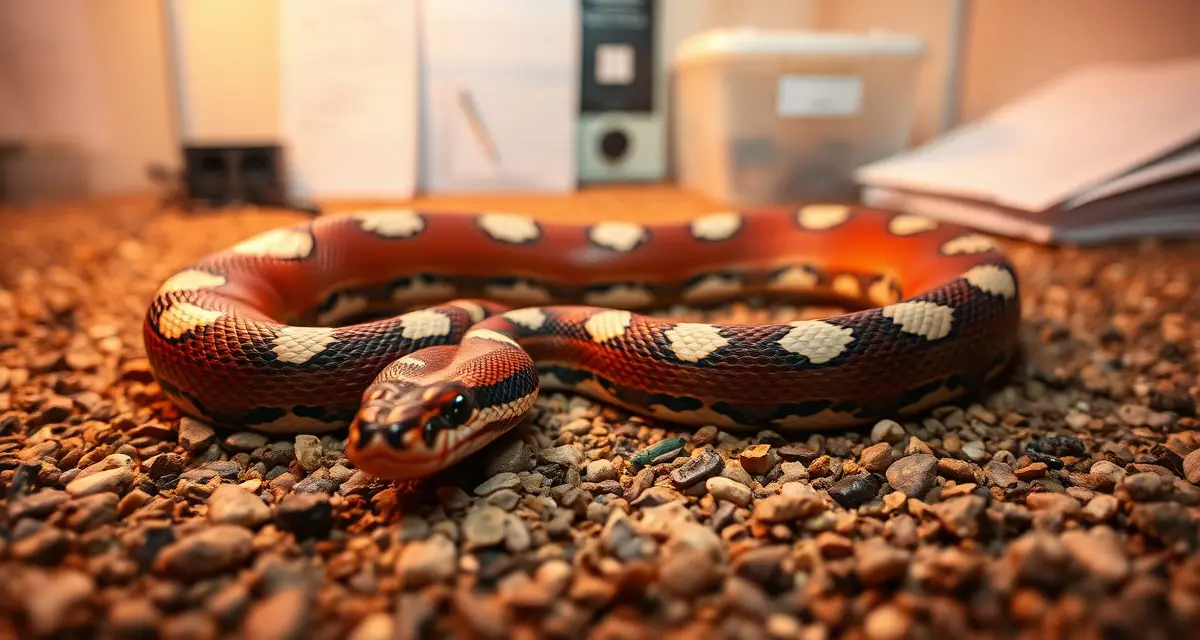
Milk Snake Record Keeping for Breeders: Complete Breeder Guide
Milk snake record keeping serves the same core functions as records for any breeding program: genetic documentation for buyers, operational tracking for management, and financial data for business decisions. What makes milk snake records slightly more complex than some species is the subspecies diversity in the genus. If you're working multiple subspecies, each needs its own records that include accurate subspecies identification, because cross-subspecies animals and pure-subspecies animals have very different market values. Breeders using integrated software report 30% less time on administrative tasks, and structured records are what make managing a multi-subspecies program manageable.
TL;DR
- Milk snakes span dozens of recognized subspecies of Lampropeltis triangulum and related species, each with distinct care and breeding requirements.
- Most milk snake subspecies require 60-90 days of seasonal cycling at 50-55 degrees Fahrenheit for reliable breeding.
- Clutch sizes range from 4-18 eggs depending on subspecies, with Honduran milk snakes averaging toward the larger end.
- Incubation runs 55-70 days at 78-82 degrees Fahrenheit with moderate humidity.
- Honduran milk snakes have an active morph program with albino, hypo, and tri-color tangerine lines among the established variants.
Essential Record Categories
Animal Records
Every milk snake in your collection needs:
- Unique ID
- Subspecies identification (as specific as possible, including locality if known)
- Morph status (visual, confirmed het, possible het, normal)
- Sex
- Acquisition date and source
- Weight history (monthly)
- Feeding history
- Shed dates
- Health events
- Housing location
subspecies genetics overview matters particularly for milk snakes because normal-phase animals from documented pure subspecies lines have meaningfully different value than crosses. Track this from acquisition.
Breeding Records
Per season:
- Cooling protocol dates and temperatures
- Female condition at cooling start (weight, body score)
- Pairing dates and male IDs
- Behavioral observations from each introduction
- Ovulation/follicle development signs if observed
- Lay date and clutch ID
clutch size records
At lay through hatch:
- Total egg count and initial fertility assessment
- Incubation parameters
- Candling dates and results
- Hatch date and hatchling count
Hatchling Records
Individual records from hatch to sale:
- ID linked to clutch
- Morph identification
- Feeding history
- Weight timeline
- Sale date, price, and buyer information
Financial Records
Costs and revenue connected at the clutch level, supporting P&L calculations per clutch and per breeding pair.
HatchLedger's reptile breeder hub connects all of these record categories. Animal records link to breeding records, breeding records link to clutch records, clutch records link to hatchling records, and all of these connect to financial data. The information you need to answer any question about your program is accessible without manual cross-referencing.
Record-Keeping Habits That Work
Log at the time of the event. A feeding logged immediately is accurate. The same feeding logged a week later from memory has errors. Build the habit of completing the record before putting the animal back.
Use consistent IDs from day one. Naming conventions applied inconsistently create confusion that compounds as collections grow.
Connect physical and digital records. Every enclosure should have a label that matches its digital record. Update digital location records when animals move.
Review records before each season. Your past results tell you more than any generic protocol guide. Let your documented history guide your next season's decisions.
Reptile breeder software comparison resources consistently identify that breeders who review their own historical data season-over-season improve results faster than those who don't, because the data reveals what's actually working in their specific program rather than what's generically recommended.
Frequently Asked Questions
What is the best approach to milk snake record keeping for breeders?
Create individual records for every animal with accurate subspecies and morph documentation. Log events at the time they occur. Connect breeding records to clutch records and financial data so your system tells the complete story of each animal from acquisition through sale. Use consistent IDs applied from the start of your program. Review records before each breeding season to let your documented results guide your decisions. Digital systems are essential for collections beyond 15 to 20 animals.
How do professional breeders handle milk snake record keeping for breeders?
Professional milk snake breeders maintain accurate subspecies documentation, complete genetic records for every animal, and full breeding, clutch, and financial records for every season. They log events at the time they occur and review records seasonally. Their documentation standards support premium pricing for documented animals and generate buyer trust that produces repeat customers. Most use dedicated breeding software that maintains record integrity at collection scales that paper or spreadsheet systems can't support reliably.
What software helps manage milk snake record keeping for breeders?
HatchLedger is purpose-built for reptile breeders, connecting animal records, breeding history, clutch outcomes, and financial tracking in one system. Unlike generic spreadsheets, it's designed around the specific workflow of an active breeding season. Free for up to 20 animals.
What is the most commonly bred milk snake subspecies?
Honduran milk snakes (L. t. hondurensis) are the most widely bred milk snake subspecies due to their larger size, active morph development, and established keeper base. Nelson's milk snakes and Sinaloan milk snakes are also commonly bred. Scarlet kingsnakes have a smaller but dedicated keeper community.
How do you tell apart milk snake subspecies?
Subspecies identification relies on coloration pattern (band count and width), scale counts, and geographic origin. For captive-bred animals, documentation from the original breeder is the most reliable source. Hybridization between subspecies does occur and reduces the value and documentation reliability of offspring.
Sources
- USARK (United States Association of Reptile Keepers)
- Association of Reptilian and Amphibian Veterinarians (ARAV)
- Herpetologica (Herpetologists League)
- Society for the Study of Amphibians and Reptiles (SSAR)
- Reptiles Magazine (Bowtie Inc.)
Get Started with HatchLedger
Milk snake breeders working across subspecies and morph lines benefit from records that track lineage clearly and connect cooling protocols to seasonal clutch outcomes. HatchLedger keeps this information organized and searchable across your entire collection. Free for up to 20 animals.