Ball Python Pip Timing: When to Assist and When to Wait
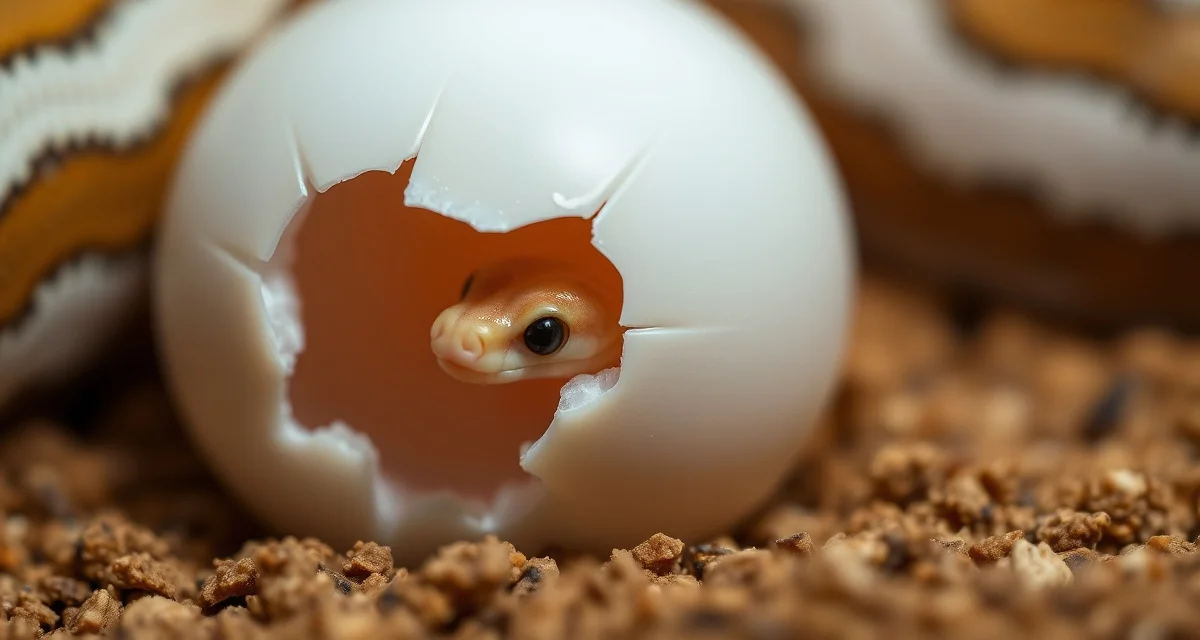
Pip day is intense. After 55-65 days of incubation, the first small slit appears in an egg shell and a tiny head pokes out. Then the hatchling goes still. And waits. And you wonder: is this normal? Should I help? When is waiting too long?
TL;DR
- Ball python breeding operations require systematic record-keeping from pre-season preparation through end-of-season sales.
- Females at 1,200-1,500g or more are the target weight before introducing them to a breeding male.
- Ovulation detection is the key event that anchors pre-lay shed and lay date calculations.
- Clutch profitability guide depends on understanding actual cost basis per animal, not just gross sale revenue.
- Well-documented animals with complete feeding histories and clear genetic records consistently sell faster and at higher prices.
Understanding normal pip progression, and knowing the specific signs that indicate a hatchling needs help, is one of the most important skills for a production breeder. Getting it wrong in either direction costs animals.
Normal Pip Progression
Ball pythons are "egg pippers", they use their egg tooth (a temporary sharp projection on the upper snout) to slice through the shell. Here's the typical sequence:
- The pip: A small slit appears in the egg. The hatchling's snout is typically visible.
- The wait: The hatchling rests inside the egg, absorbing the remaining yolk sac. This typically takes 12-36 hours.
- Emergence: The hatchling pushes out of the egg under its own power. The yolk sac should be fully absorbed by emergence.
During the "wait" phase after the initial pip, a hatchling may:
- Stay motionless for 6-12 hours
- Move its tongue slowly
- Show no distress or irregular breathing
This is completely normal. Do not assist at this stage.
When Does an Entire Clutch Pip?
Usually within 24-48 hours of the first pip. If one egg pips and others don't for more than 72 hours, those other eggs may have developmental issues or a slight temperature variation in your incubator is affecting some eggs differently.
Eggs that pip last are usually fine. Eggs that never pip at 65+ days may be late developers or may have died in the shell.
When to Intervene: Specific Signs That Require Assistance
Legitimate Reasons to Assist
1. Pip with visible distress beyond 48 hours.
If a hatchling has pipped but shows no movement, tongue flicking, or signs of progress after 48 hours, consider an assisted emergence. Cut the egg carefully along the pip line using sterile scissors, extending the slit about 2 inches. Check if the yolk sac is absorbed (should be). If absorbed and the animal is unresponsive, it may be weak but can sometimes recover with warmth.
2. Egg sinking with no pip at day 65+.
A viable egg should maintain its firmness. An egg that collapses, turns yellow, or develops an odor likely contains a dead animal. Assisted opening of a very late or collapsed egg confirms the situation but there's usually nothing to save.
3. Visible hatchling stuck in dried shell.
If the pip occurred and then the shell dried around the hatchling's body trapping it, gently moisten the shell with warm water and carefully loosen it. Don't tear the hatchling out, moisten, wait, moisten again.
Do NOT Assist For:
- Hatchling resting in pip within the first 24 hours
- Movement visible inside egg before any pip
- Egg that's firm, veined when candled, and not yet at day 60
Premature assistance ruptures the yolk sac if it's not fully absorbed, that kills the animal.
Clutch Coordination: When Some Eggs Lag
In a clutch of 7 eggs, eggs 1-5 might pip over days 1-2, while eggs 6-7 don't pip until day 3-4. This is normal. Eggs closer to the heat source and with slightly different microenvironments can vary.
If egg 6 still hasn't pipped at day 68 while the rest have hatched and been processed, that's when a careful candling or brief opening is appropriate to assess viability.
Recording Pip Dates in HatchLedger
Log the pip date for each egg in the clutch as they occur. HatchLedger's incubation records track pip timing relative to lay date, this gives you a real incubation duration for each clutch across seasons, which is useful for calibrating your incubator performance.
When hatchlings fully emerge, that's the birth date that goes into the hatchling inventory record. The incubation duration (lay to hatch) is automatically calculated from your records.
Post-Pip Hatchling Assessment
After emergence:
- Check that the yolk sac is fully absorbed. A small navel scar is normal. A dangling yolk sac requires veterinary attention.
- Look for kinks in the spine, run your fingers gently along the body
- Check eye formation, both eyes should be present and appear normal
- Confirm bilateral symmetry, both sides of the body should look similar
Hatchlings with minor issues (very small retained yolk navel, slight neurological traits in Spider combos) are documented but may be sellable with disclosure. Hatchlings with severe kinks or deformities are not commercially viable.
FAQ
What is the best approach to ball python pip timing?
Wait 24-36 hours after the initial pip before considering any intervention. Normal pip resting time is up to 48 hours. Only assist if there are specific signs of distress or the hatchling has made zero progress over 48+ hours. The most common mistake new breeders make is assisting too early and rupturing the unabsorbed yolk sac.
How do professional breeders handle ball python pip timing decisions?
Experienced breeders watch but don't touch for the first 24 hours after pip. They check clutches 2-3 times per day once pips start appearing. They know each individual in a clutch is in slightly different condition and give laggards extra time before intervening. They have sterile scissors and clean warm water ready for the rare cases that need assistance.
Sources
- USARK (United States Association of Reptile Keepers)
- Association of Reptilian and Amphibian Veterinarians (ARAV)
- World of Ball Pythons (WoBP genetics reference database)
- MorphMarket (reptile industry marketplace)
- Reptiles Magazine (Bowtie Inc.)
Get Started with HatchLedger
Every part of a ball python breeding operation -- from pairing records to clutch documentation to financial tracking -- works better when the data is connected rather than scattered across notebooks and spreadsheets. HatchLedger is built for exactly that. Try it free with up to 20 animals.