Managing Multiple Ball Python Clutches in One Season
By HatchLedger Editorial Team · Published 2025-07-07 · Updated Mar 13, 2026
Running one clutch is a breeding project. Running five or more is a logistics operation. The jump from hobbyist to small-scale breeder isn't just about having more animals, it's about being able to track multiple pairings, multiple ovulations, multiple incubation timelines, and multiple clutches hatching at different points across the season, all without things slipping through the cracks.
TL;DR
- Ball python breeding operations require systematic record-keeping from pre-season preparation through end-of-season sales.
- Females at 1,200-1,500g or more are the target weight before introducing them to a breeding male.
- Ovulation detection is the key event that anchors pre-lay shed and lay date calculations.
- Clutch profitability guide depends on understanding actual cost basis per animal, not just gross sale revenue.
- Well-documented animals with complete feeding histories and clear genetic records consistently sell faster and at higher prices.
Breeders using integrated software report 30% less time on administrative tasks, and when you're managing ball python multiple clutches management, that time isn't abstract. It's the difference between organized and overwhelmed.
What Goes Wrong When You Scale Without Systems
The most common failure mode when breeders start running multiple clutches is a gradual erosion of record accuracy. Ovulation dates get estimated instead of logged. Lay dates get confused between females. Incubation containers lose their labels. Hatchlings get mixed up at identification.
None of these errors is catastrophic in isolation. But cumulatively, they mean you can't tell which pairings were fertile, which females are recovering well, and which clutches are returning value. You end up running the operation on feel rather than data.
How to Manage Multiple Ball Python Clutches
Step 1: Build a Pairing Schedule Before the Season Starts
Don't wing this. Before breeding season begins, map out every planned pairing, the females involved, and the rough timeline you're targeting. Stagger your introductions if possible, all females ovulating in the same two-week window means all eggs hatching simultaneously, which creates a crunch at hatch time that's hard to manage alone.
Deliberately spacing pairings across October, November, and December can give you clutches hatching from March through June, a much more manageable spread.
Step 2: Create a Standardized Logging System
Every breeding female needs an individual record. Every male needs an individual record. Every introduction gets logged. Every lock gets logged. Every ovulation gets logged with the exact date.
This is the data backbone of multi-clutch management. Without it, you're running on guesswork as the season progresses.
Use the ball python breeding hub for guidance on what to track at each stage.
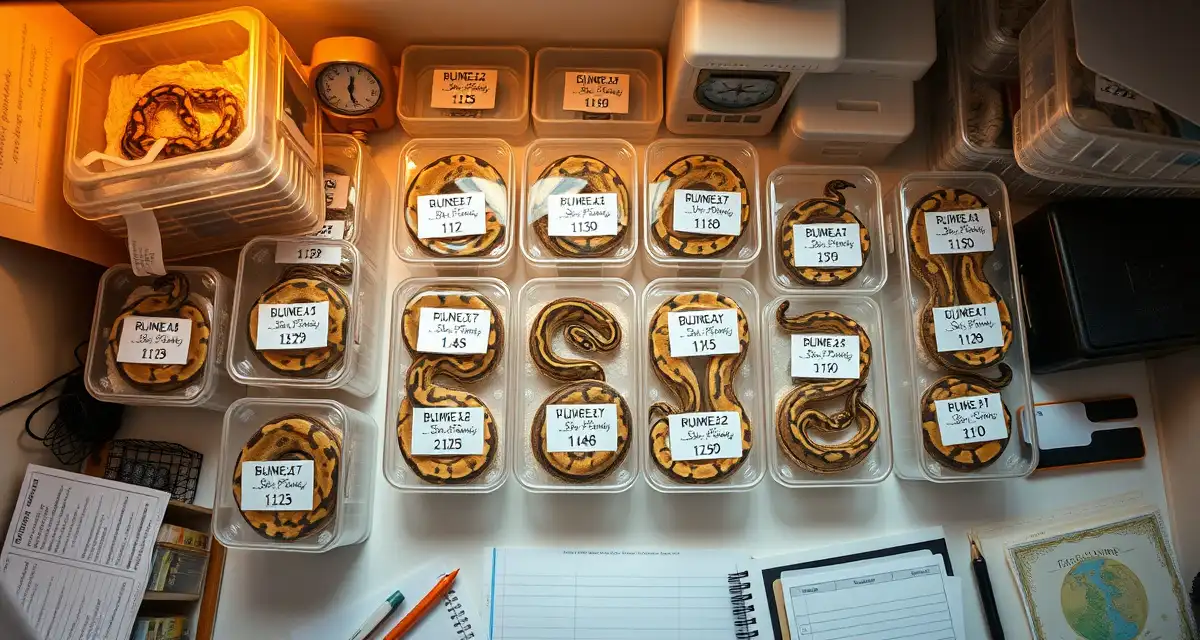
Step 3: Label Everything Physically
This sounds basic, but breeders with multiple clutches underestimate how important physical labeling becomes. Every incubation container should have:
- Female ID
- Male ID
- Lay date
- Expected hatch window (calculated from lay date, typically 54-60 days)
- Clutch number (if the female has laid before)
Write this on the container in permanent marker or use waterproof labels. Digital records alone won't save you if containers get moved during a hatch.
Step 4: Stagger Your Incubation Checks
With multiple containers in an incubator, you need a systematic check schedule. Weekly checks for egg condition and development are standard. But when you have 8 containers in an incubator and 3 are due to hatch within two weeks of each other, you need more frequent checks during that window.
Build a hatch calendar. Know when every container should start showing pipping activity. Set reminders.
Step 5: Manage Female Recovery in Parallel with Production
This is where multi-clutch seasons create their biggest hidden cost. While you're excited about hatching clutches and selling animals, your post-lay females need systematic recovery feeding.
A female that laid 5 weeks ago and hasn't been fed aggressively since then is losing ground fast. She may not be ready for next season if you don't address recovery proactively.
Track recovery feeding separately from production feeding. Know how long ago each female laid and where she is in the recovery timeline.
Step 6: Handle Hatchlings Systematically
When multiple clutches hatch within a few weeks of each other, processing gets complicated. Have a system:
- Process one clutch completely before starting the next
- Sex, weigh, morph ID, and photograph each animal
- Label enclosures immediately with all relevant data
- First feeding attempts scheduled and logged
Don't mix hatchlings from different clutches until they're fully identified and labeled. One mix-up between a clown clutch and a pastel clown clutch can cost you notable money in misidentified animals.
Step 7: Run Clutch P&L as You Go
Don't wait until the end of the season to figure out which clutches returned value. Track revenue and costs at the clutch level in real time.
The reptile breeder software comparison explains why integrated tools built for breeders handle this better than general spreadsheets, especially when you're managing 5-10 clutches simultaneously with different sale timelines.
Common Mistakes in Multi-Clutch Management
No staggering of introductions. When everything hatches at once, everything is too much at once.
Losing container labels. Pen on masking tape in a humid incubator is not a reliable label system. Use waterproof methods.
Not tracking recovery feeding separately. Post-lay females get neglected when breeders are focused on new clutches and hatchling sales.
Not knowing your numbers. If you can't tell which clutches were profitable and which were breakeven, you're just guessing at what to repeat next year.
What is the best approach to ball python multiple clutches management?
Plan your season before it starts. Stagger introductions to spread hatch windows, build individual records for every breeding animal, label every incubation container with complete pairing data, and track female recovery alongside production. The organizational investment at the start of the season pays back in time saved and errors avoided throughout.
How do professional breeders handle ball python multiple clutches management?
Professional breeders run their multi-clutch season like a production schedule. Every pairing has a timeline, every clutch has a financial model, every animal has an individual record. They know at any point during the season which clutches are in incubation, which are due to hatch when, and which females are in recovery. None of that knowledge lives in their head, it lives in their records.
What software helps manage ball python multiple clutches management?
HatchLedger is built specifically for breeders managing multiple clutches simultaneously. It connects pairing records to incubation tracking to clutch P&L, so you can see the full picture of your season at a glance. When you're running 6-10 clutches across a season, having all of that data integrated in one place is what keeps you organized and profitable.
Related Articles
FAQ
What is Managing Multiple Ball Python Clutches in One Season?
Managing multiple ball python clutches in one season means running a coordinated breeding operation where you track several females through pairing, ovulation, pre-lay shed, egg deposition, and incubation simultaneously. Rather than treating each clutch as a standalone event, you manage overlapping timelines across five or more animals, ensuring no critical dates are missed and every hatchling is properly documented from first pip to sale.
How much does Managing Multiple Ball Python Clutches in One Season cost?
There is no fixed cost for managing multiple clutches — expenses scale with your operation. Core costs include quality breeding animals, an incubator, substrate, feeding stock for females recovering post-lay, and record-keeping tools. Dedicated breeding software like HatchLedger typically runs $10–$30 per month and can replace spreadsheets. The real financial variable is clutch profitability, which depends on your cost basis per animal, not just sale revenue.
How does Managing Multiple Ball Python Clutches in One Season work?
The process begins in pre-season with weight checks — females should reach 1,200–1,500g before pairing. Males are introduced and pairings are logged. Ovulation is monitored as the anchor event, allowing you to predict pre-lay shed timing and expected lay dates. Eggs are pulled and incubated, hatch dates tracked, and hatchlings documented with feeding records and genetics before being listed for sale.
What are the benefits of Managing Multiple Ball Python Clutches in One Season?
Scaling to multiple clutches increases revenue potential, diversifies your genetic offerings, and builds a recognizable breeder reputation. Systematic management means fewer missed ovulations, more accurate lay-date predictions, and better hatchling care. Well-documented animals with complete feeding and genetic histories sell faster and command higher prices. Breeders using integrated software report roughly 30% less time on administrative tasks, freeing time for animal husbandry.
Who needs Managing Multiple Ball Python Clutches in One Season?
Small-scale and intermediate ball python breeders who are moving beyond one or two clutches per season need structured multi-clutch management. If you're pairing five or more females, tracking overlapping timelines manually becomes error-prone. This approach is also relevant to hobbyists planning to grow, anyone selling hatchlings commercially, or breeders working with high-value morphs where documentation directly impacts sale prices.
How long does Managing Multiple Ball Python Clutches in One Season take?
A typical ball python breeding season spans roughly six to eight months. From first pairing introductions in the fall through late-season hatchlings selling in summer, you may have clutches at completely different stages simultaneously. Incubation alone runs 55–65 days. When staggered across multiple females, active management can span the full season without a clear break, making ongoing record-keeping essential rather than optional.
What should I look for when choosing Managing Multiple Ball Python Clutches in One Season?
Look for a system — software or otherwise — that tracks individual females through every stage: pairing dates, ovulation confirmation, pre-lay shed, lay date, egg count, incubation temps, and hatch dates. Genetic record integration and feeding history logging are critical if you plan to sell. Avoid tools that only handle one clutch at a time. Scalability, reminders for key events, and cost-basis tracking per clutch are strong indicators of a useful platform.
Is Managing Multiple Ball Python Clutches in One Season worth it?
For anyone running more than two or three clutches per season, yes. The administrative overhead of overlapping timelines, combined with the financial stakes of high-value hatchlings, makes structured management genuinely worthwhile. Disorganized records lead to missed lay dates, mislabeled genetics, and underselling animals. The time savings alone justify the investment, and complete documentation consistently translates into faster sales and stronger buyer confidence.
Sources
- USARK (United States Association of Reptile Keepers)
- Association of Reptilian and Amphibian Veterinarians (ARAV)
- World of Ball Pythons (WoBP genetics guide reference)
- MorphMarket (industry marketplace data)
- Reptiles Magazine (Bowtie Inc.)
Scale Your Season with HatchLedger
Get Started with HatchLedger
Every part of a ball python breeding operation -- from pairing records to clutch documentation to financial tracking -- works better when the data is connected rather than scattered across notebooks and spreadsheets. HatchLedger is built for exactly that. Try it free with up to 20 animals.