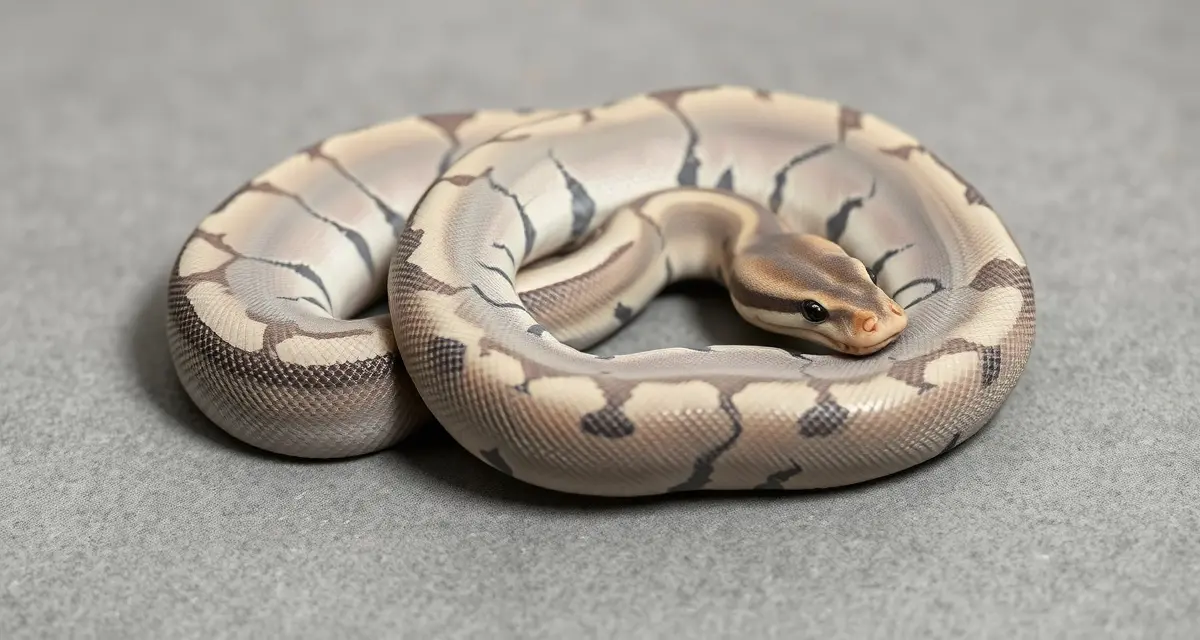
Case Study: Building an Axanthic Ball Python Line
Axanthic ball pythons occupy a unique position in the morph market. The striking silver-grey coloration is genuinely distinctive, and Axanthic combinations, especially with other color-altering genes, produce animals that look unlike anything else in the hobby. But Axanthic comes with a complexity most other recessives don't: multiple incompatible lines.
TL;DR
- Ball python breeding operations require systematic record-keeping from pre-season preparation through end-of-season sales.
- Females at 1,200-1,500g or more are the target weight before introducing them to a breeding male.
- Ovulation detection is the key event that anchors pre-lay shed and lay date calculations.
- Clutch profitability guide depends on understanding actual cost basis per animal, not just gross sale revenue.
- Well-documented animals with complete feeding histories and clear genetic records consistently sell faster and at higher prices.
This case study walks through the strategic and practical considerations of building an Axanthic line, including line selection, combo strategy, and the record-keeping requirements of a multi-year Axanthic project.
Understanding Axanthic Lines
Axanthic ball pythons have been developed independently by multiple breeders, and each independently derived Axanthic gene is a separate allele or a different mutation at the same or different loci. The practical consequence is that crossing animals from different Axanthic lines does not produce visual Axanthic offspring. You get animals that look normal but carry one copy of each line's gene.
The established Axanthic lines include:
- VPI Axanthic (developed by Vida Preciosa International)
- BHB Axanthic (Brian Barczyk's line)
- TSK Axanthic (Tracey and Skip Kalaf)
- Snake Keeper Axanthic (various attribution)
- Additional lines from other founding breeders
When building an Axanthic program, choose a single line and stick with it. Mixing lines without confirmation of compatibility wastes breeding cycles and creates animals with complex, unconfirmed genetics guide that are difficult to sell and difficult to breed productively.
Line Selection: Factors That Matter
For this case study, the breeder selects the VPI Axanthic line for two reasons:
Availability: VPI Axanthic animals and hets are relatively accessible in the current market. Finding breeding-quality animals with good additional gene combinations is straightforward compared to some rarer lines.
Combination history: VPI Axanthic has been combined with more morphs than most other lines, which means there are proven combo templates to work from. You're not pioneering entirely new combinations, you're following established, proven paths with known visual outcomes.
Market recognition: Buyers who are sophisticated enough to seek Axanthic animals tend to ask about line. VPI is the most widely recognized line, which reduces the education barrier with buyers.
Starting Foundation Animals
The breeder acquires:
- One visual VPI Axanthic female, adult, with Pastel gene: $600
- One 100% het VPI Axanthic Banana male: $450
Total foundation investment: $1,050.
The Pastel Axanthic female is an adult ready to breed immediately. The Banana het Axanthic male is sub-adult and will be ready for his first breeding season in 8 months.
Pairing Strategy: Year One
Visual Axanthic female x Banana het Axanthic male:
Expected offspring:
- 50% carry the Axanthic gene (visual Axanthic + some combination of Pastel, Banana)
- Of those with Axanthic: some will be visual Axanthic (inheriting two copies of the gene)
Wait, this needs correction. The female is a visual Axanthic (two copies of the gene). Every offspring gets one Axanthic gene from the female. The male is het Axanthic (one copy), so he contributes either the Axanthic gene or not.
Revised expected outcomes from visual Axanthic x het Axanthic:
- 50% visual Axanthic (get Axanthic from both parents)
- 50% 100% het Axanthic (get Axanthic only from the female)
Additionally, the Banana gene (co-dom) from the male is passed to 50% of offspring independently:
- 25% of total clutch: visual Axanthic with Banana (Banana Axanthic)
- 25%: visual Axanthic without Banana
- 25%: 100% het Axanthic with Banana
- 25%: 100% het Axanthic without Banana
Plus the Pastel from the female is passed to 50% of offspring, creating Pastel Axanthic, Pastel Banana Axanthic, etc.
A clutch of 8 eggs produces a diverse mix. Banana Axanthic animals are visually striking, the grey of Axanthic combined with the orange of Banana creates a muted, almost iridescent animal that photographs unusually well. Current prices for Banana Axanthic: $400-800.
Year One estimated revenue from one clutch: $2,500-5,000 depending on the genetic breakdown and individual animals.
Building Toward Axanthic Combos
The Axanthic gene is most valuable in combination with other recessives and with specific co-dominant genes that interact interestingly with the grey coloration.
Axanthic Albino (Snowball): One of the most established and recognizable Axanthic combinations. The grey of Axanthic combined with the yellow-removal of Albino produces a near-white animal with pink eyes. Building toward Snowball requires obtaining animals that are double het (het Axanthic and het Albino), then pairing double hets together or with visual animals.
Axanthic Clown: The Clown gene's pattern-reducing effect on an Axanthic animal produces a dramatically clean grey and white animal. Axanthic Clown is a collector morph with limited production and consistent demand.
Axanthic Pied: Axanthic pattern combined with Pied's white sections creates animals with grey and white coloration rather than the standard warm tones. Visually distinct and in demand with serious collectors.
Introducing a second recessive into the Axanthic program requires acquiring either visual animals for the second gene or double het animals. This is typically a Year Two or Three strategic decision.
Managing Line Integrity
One of the ongoing challenges of an Axanthic program is maintaining line integrity. If you acquire a 100% het Axanthic animal from a breeder, you need documentation of which line that het comes from. An undocumented "het Axanthic" is genetically ambiguous.
When buying het animals for an Axanthic program:
- Always ask specifically which Axanthic line the het is from
- Ask for parentage documentation that traces to visual animals of confirmed line
- Be skeptical of "het Axanthic" animals without clear line identification
Provenance documentation for hets is more important in Axanthic breeding than in many other recessive programs precisely because the incompatibility between lines makes incorrect line assignment a serious problem.
Record-Keeping at the Line Level
Axanthic programs require records that track not just het status but also line attribution for every animal. When selling het Axanthic offspring, clearly documenting the line they carry is a professional obligation and a commercial advantage.
The HatchLedger platform allows you to record gene notes and parentage details that go beyond simple morph identification, so your line tracking is integrated into the same record system as your feeding logs and financial data. Breeders using integrated software report 30% less time on administrative tasks, and for Axanthic programs specifically, the documentation capability is as important as the time savings.
Financial Performance of an Axanthic Program
Axanthic programs perform well at the combo level and modestly at the single-gene level. Single-gene visual Axanthics in most lines sell for $200-400. The same animal with Banana or Pastel adds $200-400 of value. The same animal as a Clown Axanthic or Snowball can sell for $1,500-4,000+.
The financial story is similar to other recessive programs: the investment is front-loaded, the combo payoff is in Years Three to Five, and the ongoing program generates consistent returns once established.
The reptile breeder software comparison covers how breeders manage the financial tracking for programs like this.
Frequently Asked Questions
What is the best approach to axanthic ball python line case study?
Choose one Axanthic line and document it rigorously from Day One. Never mix lines without confirming compatibility. Build toward combo animals that take the Axanthic coloration in unexpected directions (Snowball, Axanthic Clown, Axanthic Pied) rather than producing single-gene Axanthics as your primary output. Track line attribution for every het animal in your program.
How do professional breeders handle axanthic ball python line case study?
Professional Axanthic breeders are meticulous about line documentation and only acquire animals from sources they can verify. They plan combo targets from the beginning rather than adding secondary genes as an afterthought, and they maintain clear records of which line every het in their collection comes from so that buyers receive unambiguous genetic documentation.
What records should every reptile breeder maintain per animal?
At minimum: acquisition date and source, morph and genetic documentation, feeding log, weight history, any veterinary treatments, and breeding history including pairing dates, clutch of origin for captive-bred animals, and offspring records. These records serve your own management, buyer documentation, regulatory compliance, and long-term genetic tracking.
How should reptile breeders document genetics for buyers?
A complete genetic record for sale includes the animal's visual morph name, confirmed het genes and their basis (parentage documentation or proven-out production), possible het genes with probability percentages, hatch date, and parent morph information. Including clutch-of-origin records lets buyers independently verify the claims.
Sources
- USARK (United States Association of Reptile Keepers)
- Association of Reptilian and Amphibian Veterinarians (ARAV)
- World of Ball Pythons (WoBP genetics reference database)
- MorphMarket (reptile industry marketplace)
- Reptiles Magazine (Bowtie Inc.)
Get Started with HatchLedger
Every part of a ball python breeding operation -- from pairing records to clutch documentation to financial tracking -- works better when the data is connected rather than scattered across notebooks and spreadsheets. HatchLedger is built for exactly that. Try it free with up to 20 animals.