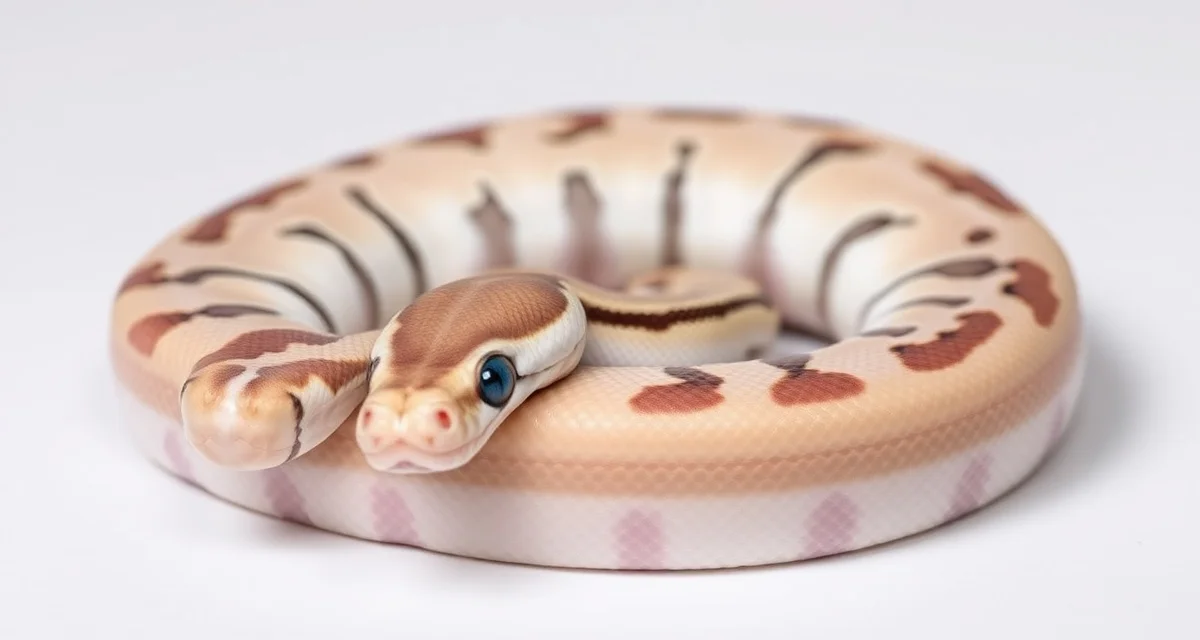
Phantom Ball Python Breeding Pairs: All Possible Outcomes
Phantom is a Blue Eye complex co-dominant morph that produces visuals similar to Lesser and Mojave and contributes to BEL production when crossed with other BEL complex genes. It's a solid project gene for breeders building toward leucistic animals.
TL;DR
- All pairing outcomes for Phantom can be calculated before putting animals together by understanding the morph's inheritance pattern.
- Recessive genes require het x het pairings to produce visuals, with expected 25% visual odds per clutch.
- Co-dominant pairings with normal animals produce 50% co-dominant offspring; co-dominant x co-dominant produces 25% super form.
- Documenting each animal's confirmed genetic status is what makes het claims valuable to buyers in subsequent generations.
- Using a morph calculator before the season helps set realistic expectations for the number of target animals likely from each clutch.
Phantom Genetics Overview
Phantom is a co-dominant mutation in the BEL complex. Single-copy Phantoms show a faded, somewhat washed-out appearance with reduced pattern and lightened background color, sharing some visual similarities with Lesser and Mojave. The super form is a white Blue-Eyed Leucistic animal.
Phantom crosses with other BEL complex genes, including Lesser, Butter, Mojave, and Russo, produce leucistic super forms at 25%.
Phantom x Normal Pairings
- 50% Phantom
- 50% Normal
Standard co-dominant outcome. Normals carry no Phantom gene.
Phantom x Phantom Pairings (Super Phantom BEL)
- 25% Super Phantom (Blue-Eyed Leucistic)
- 50% Phantom
- 25% Normal
The Super Phantom is a BEL with blue eyes, visually indistinguishable from Super Mojave, Super Lesser, or other BEL supers.
Phantom x BEL Complex Crosses
Phantom x Mojave
- 25% BEL (Phantom/Mojave)
- 25% Phantom
- 25% Mojave
- 25% Normal
Phantom x Lesser
- 25% BEL (Phantom/Lesser)
- 25% Phantom
- 25% Lesser
- 25% Normal
Phantom x Butter
- 25% BEL (Phantom/Butter)
- 25% Phantom
- 25% Butter
- 25% Normal
All BEL complex crosses with Phantom work the same way.
Mystic and Phantom Interactions
Mystic and Phantom are specifically noted for their combination outcome: Mystic x Phantom produces the Mystic Potion, a distinctive animal with unique patterning different from standard BELs. This is a particularly sought-after combination.
Phantom x Mystic = Mystic Potion
- 25% Mystic Potion
- 25% Phantom
- 25% Mystic
- 25% Normal
The Mystic Potion is a different animal than a standard BEL, with unusual pattern expression. This combination is worth specifically pursuing if you have both genes in your collection.
Popular Phantom Combination Animals
Phantom x Pastel: Brightens the Phantom's lightened base for a cleaner, more vibrant animal.
Phantom x GHI: Produces GHI Phantom combinations with dramatic dark and faded tones.
Phantom x Enchi: Pattern reduction from both genes stacks nicely.
Phantom in High-Gene BEL Projects
Like all BEL complex genes, Phantom can be stacked with multiple other BEL complex genes to produce cleaner leucistic animals. A four or five-gene BEL is a premium animal worth building toward if you have the collection to support it.
Document every BEL complex gene your animals carry in HatchLedger. The Mystic x Phantom cross specifically to produce Mystic Potions is tracked by the ball python morph calculator alongside standard BEL complex pairings.
Frequently Asked Questions
What are the possible outcomes from Phantom ball python breeding pairs?
Phantom x Normal produces 50% Phantom and 50% Normal. Phantom x Phantom produces 25% Super Phantom (BEL), 50% Phantom, and 25% Normal. Phantom x Mystic specifically produces 25% Mystic Potion, 25% Phantom, 25% Mystic, and 25% Normal.
How do professional breeders use Phantom in their ball python projects?
They pursue the Mystic Potion pairing specifically when they have both Mystic and Phantom in their collection, and use Phantom as a BEL complex gene for standard leucistic production in other pairings.
What software helps manage Phantom ball python genetics records?
HatchLedger is purpose-built for reptile breeders, connecting animal records, breeding history, clutch outcomes, and financial tracking in one system. Unlike generic spreadsheets, it's designed around the specific workflow of an active breeding season. Free for up to 20 animals.
What is the fastest pairing route to produce visual Phantom ball pythons?
The fastest route depends on what stock you already have. If you have a visual Phantom, pairing it with a het (or a normal for co-dominant genes) produces visuals immediately. If you are starting from hets, a het x het pairing gives 25% visual odds per clutch. Building het stock first from a visual x normal pairing before running het x het is slower but produces cleaner, more documentable genetics.
How should possible het Phantom animals be priced?
Possible het animals are priced as a percentage of confirmed het pricing, proportional to their probability. A 66% possible het from a het x het pairing typically prices at 40-60% of confirmed het value. Animals that have been proven by producing visual offspring upgrade to confirmed het status and can command full het pricing in subsequent sales.
Sources
- World of Ball Pythons (WoBP genetics reference database)
- USARK (United States Association of Reptile Keepers)
- Association of Reptilian and Amphibian Veterinarians (ARAV)
- MorphMarket (reptile industry marketplace and pricing data)
- Ball Python community breeding records
Get Started with HatchLedger
Tracking Phantom pairing outcomes, het status, and proving records across multiple seasons is where most breeders run into documentation gaps. HatchLedger connects each animal's genetic record to its clutch of origin and parent history, so your het claims are always backed by traceable data. Try it free with up to 20 animals.