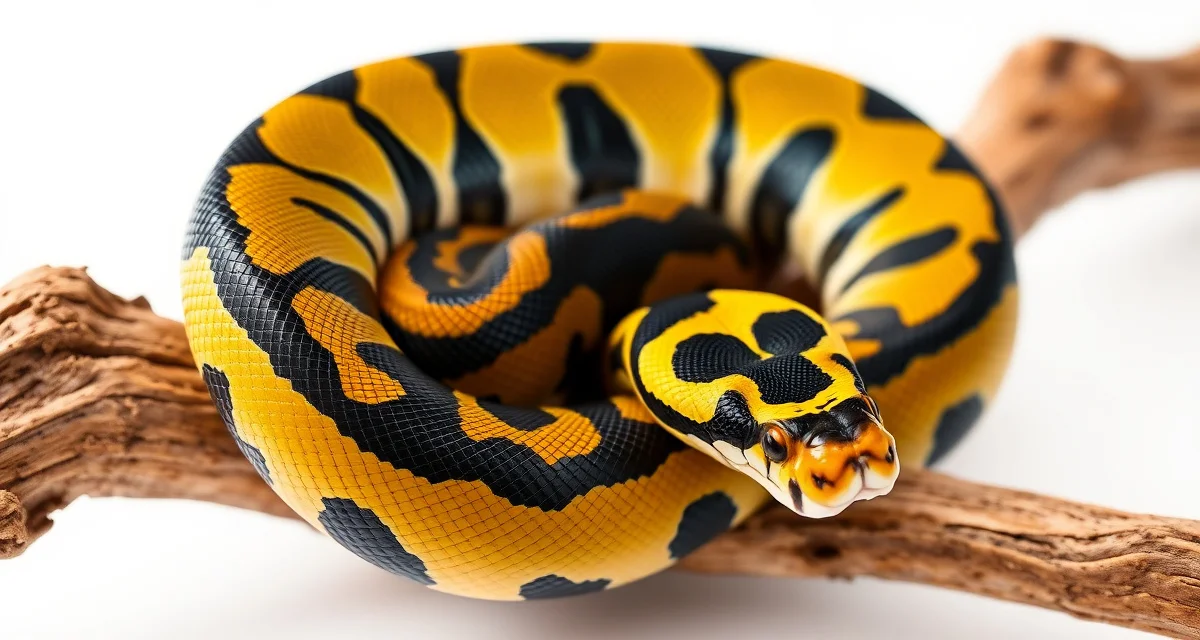
Killer Bee Ball Python Breeding Pairs: All Possible Outcomes
Killer Bee is a three-gene combination morph: Pastel + Spider + Pinstripe. It produces some of the most dramatically reduced and brightly colored animals in the hobby. Like all Spider-related morphs, every Killer Bee carries neurological wobble from the Spider gene.
TL;DR
- All pairing outcomes for Killer Bee can be calculated before putting animals together by understanding the morph's inheritance pattern.
- Recessive genes require het x het pairings to produce visuals, with expected 25% visual odds per clutch.
- Co-dominant pairings with normal animals produce 50% co-dominant offspring; co-dominant x co-dominant produces 25% super form.
- Documenting each animal's confirmed genetic status is what makes het claims valuable to buyers in subsequent generations.
- Using a morph calculator before the season helps set realistic expectations for the number of target animals likely from each clutch.
Killer Bee Genetics Overview
Killer Bee requires three genes: Pastel (co-dominant), Spider (co-dominant), and Pinstripe (dominant). All three working together create a very clean, reduced-pattern animal with bright yellow Pastel tones and the characteristic Spider/Pinstripe stripe-like pattern reduction.
Producing true three-gene Killer Bees requires careful pairing planning across multiple pairings, since you need all three genes present in offspring simultaneously.
Producing Killer Bees
Because Killer Bee is a three-gene animal, there's no single simple pairing that produces them in high numbers. Common approaches:
Bumble Bee x Pinstripe
- 12.5% Killer Bee (Pastel + Spider + Pinstripe)
- 12.5% Pastel Pinstripe
- 12.5% Spinner (Spider + Pinstripe)
- 12.5% Super Pastel Spider
- 12.5% Bumble Bee (Pastel + Spider)
- 12.5% Spider
- 12.5% Pastel
- 12.5% Pinstripe
Spinner (Spider + Pinstripe) x Pastel
- 12.5% Killer Bee
- 12.5% Spinner
- 12.5% Pastel Pinstripe
- 12.5% Spider
- Other combinations...
Killer Bee x Normal Pairings
If you have a Killer Bee (all three genes):
- 12.5% Killer Bee
- 12.5% Bumble Bee (Pastel Spider)
- 12.5% Spinner (Spider Pinstripe)
- 12.5% Pastel Pinstripe
- 12.5% Pastel
- 12.5% Spider
- 12.5% Pinstripe
- 12.5% Normal
All Spider and Spider-combination offspring carry wobble.
Killer Bee x Killer Bee Pairings
Extraordinarily complex outcomes. Every gene can be in single or double copy independently, leading to dozens of possible phenotypic outcomes. The probability of any single specific outcome is low. Most pairings of two Killer Bees are approached by breeders looking to produce super forms of one or more genes.
Wobble and Killer Bee Ethics
Every Killer Bee, every Spinner, every Bumble Bee, and every Spider animal in these clutches has neurological wobble. The wobble discussion applies to every Spider-gene animal in any of these pairings.
Document wobble severity for every animal produced and disclose clearly to buyers. Some buyers specifically seek Killer Bees and understand the wobble comes with the package. Others don't fully understand what they're buying. Your responsibility is to ensure they do.
Killer Bee Market
Killer Bees are one of the most visually impressive three-gene combination animals in the budget-accessible range. They don't require recessive genes, so they can be produced within one or two seasons from the right starting animals.
Prices for Killer Bees vary widely. Male Killer Bees might go for $200 to $400. Females can fetch $400 to $800 or more depending on expression quality and the seller's reputation.
Track all Killer Bee project animals and clutch outcomes in HatchLedger. The ball python morph calculator handles three-gene Killer Bee combination pairings and shows expected outcome percentages for every phenotype.
Frequently Asked Questions
What are the possible outcomes from Killer Bee ball python breeding pairs?
Killer Bee x Normal produces approximately 12.5% Killer Bee, plus Bumble Bees, Spinners, Pastel Pinstripes, and single-gene animals at roughly equal proportions. All Spider-gene carrying offspring (Killer Bee, Bumble Bee, Spinner, Spider) exhibit neurological wobble.
How do professional breeders produce Killer Bee ball pythons efficiently?
They build toward Killer Bee production through Bumble Bee x Pinstripe or Spinner x Pastel pairings, track three genes across clutches, and focus on female Killer Bees for the highest market return while being fully transparent about Spider wobble to all buyers.
What software helps manage Killer Bee ball python three-gene combination records?
HatchLedger is purpose-built for reptile breeders, connecting animal records, breeding history, clutch outcomes, and financial tracking in one system. Unlike generic spreadsheets, it's designed around the specific workflow of an active breeding season. Free for up to 20 animals.
What is the fastest pairing route to produce visual Killer Bee ball pythons?
The fastest route depends on what stock you already have. If you have a visual Killer Bee, pairing it with a het (or a normal for co-dominant genes) produces visuals immediately. If you are starting from hets, a het x het pairing gives 25% visual odds per clutch. Building het stock first from a visual x normal pairing before running het x het is slower but produces cleaner, more documentable genetics.
How should possible het Killer Bee animals be priced?
Possible het animals are priced as a percentage of confirmed het pricing, proportional to their probability. A 66% possible het from a het x het pairing typically prices at 40-60% of confirmed het value. Animals that have been proven by producing visual offspring upgrade to confirmed het status and can command full het pricing in subsequent sales.
Sources
- World of Ball Pythons (WoBP genetics reference database)
- USARK (United States Association of Reptile Keepers)
- Association of Reptilian and Amphibian Veterinarians (ARAV)
- MorphMarket (reptile industry marketplace and pricing data)
- Ball Python community breeding records
Get Started with HatchLedger
Tracking Killer Bee pairing outcomes, het status, and proving records across multiple seasons is where most breeders run into documentation gaps. HatchLedger connects each animal's genetic record to its clutch of origin and parent history, so your het claims are always backed by traceable data. Try it free with up to 20 animals.