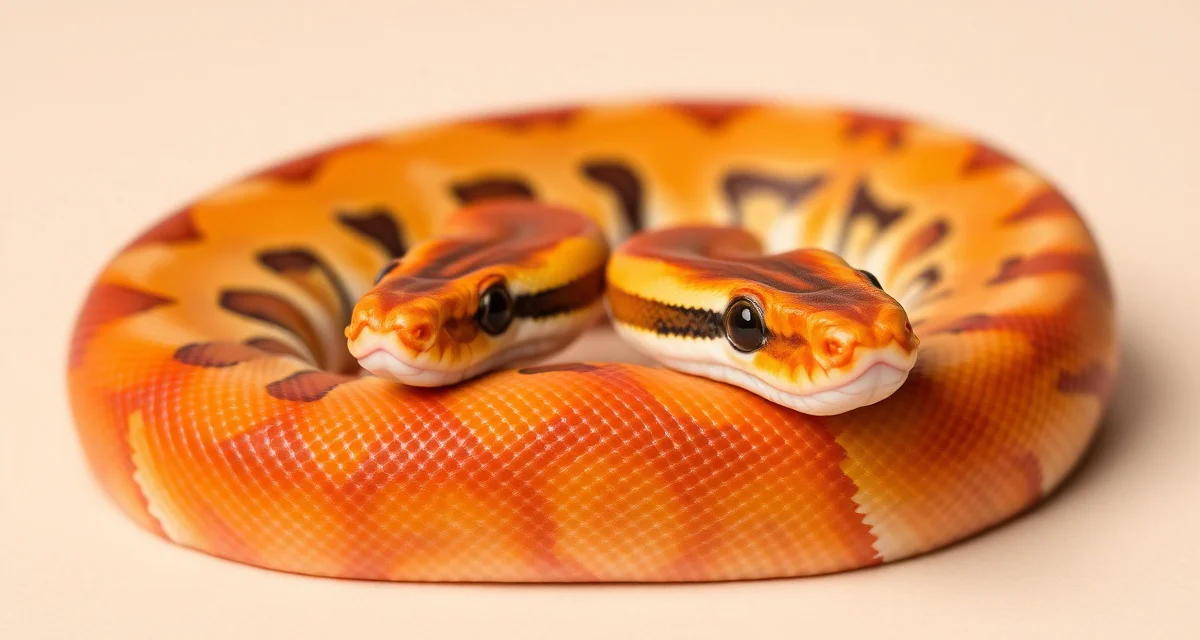
Fire Ball Python Breeding Pairs: All Possible Outcomes
Fire is a co-dominant morph in the Black Pastel/Cinnamon complex, producing reddish-orange tones and pattern reduction that gets dramatically more interesting when combined with other genes from the same complex. The Super Fire, a nearly all-white animal with dark eyes, is a consistent seller.
TL;DR
- All pairing outcomes for Fire can be calculated before putting animals together by understanding the morph's inheritance pattern.
- Recessive genes require het x het pairings to produce visuals, with expected 25% visual odds per clutch.
- Co-dominant pairings with normal animals produce 50% co-dominant offspring; co-dominant x co-dominant produces 25% super form.
- Documenting each animal's confirmed genetic status is what makes het claims valuable to buyers in subsequent generations.
- Using a morph calculator before the season helps set realistic expectations for the number of target animals likely from each clutch.
Fire Genetics Overview
Fire is a co-dominant mutation. Single-copy Fire animals show enhanced reddish-brown and orange tones, reduced patterning, and a distinctive brightening of the base color. The super form, called a Black-Eyed Leucistic or Super Fire, carries two copies and produces a white to cream animal with black eyes, distinct from the blue-eyed BEL complex.
Fire is in the same complex as Black Pastel and Cinnamon, meaning Fire x Black Pastel and Fire x Cinnamon pairings produce super forms similar to individual gene supers.
Fire x Normal Pairings
- 50% Fire
- 50% Normal
Half your clutch shows Fire's visual pattern. Normals don't carry the gene.
Fire x Fire Pairings (Super Fire / Black-Eyed Leucistic)
- 25% Super Fire (Black-Eyed Leucistic)
- 50% Fire
- 25% Normal
The Super Fire is a clean white to cream animal. It differs from the Blue-Eyed Leucistic produced by the Lesser/Mojave complex. BELs have blue eyes; Super Fires have dark eyes. Both are popular, but they serve different aesthetic preferences.
Fire Complex Cross Pairings
Fire x Black Pastel
- 25% Fire/Black Pastel super (looks like Black-Eyed Leucistic)
- 25% Fire
- 25% Black Pastel
- 25% Normal
The super form from Fire x Black Pastel is a Black-Eyed Leucistic similar in appearance to the Super Fire. Very striking.
Fire x Cinnamon
Similar outcomes to Fire x Black Pastel, with the super form appearing as a white/cream Black-Eyed Leucistic.
Fire Combination Animals
Fire x Pastel (Firefly)
- 25% Firefly (Fire + Pastel)
- 25% Fire
- 25% Pastel
- 25% Normal
The Firefly combines the reddish tones of Fire with Pastel's brightening, producing a vibrant, clean animal.
Fire x Spider
- 25% Fire Spider
- 25% Fire
- 25% Spider
- 25% Normal
Fire improves Spider combination aesthetics. Remember the Spider wobble consideration applies to all Spider offspring.
Fire x Enchi
- 25% Fire Enchi
- 25% Fire
- 25% Enchi
- 25% Normal
Pattern reduction from both genes stacks, producing very clean-looking animals.
Pricing and Market for Fire Animals
Single-gene Fire animals are modestly priced, typically $100 to $250 for hatchlings. Super Fires command more, often $400 to $800+ depending on quality and sex. Fire combination animals are priced based on the additional genes.
The Black-Eyed Leucistic from Fire complex crosses is a consistent seller. Buyers who prefer dark-eyed leucistic animals over blue-eyed specifically seek these out.
Tracking Fire Complex Projects
If you're working with Fire, Black Pastel, and Cinnamon in the same collection, tracking which animals come from which gene is critical. Animals from Fire x Black Pastel crosses may not carry "pure" Fire or "pure" Black Pastel, they're an allelic combination. Document this clearly.
Track all Fire complex pairings and outcomes in HatchLedger. The ball python morph calculator handles Fire complex cross genetics and shows you when complex interactions produce super forms.
Frequently Asked Questions
What are the possible outcomes from Fire ball python breeding pairs?
Fire x Normal produces 50% Fire and 50% Normal. Fire x Fire produces 25% Super Fire (Black-Eyed Leucistic), 50% Fire, and 25% Normal. Fire x Black Pastel or Fire x Cinnamon produces 25% Black-Eyed Leucistic super form, 25% Fire, 25% the cross gene, and 25% Normal.
How do professional breeders handle Fire ball python complex pairings?
They document when animals come from complex cross pairings rather than pure Fire parents, account for the visual similarity of different Black-Eyed Leucistic super forms, and label animals accurately for buyers building specific projects.
What software helps manage Fire ball python genetics tracking?
HatchLedger is purpose-built for reptile breeders, connecting animal records, breeding history, clutch outcomes, and financial tracking in one system. Unlike generic spreadsheets, it's designed around the specific workflow of an active breeding season. Free for up to 20 animals.
What is the fastest pairing route to produce visual Fire ball pythons?
The fastest route depends on what stock you already have. If you have a visual Fire, pairing it with a het (or a normal for co-dominant genes) produces visuals immediately. If you are starting from hets, a het x het pairing gives 25% visual odds per clutch. Building het stock first from a visual x normal pairing before running het x het is slower but produces cleaner, more documentable genetics.
How should possible het Fire animals be priced?
Possible het animals are priced as a percentage of confirmed het pricing, proportional to their probability. A 66% possible het from a het x het pairing typically prices at 40-60% of confirmed het value. Animals that have been proven by producing visual offspring upgrade to confirmed het status and can command full het pricing in subsequent sales.
Sources
- World of Ball Pythons (WoBP genetics reference database)
- USARK (United States Association of Reptile Keepers)
- Association of Reptilian and Amphibian Veterinarians (ARAV)
- MorphMarket (reptile industry marketplace and pricing data)
- Ball Python community breeding records
Get Started with HatchLedger
Tracking Fire pairing outcomes, het status, and proving records across multiple seasons is where most breeders run into documentation gaps. HatchLedger connects each animal's genetic record to its clutch of origin and parent history, so your het claims are always backed by traceable data. Try it free with up to 20 animals.