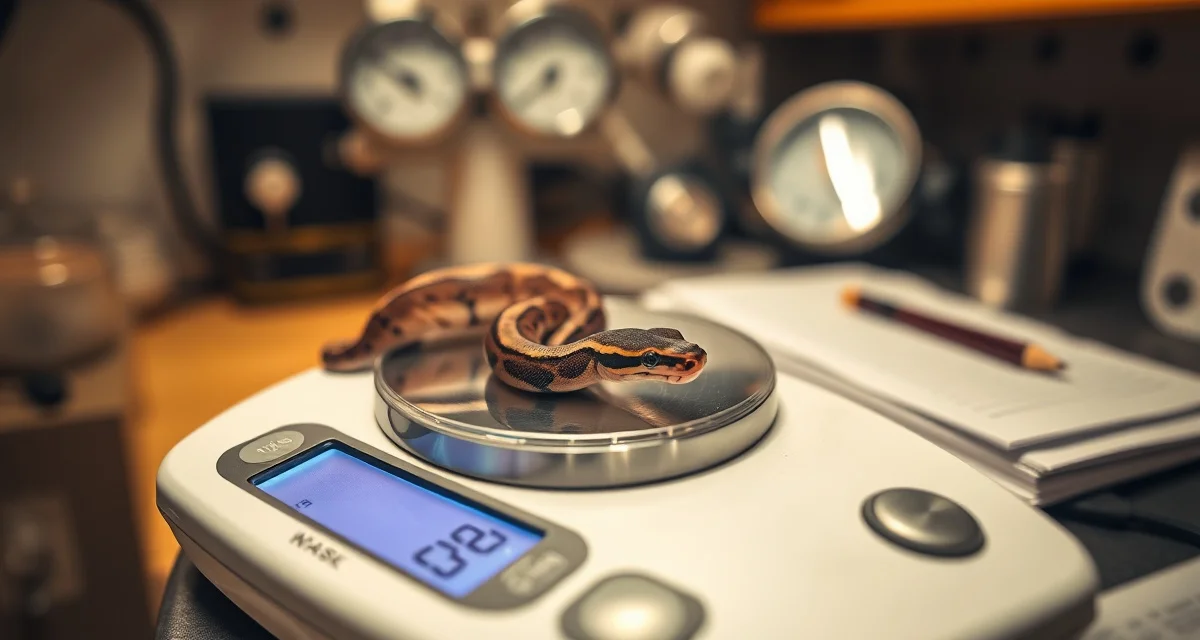
Ball Python Hatchling Weight Tracker
Hatchling weight is the earliest and most objective health indicator you have for a new animal. Before the first shed, before the first meal, a hatchling's weight tells you whether it emerged healthy or underweight, and it creates the baseline against which all future weights are compared.
TL;DR
- Tracking hatchling weights from hatch through first several meals gives you objective health data and strengthens buyer documentation.
- Healthy ball python hatchlings weigh 55-90 grams at hatch; weights outside this range warrant closer observation.
- Weight gain between meals is a reliable indicator of feeding success and overall health trajectory.
- Animals sold below 65 grams or before 3 documented meals are significantly more likely to generate buyer problems post-sale.
- Weight data across clutches over multiple seasons reveals which pairings produce the largest, most vigorous hatchlings.
Tracking weights consistently across a hatchling cohort reveals which animals are thriving, which are struggling, and whether any concerning patterns exist across a clutch.
What Hatchling Weights Tell You
At hatch: A fresh ball python hatchling typically weighs between 50-100 grams, with most falling in the 60-90 gram range. Animals below 50 grams are considered underweight and may face additional challenges establishing on feed. Animals above 100 grams hatched from exceptional eggs with excellent incubation conditions.
Record the hatch weight within the first 24-48 hours. Weight taken after the first shed will be lower (shed skin has mass), so for a true birth weight, weigh before the first shed or standardize by always weighing after the first shed and noting that convention.
After first shed: Most hatchlings shed within 7-14 days of hatching. The first shed is a health indicator: clean sheds (one piece or a few large pieces) indicate good humidity and hydration. Retained shed requires attention before the first meal attempt.
After first meal: Weight taken 48-72 hours after the first meal (allowing digestion) shows the net gain from the first feeding. Most healthy hatchlings gain 10-15% of their body weight per meal initially.
Growth rate tracking: Weekly or bi-weekly weights through the first three months show whether growth is consistent, plateauing, or declining. A hatchling that gained weight for four weeks and then stopped gaining despite eating may have a digestive issue or parasite. The pattern only emerges if you have the weight history.
Setting Up a Hatchling Weight Log
The minimum useful weight log for a hatchling includes:
- Animal ID (clutch number + individual number, or a name/tag)
- Date of measurement
- Weight in grams
- Notes (pre-shed, post-shed, just fed, refused, any observations)
Consistency matters more than perfection. Measuring every animal on the same day each week at roughly the same time and under the same conditions (before feeding, for example) gives you comparable data across animals and over time.
At clutch scale, tracking 6-10 hatchlings from one clutch plus multiple clutches from the same season means managing weight records for 40-80+ young animals simultaneously. Manual paper records work for one clutch but become unwieldy at that scale.
Growth Rate Benchmarks
Ball python hatchlings grow faster in their first year than at any subsequent point. What healthy growth looks like:
Months 1-3: Consistent weekly weight gain of 5-15 grams per feeding, depending on prey size and frequency. Some weeks will be flat (when an animal is in shed cycle or post-feeding).
Months 3-6: Growing faster in absolute grams per feeding as prey size scales up. An animal in the 200-400 gram range eating appropriately sized prey should be gaining 20-40 grams per feeding.
Month 6-12: Growth continues but may slow. Most hatchlings reach 400-700 grams by the end of their first year.
Animals notably below these benchmarks despite eating warrant closer investigation. Animals notably above are thriving and may be candidates for earlier pairing (particularly females, which need to reach 1,500 grams for breeding).
Red Flags in Hatchling Weight Data
Weight loss between feedings: If an animal ate but weighs less at the next weigh-in than before it ate, something is wrong. Possible causes include regurgitation you didn't observe, rapid water loss from humidity problems, or parasites.
Stalled growth despite eating: Two or more consecutive weights with no gain despite accepting food suggests the animal isn't absorbing nutrients properly. Possible causes: internal parasites, cryptosporidiosis, or metabolic issues.
Clutch-wide stalled growth: If multiple animals from the same clutch are failing to grow on similar schedules, consider an incubation issue (temperature spike affecting development) or a husbandry factor affecting the whole clutch section.
High variance within a clutch: Some variance in growth rate is normal, but animals from the same clutch that are eating the same prey size diverging dramatically in weight over time (one at 300 grams, a sibling at 180 grams after 3 months) merit individual investigation of the smaller animal.
Connecting Weight to Hatchling Records
Weight tracking is most useful when it's part of a complete hatchling record rather than a standalone log. Connecting weight data to:
- Feeding history (what was offered, what was accepted, what was refused)
- Shed dates and quality
- Health observations
- Parentage (which clutch, which pairing)
...gives you a complete picture of each animal's development.
The HatchLedger platform logs weights against individual animal profiles and visualizes trends automatically. When you're managing hatchlings from five clutches simultaneously, having weights, feeding logs, and health notes all connected to the same animal record is what makes tracking actionable rather than overwhelming. Breeders using integrated software report 30% less time on administrative tasks, with that savings particularly pronounced during hatchling season when the volume of data being generated is highest.
Hatchling Weight and Sale Timing
Many buyers ask about hatchling weight at the time of sale. An animal that's 80 grams at hatch, ate five times, and is now 175 grams at 10 weeks is demonstrably established on feed and growing well. Being able to provide that weight history rather than just a current weight is a real selling advantage.
For animals going through hatchling inventory management before sale, weight tracking supports accurate inventory management and helps you identify which animals are ready for sale (established, growing consistently) versus which need more development time.
The reptile breeder software comparison shows how different tools handle the connected record-keeping that makes this kind of documentation practical at scale.
Frequently Asked Questions
What is the best approach to ball python hatchling weight tracker?
Weigh every hatchling at consistent intervals, on a consistent schedule, and record the results against individual animal IDs with dates. The most useful cadence is weekly for the first three months. Connect weight data to feeding and health logs so you can see whether weight trends correlate with feeding behavior or health events rather than tracking weights in isolation.
How do professional breeders handle ball python hatchling weight tracker?
Professional breeders weigh every hatchling individually and log the weights against animal records throughout the pre-sale period. This data informs when animals are ready for sale, helps identify health issues early, and provides the growth history documentation that serious buyers often request before purchase.
What records should every reptile breeder maintain per animal?
At minimum: acquisition date and source, morph and genetic documentation, feeding log, weight history, any veterinary treatments, and breeding history including pairing dates, clutch of origin for captive-bred animals, and offspring records. These records serve your own management, buyer documentation, regulatory compliance, and long-term genetic tracking.
How should reptile breeders document genetics for buyers?
A complete genetic record for sale includes the animal's visual morph name, confirmed het genes and their basis (parentage documentation or proven-out production), possible het genes with probability percentages, hatch date, and parent morph information. Including clutch-of-origin records lets buyers independently verify the claims.
Sources
- USARK (United States Association of Reptile Keepers)
- Association of Reptilian and Amphibian Veterinarians (ARAV)
- World of Ball Pythons (WoBP genetics reference database)
- MorphMarket (reptile industry marketplace)
- Reptiles Magazine (Bowtie Inc.)
Get Started with HatchLedger
Weight tracking for a full season's hatchlings across multiple clutches is exactly the kind of data that is easy to lose in notebooks or separate spreadsheets. HatchLedger keeps per-animal weight records connected to feeding logs and clutch records so the data is always complete. Try it free with up to 20 animals.