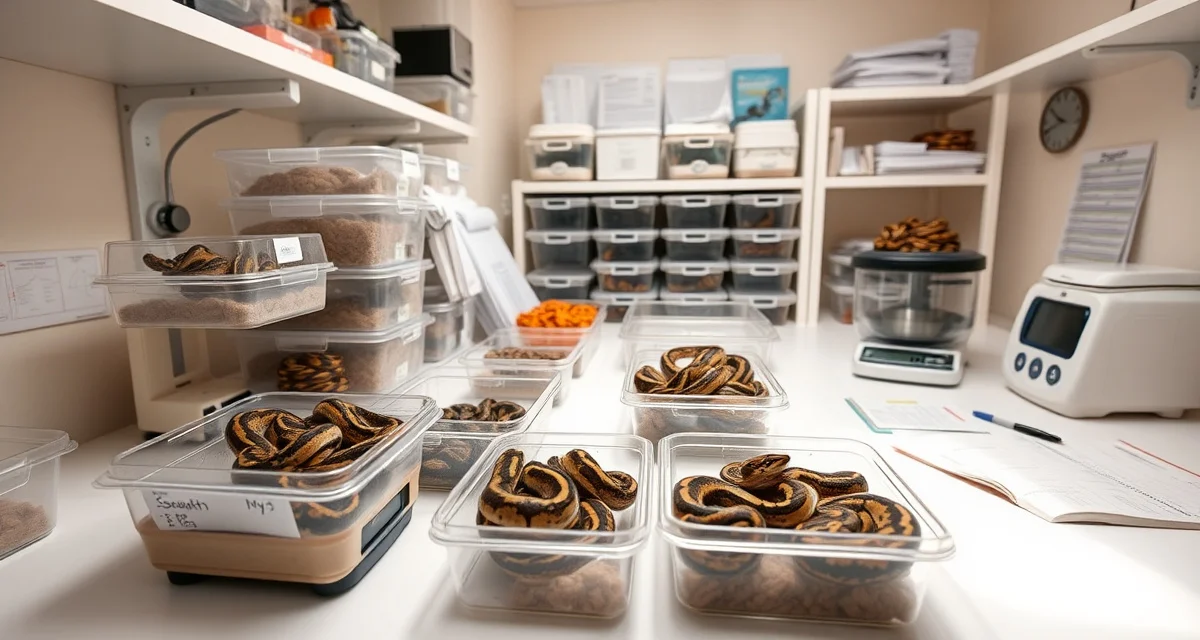
Ball Python Hatchling Inventory Management
The week after a major hatch is controlled chaos if you're not organized. You've got 35 new animals, each needing to be sexed, identified, weighed, photographed, and entered into inventory, while also starting their first feeding protocol, checking on other active clutches, and managing buyer inquiries that have started coming in because you posted hatch photos on Instagram.
TL;DR
- Ball python breeding operations require systematic record-keeping from pre-season preparation through end-of-season sales.
- Females at 1,200-1,500g or more are the target weight before introducing them to a breeding male.
- Ovulation detection is the key event that anchors pre-lay shed and lay date calculations.
- Clutch profitability guide depends on understanding actual cost basis per animal, not just gross sale revenue.
- Well-documented animals with complete feeding histories and clear genetic records consistently sell faster and at higher prices.
Good hatchling inventory management turns that chaos into a repeatable process.
Setting Up Before Hatch
Don't wait until hatchlings emerge to prepare housing. Before your first clutch pips:
Physical preparation:
- Hatchling rack or individual tubs ready and running at temperature
- Labeling system in place (enclosure numbers matching HatchLedger IDs)
- Probes and lubricant available for sexing
- Scale (accurate to 0.1g) in the workspace
- Camera ready for hatch photos
Digital preparation:
- Clutch record in HatchLedger with expected hatch window
- Parent animals' gene records confirmed accurate
- Hatchling ID numbering system established for this season
Processing Every Hatchling at Emergence
Within 24-48 hours of each animal fully emerging from the egg:
Step 1: Morph Identification
Compare the hatchling to both parents' genetics guide and identify the most likely phenotype. For complex clutches (multiple co-doms, possible het recessives), document your identification reasoning, not just the conclusion.
For ambiguous animals, an Enchi vs. a normal that could be Enchi, a possible het vs. a confirmed het, note the uncertainty. "Possible Enchi, lower end of expected brightness, flagged for review at 3 months" is more honest and ultimately more valuable to you and to buyers than a confident wrong ID.
Step 2: Sex
Sex every hatchling using probe or pop method within 48 hours. Record sex and method used. See the sexing guide for technique details.
Step 3: Weight
Weigh each hatchling immediately after processing. Hatchling weights typically run 55-80g for ball pythons. Record in HatchLedger. This becomes the birth weight baseline for tracking growth.
Step 4: Photograph
Take a dorsal photo and a lateral photo of each hatchling. Good photos serve:
- Sale listings (buyers want current photos, not hatch photos months later, but hatch photos are a useful baseline)
- Future morph ID reference if you're uncertain
- Record keeping (visual comparison year over year)
Step 5: Enter HatchLedger Record
Each hatchling gets a record in HatchLedger's inventory with:
- Unique ID
- Parent IDs (both, automatically linked through clutch record)
- Morph/genetics (visual + het status)
- Sex
- Birth weight
- Hatch date
- Status: "available for sale" or "holdback" with holdback reason
Ongoing Inventory Management
Feeding Tracking
Every feeding attempt is logged. Date, prey item offered, size, outcome (ate / refused / picked up but dropped). Ball pythons that refuse 3+ consecutive meals need attention. HatchLedger filters let you see all animals that haven't fed in more than 14 days, a useful alert for catching problem feeders early.
Weight Monitoring
Weigh hatchlings weekly for the first 8 weeks. Steady weight gain or maintenance is healthy. Weight loss despite eating may indicate parasites or illness. Log all weights.
Status Updates
As hatchlings develop from "new hatch" to "feeding established" to "available for sale" to "sold," update status in HatchLedger. This gives you a real-time inventory count of available animals, pending holds, and sold animals at any point.
Pricing and Listing Hatchlings
Once animals are established feeders (3-5 consecutive successful meals), you can list them for sale. Pricing comes directly from your inventory records:
- Morph/genetics confirmed → market price for that morph
- Sex confirmed → female premium of 20-30%
- Feeding record → "eating established" adds confidence and value
- Lineage documentation → proven het status from documented parents adds value
HatchLedger's buyer pack generator pulls all of this into a professional certificate for each sale.
Sold Animal Records
When a hatchling sells, record:
- Sale date
- Sale price
- Buyer name/contact
- Platform (direct, MorphMarket, etc.)
- Shipping/pickup method
This data feeds your annual P&L analysis and clutch profitability calculations. Without it, you're guessing at whether your breeding program is financially successful.
FAQ
What is the best approach to ball python hatchling inventory management?
Process every hatchling within 48 hours of emergence: sex, weigh, photograph, identify, enter into inventory. Then maintain weekly weight records and log every feeding attempt. Don't let inventory fall behind, once you're 3 weeks behind on entering hatchlings, catching up feels overwhelming and critical data gets lost.
How do professional breeders handle ball python hatchling inventory at scale?
Experienced breeders with large clutch volumes assign consistent processing days, for example, all hatchlings that emerged in a given week are processed on Saturday of that week. They use HatchLedger's mobile access to enter records in real time during processing sessions. They price animals as soon as they're established feeders rather than holding large unsold inventory.
Sources
- USARK (United States Association of Reptile Keepers)
- Association of Reptilian and Amphibian Veterinarians (ARAV)
- World of Ball Pythons (WoBP genetics reference database)
- MorphMarket (reptile industry marketplace)
- Reptiles Magazine (Bowtie Inc.)
Get Started with HatchLedger
Every part of a ball python breeding operation -- from pairing records to clutch documentation to financial tracking -- works better when the data is connected rather than scattered across notebooks and spreadsheets. HatchLedger is built for exactly that. Try it free with up to 20 animals.