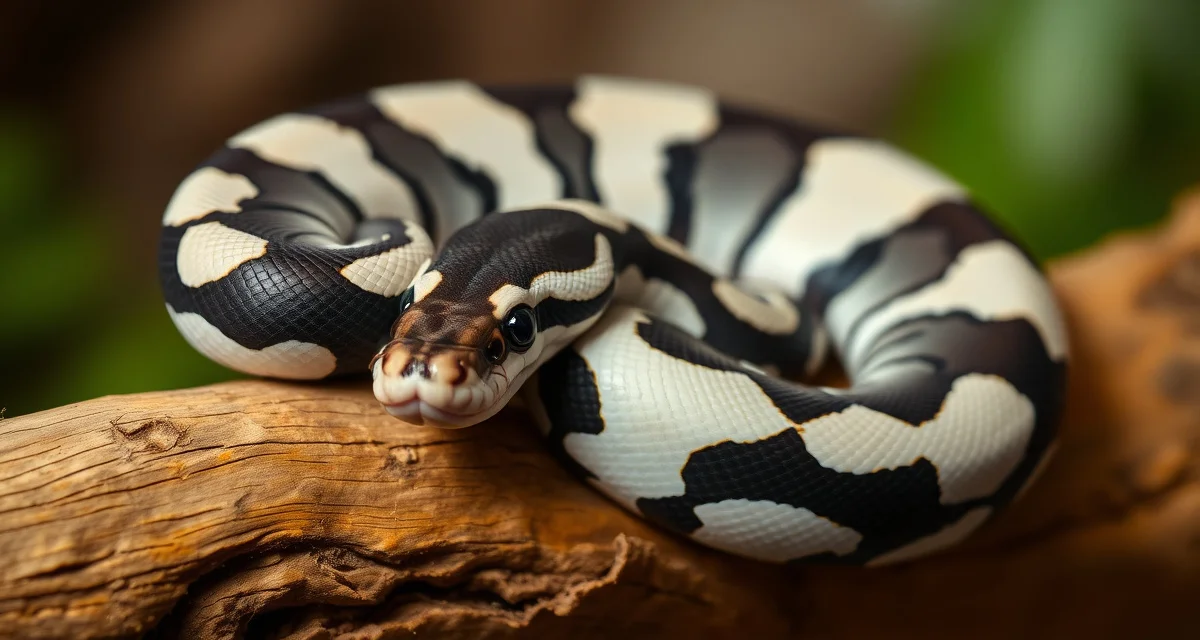
Phantom Pied Ball Python: Breeding Odds, Pairings and Market Value
The phantom pied ball python is a combo that sits in interesting territory. Phantom is a BEL (Blue-Eyed Leucistic) complex gene, which means it carries both its own visual expression and the potential to produce blue-eyed leucistic animals when paired with compatible BEL complex genes. Stack phantom with pied, and you get a clean, high-contrast piebald with enhanced color and the potential for leucistic surprises in your clutch.
TL;DR
- The Phantom Pied combination requires careful planning across multiple genetic lines before visual animals can be produced.
- Recessive genes in any combination require both parents to carry the gene, making genetics guide the foundation of a successful project.
- Multi-recessive projects typically take 2-4 seasons from acquiring het stock before producing the target combination visual.
- Co-dominant genes in combinations show in single copy, allowing you to confirm the gene visually before selling or retaining animals.
- Documenting parentage for every animal in a multi-gene project is the only reliable way to maintain accurate het claims across generations.
Managing these projects well requires attention to detail at every step. Breeders using integrated software report 30% less time on administrative tasks, and in a project this layered, that matters.
The Planning Problem with Phantom Pied
Phantom pied is where breeders who don't track their genetics carefully get into trouble. The BEL complex interaction means your phantom animals might be producing leucistics in your clutch that you're misidentifying or not expecting. And pied, being recessive, requires documented het status from both parents.
The upside of this complexity: phantom pieds look great, and the leucistic possibilities add value to clutches that a pure pied project wouldn't have. The downside: you need to know your genetics in detail before you pair.
How to Breed Phantom Pied Ball Pythons
Step 1: Understand What Phantom Does in a Pied Project
Phantom on its own produces a subtle pattern reduction and color enhancement. In a pied, it brightens and modifies the colored sections of the pattern in a visually pleasing way.
But if your phantom animals also have other BEL complex genes in the mix (Mystic, Mojave, Lesser, Fire, Butter, Russo), you may produce BEL leucistics in the clutch. This is worth planning for. Use the ball python morph calculator to map all the possibilities.
Step 2: Confirm Pied Het Status
Pied is recessive. Every animal in your project that's supposed to carry het pied needs documented pairing records to back that up. Unproven hets sell for less, and they should. Build your project on animals with traceable genetics.
Step 3: Select Your Best Pairing
Productive phantom pied pairings include:
- Phantom het Pied x het Pied: produces phantom pieds, phantom het pieds, visual pieds, het pieds, normals
- Phantom Pied x Normal het Pied: produces phantom pieds, phantom het pieds, and het animals
- Phantom Pied x Phantom het Pied: produces all of the above plus potential Super Phantom Pied
Super phantom pied animals, while uncommon, are striking. They carry noticeably higher value than single-gene phantom pieds.
Step 4: Condition and Cycle Breeders
Females to 1,500g or above. Feed heavily through summer and fall. Initiate cooling in October or November with night temperature drops. Log every feeding and weight. Phantom animals are typically good feeders with no special conditioning requirements.
Step 5: Introduce and Track Pairings
Evening introductions. Log every introduction and lock. With phantom pied pairings, the BEL complex adds another layer of documentation importance. Knowing exactly which animals produced a clutch helps you explain surprising hatchlings.
Reintroduce males weekly through breeding season.
Step 6: Identify and Log Ovulation
Log ovulation immediately when the mid-body swelling is visible. Pre-lay shed at 30 days, egg laying at 16-18 days post-shed. Precise ovulation logging gives you a reliable hatch window.
Step 7: Incubate and Hatch
Eggs at 88-90°F, high humidity. Clutches average 4-8 eggs. Mark containers clearly. Hatch window: 54-60 days.
Phantom pied hatchlings are identifiable at hatch. The modified coloration is visible in visual animals. Visual pieds, phantom pieds, and potential BEL leucistics will all look different. Know what to look for.
What Phantom Pied Ball Pythons Sell For
| Animal | Typical Range |
|--------|--------------|
| Phantom het Pied | $200 - $400 |
| Visual Pied | $250 - $500 |
| Phantom Pied | $400 - $900 |
| Super Phantom Pied | $800 - $1,600+ |
| BEL Leucistic (if produced) | $800 - $1,500+ |
| Females | Premium +30-50% |
Phantom pieds are mid-to-upper-tier pied combos with solid demand. The potential for leucistic production adds bonus value to some clutches.
Common Mistakes in Phantom Pied Projects
Not knowing BEL complex interactions. If your phantom animals carry other BEL complex genes, you might produce leucistics unexpectedly. This is a good surprise, but only if you identify them correctly.
Relying on unproven hets. Pied het status needs documentation. Unproven hets lower your selling price on every het animal in the clutch.
Undervaluing visual pieds from mixed clutches. If your target animal is phantom pied but your clutch also produces visual pieds, those animals are still worth real money. Price accordingly.
Missing the recovery window for females. Heavy clutches require recovery feeding. The ball python breeding hub covers female recovery protocols in detail.
What is the best approach to phantom pied ball python?
Map your project genetics carefully before pairing, paying specific attention to BEL complex interactions. Confirmed pied het status is non-negotiable. Don't build a project on unverified hets. The best pairings produce a high ratio of phantom pieds or visual pieds alongside het animals that other breeders want to buy.
How do professional breeders handle phantom pied ball python?
Professional breeders working phantom pied projects maintain genetic records for every animal in the project, price their het animals based on documentation quality, and plan for BEL complex interactions ahead of time. They don't get surprised by leucistics. They plan for them as potential bonus animals.
What software helps manage phantom pied ball python?
HatchLedger connects your breeding records to clutch P&L so you can evaluate project performance on real numbers. For phantom pied projects where individual animals carry notable value and genetics documentation matters to buyers, having integrated records in one place makes the difference between professional and amateur operations.
Sources
- USARK (United States Association of Reptile Keepers)
- Association of Reptilian and Amphibian Veterinarians (ARAV)
- MorphMarket (reptile industry market reference)
- World of Ball Pythons (WoBP genetics reference database)
- Reptiles Magazine (Bowtie Inc.)
Track Your Phantom Pied Project the Right Way
Get Started with HatchLedger
Building a Phantom Pied project across multiple seasons means tracking genetics, parentage, and clutch outcomes that compound in complexity year over year. HatchLedger connects all of that data in one system so your project documentation stays accurate from first pairing through final sale. Try it free with up to 20 animals.