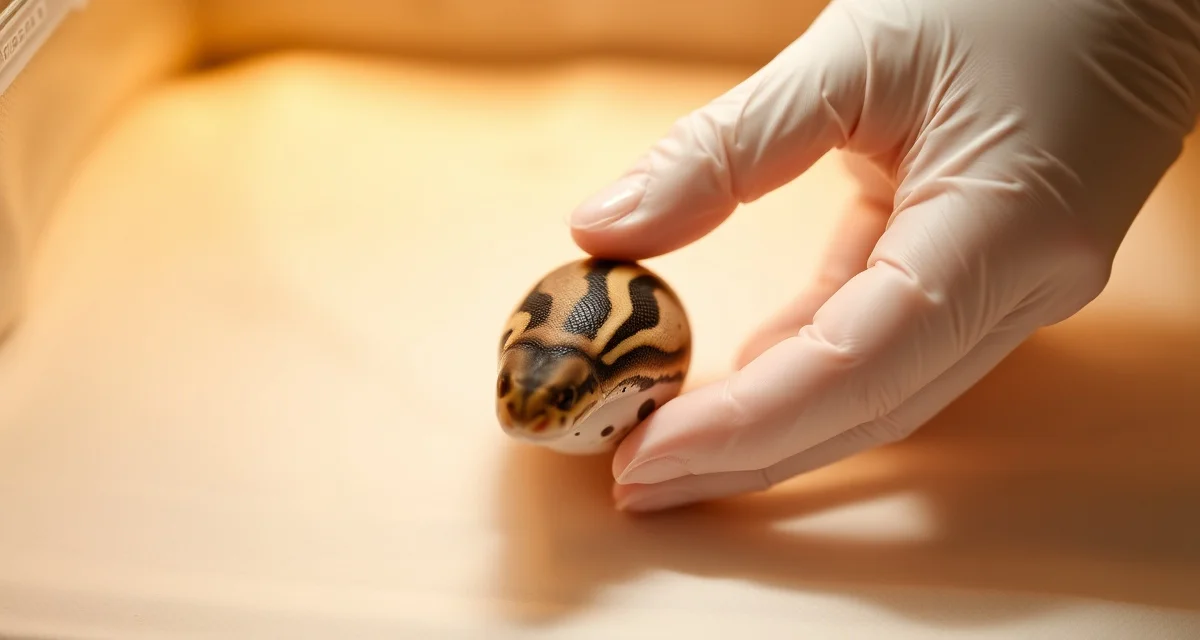
Handling Stuck or Problem Ball Python Eggs
Problem eggs are part of breeding ball pythons. Even experienced breeders with well-conditioned animals and dialed-in incubation setups deal with infertile eggs, stuck eggs, and collapsed eggs across a season. What separates experienced breeders from beginners in these situations is knowing when to intervene, how to intervene, and when to leave well enough alone.
TL;DR
- Ball python breeding operations require systematic record-keeping from pre-season preparation through end-of-season sales.
- Females at 1,200-1,500g or more are the target weight before introducing them to a breeding male.
- Ovulation detection is the key event that anchors pre-lay shed and lay date calculations.
- Clutch profitability guide depends on understanding actual cost basis per animal, not just gross sale revenue.
- Well-documented animals with complete feeding histories and clear genetic records consistently sell faster and at higher prices.
Breeders using integrated software report 30% less time on administrative tasks, which means more attention available for the careful observation that catches egg problems early.
The Most Common Ball Python Problem Eggs
Infertile (clear) eggs: Eggs that contain no developing embryo. They look watery and uniformly pale. They may collapse over time as moisture redistributes into surrounding eggs or environment.
Stuck eggs: Eggs that fuse together at the shell during incubation and can't be safely separated. Often happens when eggs are laid in a cluster and adhere during early incubation. Also describes eggs adhered to the laying substrate.
Moldy eggs: Eggs that develop surface mold, usually white or green fuzzy growth. Can indicate compromised eggs, high humidity combined with poor air exchange, or introduced contamination.
Collapsed/dented eggs: Eggs that develop soft spots or dents during incubation. Can indicate infertility, embryo death, or humidity issues.
Locked eggs (slow developers): Eggs that haven't pipped by the expected hatch window. Sometimes these are late bloomers. Sometimes they're dead.
How to Handle Problem Ball Python Eggs
Step 1: Identify Problem Eggs Early Through Candling
The earlier you identify a problem egg, the more options you have. Regular candling (at day 14-21 and day 35 of incubation) gives you a picture of clutch viability before things become urgent.
Fertile eggs show blood vessel development. Infertile eggs look clear. Compromised eggs often develop visual soft spots or unusual discoloration.
Log your candling observations. See the ball python egg candling guide at the ball python breeding hub for detailed candling technique.
Step 2: Don't Discard Suspected Clear Eggs Prematurely
This is the most common mistake when handling ball python bad egg management. A clear-looking egg at day 14 may still be fertile, some eggs are just harder to candle. Wait until day 35-40 before making a definitive call on a suspected infertile egg.
If the egg hasn't started to collapse and doesn't smell bad, keep it in incubation. Late-hatching eggs exist, and a healthy hatchling from an egg you almost discarded is a valuable lesson in patience.
Step 3: Handle Stuck Eggs Carefully
When eggs stick together during laying or early incubation, don't try to forcefully separate them. Stuck eggs that are viable can remain stuck through the entire incubation and hatch fine if the connection doesn't cut off a hatchling's access to the pip site.
If you must separate stuck eggs, use warm water or a damp cloth to gradually loosen the adhesion while supporting both eggs. Never pull abruptly. If the eggs won't separate without force, leave them together.
Eggs stuck to laying substrate should be cut free carefully with scissors, cutting the substrate around the egg, not trying to peel it from the egg. Leave a thin layer of substrate adhered to the egg rather than damaging the shell.
Step 4: Address Mold Appropriately
Surface mold on an egg doesn't automatically mean the egg is dead. Some viable eggs develop localized mold growth without losing the embryo.
Remove mold with a cotton swab dampened with dilute hydrogen peroxide (3% solution). Treat the surface gently and don't scrub. Improve air exchange in your incubation container, mold growth often indicates humidity or CO2 buildup.
Monitor treated eggs closely. If mold returns aggressively or the egg starts to collapse, the egg is likely compromised. Remove it from the container to prevent contamination of remaining eggs.
Step 5: Remove Clearly Compromised Eggs Promptly
An egg that has ruptured, is actively weeping fluid, or smells strongly should be removed from the incubation container immediately. A ruptured or rotting egg introduces pathogens and moisture that can damage healthy eggs in the same container.
When removing a compromised egg from a stuck cluster, be careful not to damage adjacent healthy eggs. If the compromised egg is firmly adhered to healthy eggs, cut it away as close as possible without disturbing the healthy egg's shell.
Step 6: Assess Slow or Non-Pipping Eggs After Expected Hatch Window
If eggs haven't pipped by day 62-65 when your hatch window was 54-60 days, assess the situation:
- Candle the egg if possible, is there any movement or visible dark mass?
- Check for any pip or slit that might be hard to see
- If the egg still looks viable and shows no collapse, give it another week
- If the egg is noticeably smaller, dented, or feels different from when it went in, it may have failed
If you're confident an egg is late and still viable, you can make a small safety pip, a tiny incision in the top of the egg, to confirm if the hatchling is alive. Do this only as a last resort when the egg is clearly past its window. A prematurely opened egg kills the embryo.
Step 7: Document Every Outcome
Log every problem egg situation. Which egg, what happened, what action you took, what the outcome was. This data builds your knowledge base across seasons and helps you identify whether problems are clutch-specific, female-specific, or incubator-related.
The reptile breeder software comparison explains why integrated tracking tools handle this kind of incubation documentation better than ad hoc notes.
Common Mistakes with Problem Eggs
Giving up on viable eggs too early. Clear-looking eggs, late-developing eggs, and dented eggs can still produce healthy hatchlings. Wait and observe before acting.
Leaving compromised eggs that are actively rupturing. A leaking, rotting egg left in a container will damage or kill adjacent healthy eggs. Remove it promptly.
Forceful separation of stuck eggs. Tearing adhered shells damages eggs that might otherwise hatch fine. Patient, gentle handling is the only approach.
Not documenting problem egg situations. Your records tell you whether egg issues are a recurring pattern in specific females or clutches, information that affects future breeding decisions.
What is the best approach to ball python problem eggs handling?
Identify issues early through regular candling, don't write off potentially viable eggs too soon, handle stuck eggs with patience rather than force, remove actively compromised eggs promptly to protect healthy clutch-mates, and document every problem and outcome. Most problem egg situations are manageable if you stay calm and act based on observation rather than panic.
How do professional breeders handle ball python problem eggs handling?
Professional breeders develop a calm, methodical approach to problem eggs through experience. They candle regularly, act promptly when an egg is actively compromising others, give borderline eggs the time they need rather than discarding prematurely, and document every situation to build a reference library for future seasons. They also know that some egg loss is normal, not every season is perfect.
What software helps manage ball python problem eggs handling?
HatchLedger allows breeders to log incubation observations, problem egg situations, and outcomes alongside pairing data and clutch records. When you can review the full incubation history of a clutch, including candling results and problem egg notes, you have context for understanding outcomes and making better decisions next season.
Sources
- USARK (United States Association of Reptile Keepers)
- Association of Reptilian and Amphibian Veterinarians (ARAV)
- World of Ball Pythons (WoBP genetics guide reference)
- MorphMarket (industry marketplace data)
- Reptiles Magazine (Bowtie Inc.)
Track Every Incubation Detail in HatchLedger
Get Started with HatchLedger
Every part of a ball python breeding operation -- from pairing records to clutch documentation to financial tracking -- works better when the data is connected rather than scattered across notebooks and spreadsheets. HatchLedger is built for exactly that. Try it free with up to 20 animals.