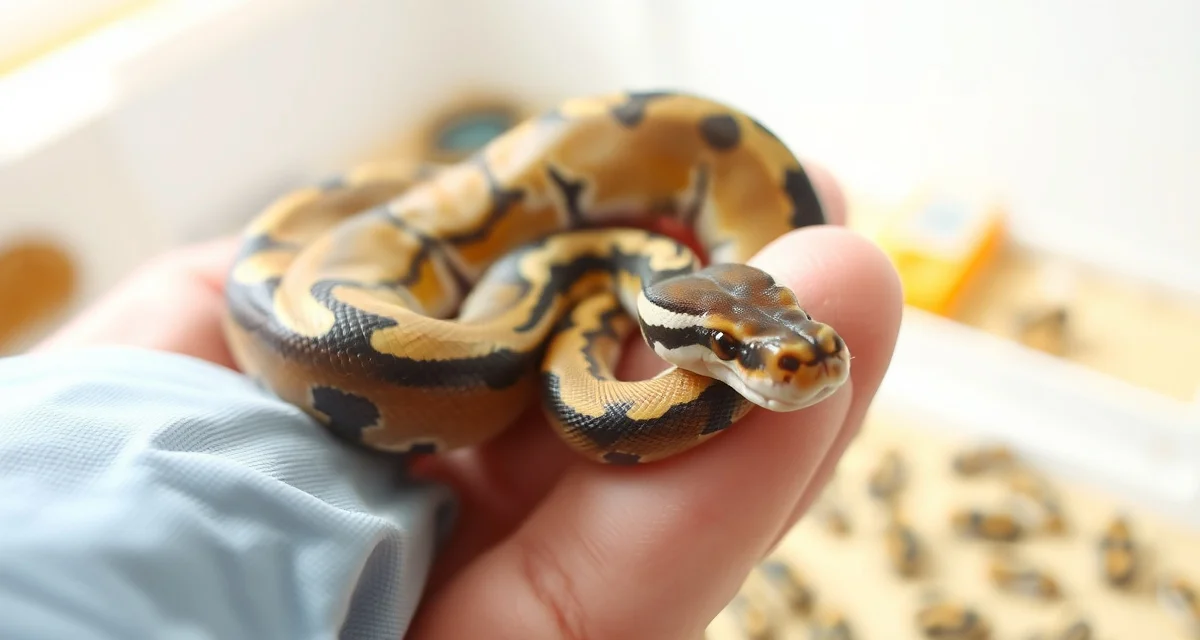
How to Identify a New Ball Python Morph
You've been working with ball pythons for years. You know what a normal looks like. You know your pastels and your pieds. Then one day a hatchling comes out of an egg looking different, subtly or dramatically, and you're staring at it thinking: is this something?
TL;DR
- Ball python breeding operations require systematic record-keeping from pre-season preparation through end-of-season sales.
- Females at 1,200-1,500g or more are the target weight before introducing them to a breeding male.
- Ovulation detection is the key event that anchors pre-lay shed and lay date calculations.
- Clutch profitability guide depends on understanding actual cost basis per animal, not just gross sale revenue.
- Well-documented animals with complete feeding histories and clear genetic records consistently sell faster and at higher prices.
Ball python new morph identification is part science, part pattern recognition, and part community verification. The hobby has over 4,000 recognized morphs and combinations. Many of those were identified by breeders who had the exact experience you're having right now.
Breeders using integrated software report 30% less time on administrative tasks, time that matters when you're documenting an unusual animal carefully.
What Makes a Ball Python Morph?
A morph is a heritable genetic mutation that produces a distinct, consistent phenotype, a visible change in color, pattern, or both. Not every unusual-looking animal is a new morph. The key word is "heritable." The trait must be genetic and predictably passed to offspring.
Unusual markings from incubation conditions, stress responses, or random developmental variation are not morphs. They don't reproduce predictably. True morphs follow Mendelian inheritance patterns, dominant, co-dominant/incomplete dominant, or recessive.
Step 1: Rule Out the Known Possibilities
Before concluding you've found something new, systematically rule out known morphs.
Start with your pairing records. What genetics guide did both parents carry? What possible outcomes could that pairing produce? If you were breeding a pastel het clown to a het clown female, could the unusual animal be a combination you didn't anticipate, perhaps an expression of a gene you didn't know was present?
Look at the hatchling against reference photos of:
- All known morphs with similar coloration or pattern elements
- Super forms of co-dominant genes in the pairing
- Known combinations of all genes present in the parents
The ball python morph community has been at this for decades. Thousands of combinations have been documented. Before claiming something new, be thorough about ruling out the known universe.
Step 2: Document Meticulously
If you can't identify the animal through known morphs, start documenting.
Photograph the animal against a neutral background in consistent lighting. Photograph:
- Dorsal view (top-down)
- Lateral view (both sides)
- Head (top and side)
- Tail
- Belly (ventral surface)
Compare these photos against known morphs systematically. Note the specific features that seem unusual:
- Is the pattern different? How?
- Is the coloration shifted? Which way?
- Is there reduced pattern? Increased pattern? Altered pattern elements?
- Are the eyes different (color, pupil shape)?
- Is the belly different?
Write these observations down. Precise language matters for community verification later.
Step 3: Examine the Parents and Clutchmates
One animal being unusual isn't sufficient evidence of a new gene. Look at the whole clutch.
Do any clutchmates share the unusual trait? If so, that's more meaningful than a single animal expressing it. What percentage of the clutch shows the trait? This matters because inheritance ratios can indicate what kind of genetic mechanism is involved.
Also examine the parents. Do either parent show any subtle expression of the same trait? Sometimes animals that are heterozygous for a dominant gene show mild expression. This could indicate one parent carries the gene visually but subtly.
Step 4: Understand Inheritance Patterns
If subsequent breeding confirms something heritable is present, the inheritance pattern tells you what type of gene you're working with.
- Dominant: Breeding the animal to a Normal produces ~50% offspring expressing the trait
- Co-dominant/Incomplete Dominant: Similar to dominant, with a super form appearing when bred to itself or another of the same morph
- Recessive: Breeding the animal to a Normal produces no visuals (all offspring are hets). Breeding two hets together produces 25% visuals
To establish inheritance, you need to breed the animal and observe offspring over at least one generation. This takes time. Most breeders who believe they've found something new work quietly through multiple breeding seasons before making public claims.
Step 5: Community Consultation
The ball python community has a collective visual memory built over decades. Experienced breeders and morph historians have seen thousands of animals. Show your documentation to people you trust, reputable experienced breeders, morph experts, or community forums with strong moderation.
Be prepared for the possibility that it's something already known. That's not a failure, it's useful information. Better to discover an animal is a known variant early than to breed toward a "new" morph for years only to find it's been documented elsewhere.
Traits That Suggest Something Genuinely New
Not all unusual animals are novel morphs. Features that are more likely to indicate a genuine genetic mutation include:
- Consistent expression across the whole animal (not just one section)
- The same trait appearing in multiple clutchmates
- Parent animals showing any hint of the same trait
- The trait breeding through predictably across generations
Features more likely to indicate environmental or developmental variation:
- Unusual marking only in one body area
- Animal otherwise identical to a normal
- No clutchmates showing similar traits
- No predictable breeding results across generations
Documenting for HatchLedger Records
If you believe you're working with a potentially novel morph, keeping rigorous records from day one is non-negotiable. You need:
- Full parentage data for the animal
- Complete clutch data including all siblings
- Weight and health records from hatch
- Sequential photographs as the animal grows (juvenile coloration sometimes clarifies with age)
- Breeding records from any attempts to establish inheritance
HatchLedger stores all of this linked together, so when you're three breeding seasons in and ready to present your case to the community, your documentation is already organized rather than scattered across spreadsheets and phone photo albums.
If you're comparing tools for managing a complex multi-year project like this, the reptile breeder software comparison page covers what each option offers for long-term record management.
FAQ
What is the best approach to ball python new morph identification?
First systematically rule out all known morphs and combinations based on your pairing genetics. Then document the animal thoroughly, photos in consistent lighting, precise written descriptions of unusual traits. Examine clutchmates for the same trait. If something heritable seems present, begin test breeding and track results across multiple seasons before making community claims.
How do professional breeders handle ball python new morph identification?
Professional breeders work methodically and quietly through multiple breeding seasons before claiming a new discovery. They document rigorously, consult trusted experienced breeders, and use inheritance testing before drawing conclusions. The history of the hobby is full of animals initially thought to be new morphs that turned out to be known variants, and experienced breeders know this, so they verify carefully.
What software helps manage ball python new morph identification records?
HatchLedger is purpose-built for reptile breeders, connecting animal records, breeding history, clutch outcomes, and financial tracking in one connected system. Unlike general spreadsheets or notes apps, it's designed around the specific workflow of an active breeding season -- from pairing records through hatchling inventory and sales documentation. Free for up to 20 animals.
Sources
- USARK (United States Association of Reptile Keepers)
- Association of Reptilian and Amphibian Veterinarians (ARAV)
- World of Ball Pythons (WoBP genetics reference database)
- MorphMarket (reptile industry marketplace)
- Reptiles Magazine (Bowtie Inc.)
Get Started with HatchLedger
Every part of a ball python breeding operation -- from pairing records to clutch documentation to financial tracking -- works better when the data is connected rather than scattered across notebooks and spreadsheets. HatchLedger is built for exactly that. Try it free with up to 20 animals.