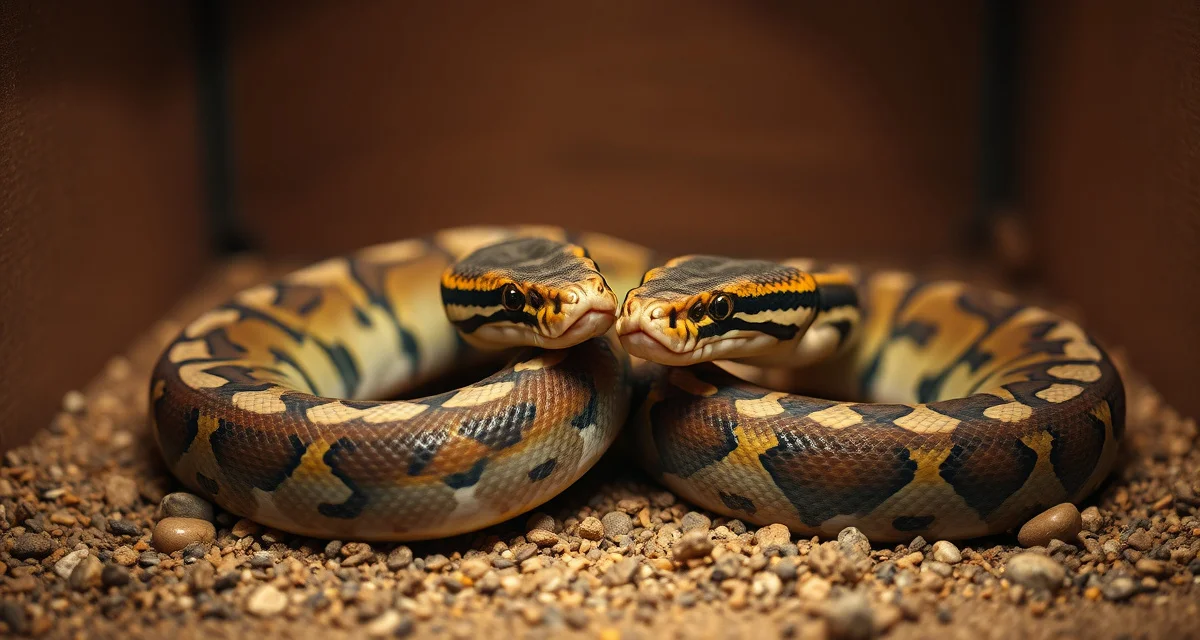
Ball Python Introduction and Pairing Techniques
Getting the introduction right is where a lot of breeders silently lose breeding opportunities they don't realize they're losing. A poor introduction technique, wrong timing, wrong temperature, wrong reading of animal behavior, can result in missed locks, stressed animals, and a season that underperforms for reasons that are invisible without the right knowledge.
TL;DR
- Ball python breeding operations require systematic record-keeping from pre-season preparation through end-of-season sales.
- Females at 1,200-1,500g or more are the target weight before introducing them to a breeding male.
- Ovulation detection is the key event that anchors pre-lay shed and lay date calculations.
- Clutch profitability guide depends on understanding actual cost basis per animal, not just gross sale revenue.
- Well-documented animals with complete feeding histories and clear genetic records consistently sell faster and at higher prices.
Breeders using integrated software report 30% less time on administrative tasks, which is time that goes back into the direct animal observation that good pairing technique demands.
Why Introduction Technique Matters More Than genetics guide
You can have the most valuable pairing in your program fail if the animals don't lock. Or you can miss the lock entirely because you weren't there to observe it. Or you can misread a failed introduction as a successful one and spend weeks waiting for an ovulation that isn't coming.
Technique is how you turn good genetics into actual clutches. Here's how to do it well.
How to Introduce and Pair Ball Pythons
Step 1: Confirm Both Animals Are Ready
Before any introduction, both animals should show signs of breeding readiness. Males should be active in the evening, showing interest in exploring and tracking. Females should be at target weight, showing increased activity, and ideally have been in the cooling protocol for 4-6 weeks.
Don't introduce based on calendar dates. Watch the animals. An unready female will reject the male, potentially with defensive behavior that stresses both animals.
Step 2: Set the Environment Correctly
Evening introductions work notably better than daytime ones. Ball pythons are crepuscular and nocturnal, their breeding behavior is temperature and light-sensitive. Introduce when night temperatures have dropped to the 72-76°F range.
Use the female's enclosure. Introducing the male to the female's space, or using a neutral breeding container, both work, but avoid introducing the female to the male's space. The female's own scent in her enclosure tends to produce better results.
Keep the enclosure simple during introductions, minimal decor that could obstruct observation or trap the male.
Step 3: Monitor Without Disturbing
Once you've introduced the male, observe from a distance. Don't handle or disturb the animals during introduction. Check every 15-30 minutes for the first hour, then every hour or so after that.
You're looking for a lock, the physical joining of the male and female during copulation. Locks can last anywhere from a few minutes to several hours. Once locked, let them finish undisturbed.
Log the date, start time (approximate), and end time (approximate) of every lock. This data contributes to your ovulation timing estimates.
Step 4: Know What to Do When Animals Aren't Compatible
Sometimes a female rejects a male. She may hiss, bite, or simply move away aggressively whenever he approaches. This isn't always a sign that something is wrong with the animals, it may be timing.
Pull the male if the female shows persistent aggressive rejection. Wait 7-10 days and try again. Try a different male if the same female consistently rejects the first male. Some animals have preferences.
Don't leave animals together unsupervised if the female has shown aggression toward the male. Males can be seriously injured.
Step 5: Decide on Male Rotation
If you're running multiple females, you'll need to rotate males. Standard practice is 2-3 days with one female, then a week off before the next introduction (to the same female or a different one). Males need recovery time, they won't perform reliably if introduced continuously.
Keep a rotation log. Know which males were with which females on which dates. This matters for clutch record accuracy and for helping diagnose fertility issues if they arise.
Step 6: Supervise or Use Overnight Introductions Carefully
Some breeders do overnight introductions, leaving animals together through the night. This can work if you trust both animals are compatible and non-aggressive. But you lose observation data and risk missing problems.
If you do overnight introductions, check first thing in the morning. Log any behavioral signs you can observe (positions, whether they appear to have recently separated, etc.).
Step 7: Log Every Introduction and Outcome
This is non-negotiable. Log every introduction, date, male, female, duration, and outcome. Even failed introductions or no-lock introductions should be logged. This data builds a picture over time of which males are most productive, which females are most receptive, and what timing patterns work best in your program.
Use the reptile breeder software comparison to understand why integrated tracking tools outperform spreadsheets for multi-animal programs.
The ball python breeding hub has additional detail on reading lock behavior and managing breeding season across multiple animals.
Common Introduction Mistakes
Daytime introductions. Ball pythons don't breed reliably during the day. Make introductions in the evening.
Leaving incompatible animals together. If the female is aggressive, separate them. Injuries happen fast and can end a male's season.
Not logging introductions. Without records, you don't know which locks led to which ovulations, or which males are producing fertile clutches.
Introducing males too frequently. Over-worked males are less fertile. Give them recovery time between introductions.
What is the best approach to ball python introduction pairing techniques?
Time introductions for the evening when temperatures have dropped. Introduce the male into the female's enclosure or a neutral space. Observe quietly for the first hour, then check regularly. Log every introduction and every lock. Give males 7-10 days between introductions to the same female, and rotation days between different females.
How do professional breeders handle ball python introduction pairing techniques?
Professional breeders log every introduction systematically, note the sex and animal identity of both participants, track lock duration, and use that data to refine their rotation schedules over multiple seasons. They pay attention to which male-female pairings produce the most locks and fertility, and structure their season around that data.
What software helps manage ball python introduction pairing techniques?
HatchLedger tracks introductions, locks, and outcomes for every pairing in your program. When you're running multiple males and females simultaneously, integrated tracking means you always know which animals were together, when, and what happened, without relying on memory or scattered notes.
Sources
- USARK (United States Association of Reptile Keepers)
- Association of Reptilian and Amphibian Veterinarians (ARAV)
- World of Ball Pythons (WoBP genetics reference)
- MorphMarket (industry marketplace data)
- Reptiles Magazine (Bowtie Inc.)
Log Every Introduction from Day One
Get Started with HatchLedger
Every part of a ball python breeding operation -- from pairing records to clutch documentation to financial tracking -- works better when the data is connected rather than scattered across notebooks and spreadsheets. HatchLedger is built for exactly that. Try it free with up to 20 animals.