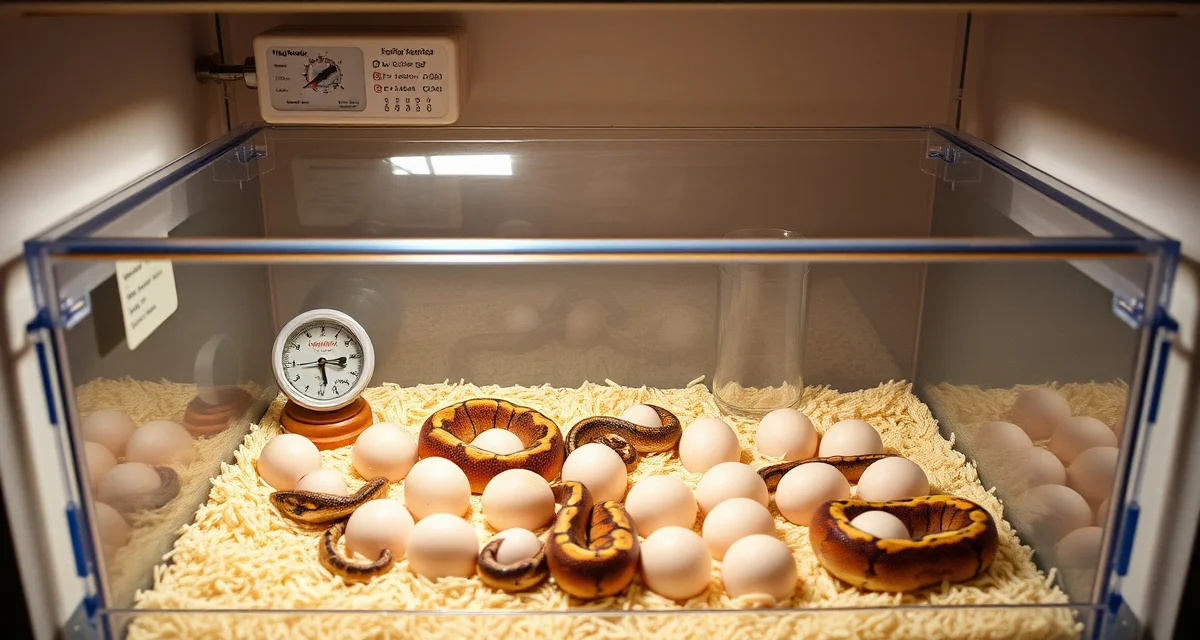
Humidity Box Incubation for Ball Pythons
By HatchLedger Editorial Team · Published 2025-03-22 · Updated Mar 13, 2026
Ask any experienced ball python breeder about their first incubation setup and you'll hear a lot of "I wish I'd known." Ball python humidity box incubation is one of the most reliable methods available, and it's not complicated, but small details make a real difference between a healthy clutch and a frustrating hatch.
TL;DR
- Ball python breeding operations require systematic record-keeping from pre-season preparation through end-of-season sales.
- Females at 1,200-1,500g or more are the target weight before introducing them to a breeding male.
- Ovulation detection is the key event that anchors pre-lay shed and lay date calculations.
- Clutch profitability guide depends on understanding actual cost basis per animal, not just gross sale revenue.
- Well-documented animals with complete feeding histories and clear genetic records consistently sell faster and at higher prices.
The method works by creating a sealed or semi-sealed environment around the eggs that maintains consistent humidity without requiring a dedicated incubator with built-in moisture control. Breeders using integrated software to track their incubation results report 30% less time on administrative tasks, meaning more attention goes to the actual animals.
Why Humidity Box Incubation Works
Ball python eggs are semi-permeable. They exchange gas with their environment while maintaining a moisture balance. The humidity box gives you control over that balance without constant intervention.
The key insight is that you're not managing humidity in a large chamber, you're managing it right at the egg surface. That makes your results more consistent and less dependent on the ambient conditions in your reptile room.
Setting Up Your Ball Python Humidity Box
Step 1: Choose the Right Container
A sealed plastic container with a tight-fitting lid works well. Shoebox-style totes, deli containers, or dedicated reptile hatching boxes all do the job. Bigger isn't better here. You want the container to fit your clutch with a bit of room around the eggs, not a massive amount of dead air space.
Some breeders drill small ventilation holes. Others go fully sealed and crack the lid briefly each week during weigh-ins. Both approaches work. The critical thing is consistency.
Step 2: Select Your Substrate
The most common substrates for ball python humidity box incubation are:
- Vermiculite: classic choice, widely used, forgiving
- Perlite: slightly different moisture retention, popular with experienced breeders
- Hatchrite: commercial product, pre-mixed to appropriate moisture level
- Sphagnum moss: works well, holds humidity effectively but harder to mix to exact ratios
Vermiculite and perlite are typically mixed with water by weight. A 1:1 ratio by weight (substrate to water) is a common starting point. Too wet and eggs can absorb excess moisture. Too dry and they lose weight too quickly.
Step 3: Mix Substrate to the Right Moisture Level
Grab a handful of your mixed substrate and squeeze it. It should hold its shape briefly but not drip water. If water streams out, it's too wet. If it crumbles immediately, add more water.
Weigh your substrate before adding water if you want to be precise. For vermiculite, 1:1 by weight is a reasonable starting ratio. Adjust from there based on your results across seasons.
Step 4: Add Eggs and Position Correctly
Place eggs in the substrate without burying them. The bottom third to half of each egg should be nestled in the substrate. Don't turn them, mark the top of each egg with a small pencil mark if you're worried about orientation.
Keep eggs touching each other if that's how the female laid them. Ball python eggs naturally bond together during development and separating bonded eggs risks damage.
Step 5: Set Your Incubation Temperature
The humidity box goes into your incubator at 88°F to 90°F (31°C to 32°C). Stability matters more than hitting an exact number. Fluctuating temperatures are more harmful than being slightly low or slightly high.
Monitor temperature at the level of the eggs, not at the incubator's probe location. These can differ.
Step 6: Maintain and Monitor Throughout Incubation
Check your humidity box weekly. Look for condensation inside the lid, a light mist is good, water droplets pooling on the eggs is too wet. Weigh the box itself each week. If it's losing weight noticeably, your substrate is drying out and needs a small water addition.
Pair this with individual egg weight tracking to get a complete picture of your incubation ball python egg incubation substrate method results.
Recording Your Incubation Data
Ball python humidity box incubation results vary by season, by substrate batch, and by your specific setup. The only way to improve over time is to keep records you can actually review. HatchLedger connects your incubation logs to your full clutch history, letting you compare results across seasons and pairings.
The ball python breeding hub has additional resources on incubation setup and clutch management for breeders at every experience level.
Without good records, you're starting from scratch every season. With them, each clutch teaches you something you can apply to the next.
Common Mistakes to Avoid
Over-wetting the substrate. This is the most common error. Eggs sitting in wet substrate can develop fungal issues or absorb too much moisture. When in doubt, err on the drier side and monitor egg weights.
Disturbing the eggs too often. Weekly checks are enough. Opening the box every day introduces temperature and humidity swings that add up over a 60-day incubation.
Ignoring the box weight. The total weight of your humidity box tells you whether moisture is evaporating. Add a small amount of distilled water if the box weight drops more than a few grams between checks.
Not labeling substrate batches. If you're using vermiculite or perlite from multiple bags, note which batch you used. Quality varies, and knowing your substrate source helps diagnose problems.
Related Articles
- What Age Can Ball Pythons Breed FAQ
- What Does Het Mean for Ball Pythons FAQ
- Ball Python Egg Incubation Temperature FAQ
- Do You Need a Permit to Breed Ball Pythons FAQ
FAQ
What is the best approach to ball python humidity box incubation?
Use a sealed or semi-sealed plastic container with vermiculite or perlite mixed at a 1:1 ratio by weight with water. Place eggs partially embedded in the substrate, maintain 88°F to 90°F, and check weekly. Monitor both individual egg weights and total box weight to track moisture levels throughout the incubation period.
How do professional breeders handle ball python humidity box incubation?
Experienced breeders typically use a proven substrate ratio they've refined over multiple seasons and keep detailed records of box weights, egg weights, and temperature logs for each clutch. They compare results across seasons to identify what variables produce the best hatch rates and adjust accordingly rather than changing everything at once.
What software helps manage ball python humidity box incubation?
HatchLedger is purpose-built for reptile breeders, connecting animal records, breeding history, clutch outcomes, and financial tracking in one connected system. Unlike general spreadsheets or notes apps, it's designed around the specific workflow of an active breeding season -- from pairing records through hatchling inventory and sales documentation. Free for up to 20 animals.
What is Humidity Box Incubation for Ball Pythons?
Humidity box incubation is a method of hatching ball python eggs using a sealed or semi-sealed container that maintains consistent moisture levels around the clutch. Unlike dedicated incubators with built-in humidity control, a humidity box creates a stable microenvironment using substrate and trapped moisture, making it one of the most reliable and accessible incubation techniques available to ball python breeders of all experience levels.
How much does Humidity Box Incubation for Ball Pythons cost?
Humidity box incubation is one of the most cost-effective methods available. The basic setup requires only a food-safe container, an appropriate substrate like vermiculite or perlite, and a reliable heat source — often items breeders already own. Initial costs typically range from $20 to $100 depending on the heat mat or thermostat used. There are no expensive dedicated incubators required, making it ideal for hobbyists and small-scale breeders.
How does Humidity Box Incubation for Ball Pythons work?
Ball python eggs are semi-permeable, meaning they exchange gas and moisture with their environment. A humidity box works by surrounding the eggs in a moist substrate — usually vermiculite or perlite mixed with water at a specific ratio — inside a sealed container. This traps humidity around the eggs, preventing dangerous moisture loss or gain. The box is then placed in a heat source maintaining temperatures between 88–90°F throughout the 55–60 day incubation period.
What are the benefits of Humidity Box Incubation for Ball Pythons?
The primary benefits include consistency, simplicity, and low cost. Humidity boxes reduce the variables that lead to failed hatches by maintaining stable moisture levels without constant monitoring. The method is forgiving for beginners while remaining effective for experienced breeders managing large collections. Breeders using structured tracking alongside this method report significantly less administrative overhead, freeing more time for hands-on animal care during critical incubation windows.
Who needs Humidity Box Incubation for Ball Pythons?
Any ball python breeder incubating eggs can benefit from humidity box incubation — from first-time hobbyists to established breeding operations. It is especially well-suited to breeders who do not want to invest in commercial incubators, those managing small to mid-sized clutch volumes, and anyone prioritizing reliable hatch rates with minimal equipment. Breeders who pair this method with systematic record-keeping report better outcomes and faster identification of issues across clutches.
Sources
- USARK (United States Association of Reptile Keepers)
- Association of Reptilian and Amphibian Veterinarians (ARAV)
- World of Ball Pythons (WoBP genetics reference database)
- MorphMarket (reptile industry marketplace)
- Reptiles Magazine (Bowtie Inc.)
Get Started with HatchLedger
Every part of a ball python breeding operation -- from pairing records to clutch documentation to financial tracking -- works better when the data is connected rather than scattered across notebooks and spreadsheets. HatchLedger is built for exactly that. Try it free with up to 20 animals.