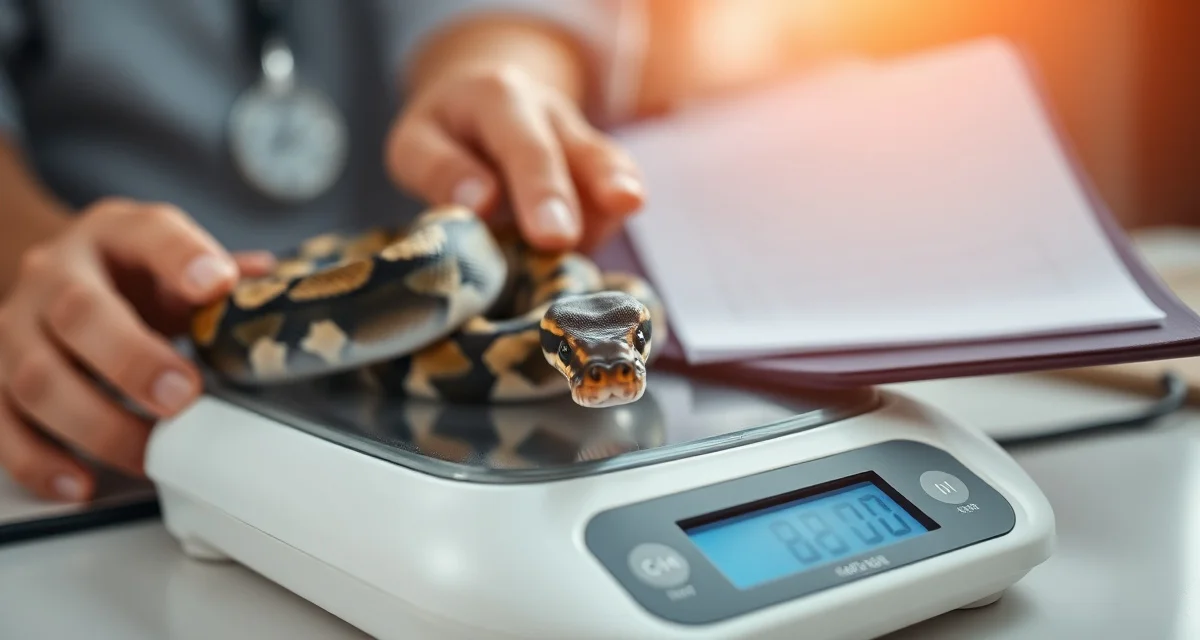
Health Monitoring and Weight Tracking for Ball Pythons
A ball python that looks fine today can be in serious trouble within a week. Respiratory infections, internal parasites, and feeding problems can all develop faster than casual observation catches. The breeders who catch health issues early are the ones who have a real monitoring system, not just a general impression of whether their collection seems okay.
TL;DR
- Ball python breeding operations require systematic record-keeping from pre-season preparation through end-of-season sales.
- Females at 1,200-1,500g or more are the target weight before introducing them to a breeding male.
- Ovulation detection is the key event that anchors pre-lay shed and lay date calculations.
- Clutch profitability guide depends on understanding actual cost basis per animal, not just gross sale revenue.
- Well-documented animals with complete feeding histories and clear genetic records consistently sell faster and at higher prices.
Weight tracking and regular health checks are the foundation. This guide covers what to look for, how often, and how to turn those observations into actionable data.
Why Weight Tracking Is the Most Important Metric
Weight is the single most objective health indicator you have for a ball python. You can look at an animal and think it seems fine. A scale doesn't lie. Consistent, regular weight records let you spot:
- Gradual weight loss over weeks or months (often the first sign of internal parasites, infection, or chronic stress)
- Failure to gain weight despite eating (can indicate parasites or metabolic issues)
- Rapid weight loss after a regurgitation event
- Whether a breeding female has regained adequate condition post-lay
Weigh every animal in your collection on a consistent schedule. For hatchlings and juveniles, weekly weights during early months are useful. For established adults, monthly is typically sufficient outside of breeding season.
Use a scale that measures in grams, not ounces. A good kitchen scale or postal scale works well and costs under $30. Accuracy to 1 gram is adequate for most purposes.
Setting Up a Weight Log
A weight log needs to be consistent to be useful. Record the date, the animal's ID, and the weight. Add a note if anything unusual is observed. That's the minimum.
Over time, graphing weight trends tells you a lot more than spot-checking. A female who's gained 50 grams per month for three months and then plateaued may be approaching the pre-ovulation fasting phase. A juvenile who was on a consistent growth curve and dropped weight for two consecutive months needs investigation.
Spreadsheets can handle this if you're disciplined about it, but they require you to manually build and maintain the graphs. The HatchLedger platform logs weights against individual animal records and visualizes trends automatically, which means you spend less time building charts and more time actually looking at what the data says. Breeders using integrated software report 30% less time on administrative tasks for exactly this reason.
Regular Health Check Protocol
Beyond weight, a systematic health check should happen at least monthly for every animal in your collection. More frequently for young animals, recovering animals, and breeding-active animals.
Body Condition Score
Assess body condition by feel, not just visual observation. A well-conditioned ball python should have:
- A rounded, not triangular, spine profile when viewed from above
- Muscle tone that doesn't feel soft or loose
- A clearly defined neck that flows naturally into the body
- No visible ribs or prominent spine from above
Females heading into breeding season should be in optimal body condition, not overweight and not underweight. A BCS (body condition score) scale of 1-5 is commonly used in reptile husbandry: 1 is severely emaciated, 5 is obese, and 3 is ideal. Learn what each number looks like by comparing animals in your collection and developing a consistent eye.
Skin Inspection
Check for:
- Retained shed: Particularly around eye caps, tail tip, and heat pits. Old retained shed constricts and can cause permanent damage.
- Blistering or scale rot: Small fluid-filled blisters, especially on the ventral surface. Indicates chronic moisture and bacterial issues.
- Mites: Tiny dark dots, especially around eye scales and in the labial pits. Confirmed by running a white paper towel under the animal's body.
- Cuts or abrasions: From rough enclosure edges, live prey, or other animals during breeding.
Respiratory Assessment
Listen and watch for:
- Audible wheezing or clicking sounds with breathing
- Mucus or discharge around the nostrils or mouth
- Open-mouth breathing or gaping
- Unusual posturing (head elevated, neck stretched)
Any of these signs warrant vet attention. Respiratory infections can spread through a collection if an animal shares airspace, particularly in room-based rather than sealed rack setups.
Oral Inspection
Ball pythons don't normally drool. Any excessive mucus, redness, or swelling in the mouth area is a warning sign for stomatitis (mouth rot). Early detection makes treatment much easier.
Cloacal Area
Check for swelling, discharge, or retained shed around the vent. Prolapse is an emergency. A cloacal plug (waxy material blocking the vent) occasionally occurs and needs to be addressed before it causes obstruction.
Monitoring Breeding Females
Breeding females need more intensive monitoring during and after the breeding season. Track:
- Pre-breed weight: Baseline condition before the season
- Post-lay weight: How much condition the female lost during egg production
- Recovery weight milestones: Weekly or bi-weekly weights until she's back to pre-breed condition
- Ovulation observation date: Recorded in the breeding log
- Pre-lay shed date: Marks the countdown to egg deposition
A female who lost 20% of her body weight during egg production and is only eating sporadically afterward isn't ready for next season regardless of the calendar date. Let the data drive that decision, not the schedule.
Monitoring Hatchlings
Hatchlings are the most vulnerable animals in any collection. In the first 60 days, you want to confirm:
- First shed completed cleanly (full shed, no retained pieces)
- First meal accepted within 7-10 days of shed
- Weight increasing consistently after establishing on feed
- No respiratory sounds or discharge
Failure to eat after two weeks of shed should trigger intervention: check temperatures, check for incomplete shed, try different prey presentation. A hatchling that isn't eating within three weeks needs closer attention.
When to Involve a Veterinarian
Not every health concern requires a vet visit, but some situations clearly do:
- Respiratory infection symptoms lasting more than a few days
- Mouth rot or severe blistering
- Neurological signs (uncontrolled spinning, stargazing, uncoordinated movement)
- Unexplained weight loss of more than 10% over two months
- Cloacal prolapse (emergency)
- Any animal that hasn't eaten in 90+ days despite normal husbandry
Build a relationship with a reptile-experienced vet before you have an emergency. Know their hours, their fees, and how they handle after-hours calls. It's much better to have this organized in advance.
Record-Keeping as Part of Health Management
Good health records serve multiple purposes. They help you catch subtle changes that you'd miss without data, they're essential when you do involve a vet, and they're part of your documentation when selling animals.
The reptile breeder software comparison shows how platforms like HatchLedger compare against spreadsheets specifically for health record management. The advantage isn't just convenience: it's searchability. When you need to find every animal that showed feeding issues in the last 6 months, HatchLedger gives you that in seconds. A spreadsheet gives you a long afternoon.
Frequently Asked Questions
What is the best approach to ball python health monitoring weight tracking?
Weigh every animal on a consistent schedule and record dates and weights against individual animal IDs. Combine weight data with monthly physical health checks covering body condition, skin, respiratory function, and oral health. Build a weight trend history for each animal so you can spot gradual changes that individual readings won't reveal.
How do professional breeders handle ball python health monitoring weight tracking?
Professional breeders treat health monitoring as a structured process with defined schedules, not ad hoc observation. They use weight data as the primary objective health metric, supplement it with systematic physical checks, and maintain records detailed enough to inform veterinary consultations. Breeding decisions, especially for females, are driven by weight data.
What records should every reptile breeder maintain per animal?
At minimum: acquisition date and source, morph and genetic documentation, feeding log, weight history, any veterinary treatments, and breeding history including pairing dates, clutch of origin for captive-bred animals, and offspring records. These records serve your own management, buyer documentation, regulatory compliance, and long-term genetic tracking.
How should reptile breeders document genetics for buyers?
A complete genetic record for sale includes the animal's visual morph name, confirmed het genes and their basis (parentage documentation or proven-out production), possible het genes with probability percentages, hatch date, and parent morph information. Including clutch-of-origin records lets buyers independently verify the claims.
Sources
- USARK (United States Association of Reptile Keepers)
- Association of Reptilian and Amphibian Veterinarians (ARAV)
- World of Ball Pythons (WoBP genetics reference database)
- MorphMarket (reptile industry marketplace)
- Reptiles Magazine (Bowtie Inc.)
Get Started with HatchLedger
Every part of a ball python breeding operation -- from pairing records to clutch documentation to financial tracking -- works better when the data is connected rather than scattered across notebooks and spreadsheets. HatchLedger is built for exactly that. Try it free with up to 20 animals.