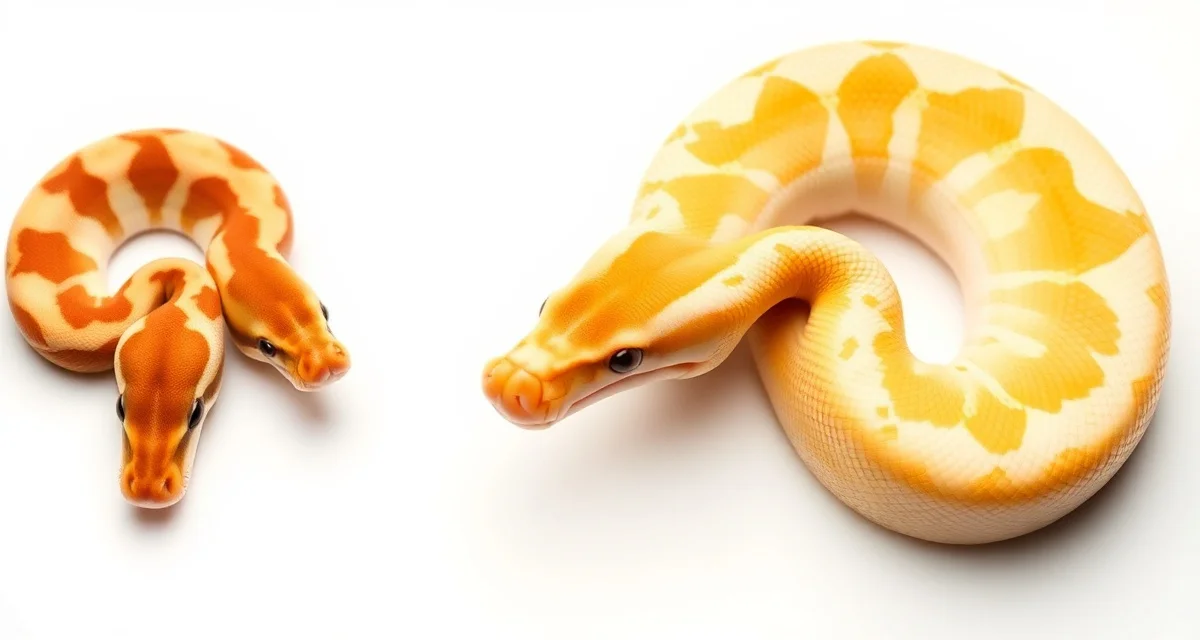
Ball Python Spotnose and Orange Dream Morph Guide: Underutilized Genes with High Combination Value
Breeders using integrated software report 30% less time on administrative tasks, and spotnose and Orange Dream (OD) projects reward the kind of systematic combination planning that good records make possible. These are genes where the most interesting outcomes require multi-gene planning, not single-gene production.
TL;DR
- Ball python breeding operations require systematic record-keeping from pre-season preparation through end-of-season sales.
- Females at 1,200-1,500g or more are the target weight before introducing them to a breeding male.
- Ovulation detection is the key event that anchors pre-lay shed and lay date calculations.
- Clutch profitability guide depends on understanding actual cost basis per animal, not just gross sale revenue.
- Well-documented animals with complete feeding histories and clear genetic records consistently sell faster and at higher prices.
Spotnose and Orange Dream are two co-dominant genes with distinctive single-copy expressions and notable combination potential. Neither has achieved the mainstream profile of pastel or cinnamon, but both have dedicated followings among breeders who've worked with their combination outcomes.
Spotnose: genetics guide and Expression
Spotnose is a co-dominant mutation that produces:
- Distinctive spotted or "freckled" head pattern with small dark spots or speckling across the head
- Pattern disruption along the dorsal saddles
- Often a lighter background coloration than normals
The name comes from the characteristic spotting pattern on the nose and head region. Spotnose animals have a distinctive "busy" head appearance that sets them apart from most other morphs.
Super spotnose: Two copies of the spotnose gene produce animals with an extremely reduced pattern, near-patternless in some cases, with the characteristic head spotting dramatically amplified.
Inheritance: Standard co-dominant ratios apply. Spotnose x Normal: 50% spotnose, 50% normal. Spotnose x Spotnose: 25% super spotnose, 50% spotnose, 25% normal.
The Spotnose Pied Connection
Spotnose has a known interaction with the pied gene that produces a distinctive outcome: spotnose pied animals often show a "wet" or diffuse-edged boundary between the white pied areas and the patterned areas, in contrast to the sharp demarcation typical of standard pieds. The pattern in the colored sections of spotnose pied animals is also disrupted.
This interaction creates a visually distinctive animal that's immediately identifiable as different from standard pied. Breeders specifically target spotnose pied combinations for this reason.
Orange Dream: Genetics and Expression
Orange Dream is a co-dominant mutation that produces:
- Enhanced orange and yellow background pigmentation
- An overall "warmer" coloration than normals or pastels
- Pattern elements that often appear lighter or more washed with the background color
OD is known for having particularly strong color enhancement effects when combined with other color morphs. It's sometimes described as having "the best orange" of the major co-dominant color genes.
Super OD: Two copies produce animals with dramatically enhanced coloration, often appearing very bright orange or golden.
Orange Dream in Combinations
OD's color enhancement pairs well with most color mutations:
OD Pastel (Asphalt): A commonly produced combination with strong color enhancement. The combination of OD and pastel's brightening produces animals with excellent orange-yellow tones.
OD Vanilla: Another strong color pairing. Vanilla's different color enhancement profile combined with OD creates distinctive animals.
OD in BEL combinations: OD does not typically contribute strongly to blue-eyed leucistic animals, but OD animals het for BEL complex genes produce some interesting combination offspring in subsequent pairings.
OD Clown and OD Pied: OD's color enhancement applied to recessive gene combinations adds visual interest to the patterned sections of clown and pied animals.
Planning Spotnose and OD Projects
Both genes are underproduced relative to their combination potential. The challenge is that building multi-gene pairings takes time and collection investment. A spotnose clown project requires:
- Having a female clown (or breeding to produce one)
- Having a spotnose male (or female)
- Pairing them or working through the genetics to get the combination
This is a multi-generation commitment for many breeders, which is part of why spotnose and OD combinations are less common than they could be.
Market Assessment
Single-gene spotnose and OD have limited retail value in the current market due to the maturity of the co-dominant gene market. The value is in:
- Spotnose pied: strong collector demand for the distinctive soft-edge patterning
- OD clown, OD pied: OD's color enhancement adds meaningful visual distinction
- Super forms in specific combination contexts
Research current pricing before committing to production of specific combinations.
HatchLedger's morph tracking records spotnose and OD as distinct genes in each animal's profile, supporting accurate combination planning across multiple breeding seasons.
The HatchLedger reptile breeder software connects genetic records to clutch outcomes, letting you validate OD and spotnose inheritance through actual results.
Frequently Asked Questions
What is the best approach to ball python spotnose and Orange Dream morph breeding projects?
Target combination outcomes where spotnose and OD add meaningful visual distinction rather than producing single-gene animals with limited market value. Spotnose pied is a specific target with strong collector demand; OD pied and OD clown are worthwhile combination goals. Plan multi-season projects with the understanding that these combinations require multiple generations to achieve.
How do professional breeders handle spotnose and OD breeding projects?
Experienced breeders working with spotnose and OD treat them as combination enhancers rather than primary genes. They pair spotnose with pieds to get the distinctive soft-edge patterning, combine OD with clown and pied for color enhancement, and work systematically toward specific combination targets rather than producing single-gene animals.
What records should every reptile breeder maintain per animal?
At minimum: acquisition date and source, morph and genetic documentation, feeding log, weight history, any veterinary treatments, and breeding history including pairing dates, clutch of origin for captive-bred animals, and offspring records. These records serve your own management, buyer documentation, regulatory compliance, and long-term genetic tracking.
How should reptile breeders document genetics for buyers?
A complete genetic record for sale includes the animal's visual morph name, confirmed het genes and their basis (parentage documentation or proven-out production), possible het genes with probability percentages, hatch date, and parent morph information. Including clutch-of-origin records lets buyers independently verify the claims.
Sources
- USARK (United States Association of Reptile Keepers)
- Association of Reptilian and Amphibian Veterinarians (ARAV)
- World of Ball Pythons (WoBP genetics reference database)
- MorphMarket (reptile industry marketplace)
- Reptiles Magazine (Bowtie Inc.)
Get Started with HatchLedger
Every part of a ball python breeding operation -- from pairing records to clutch documentation to financial tracking -- works better when the data is connected rather than scattered across notebooks and spreadsheets. HatchLedger is built for exactly that. Try it free with up to 20 animals.