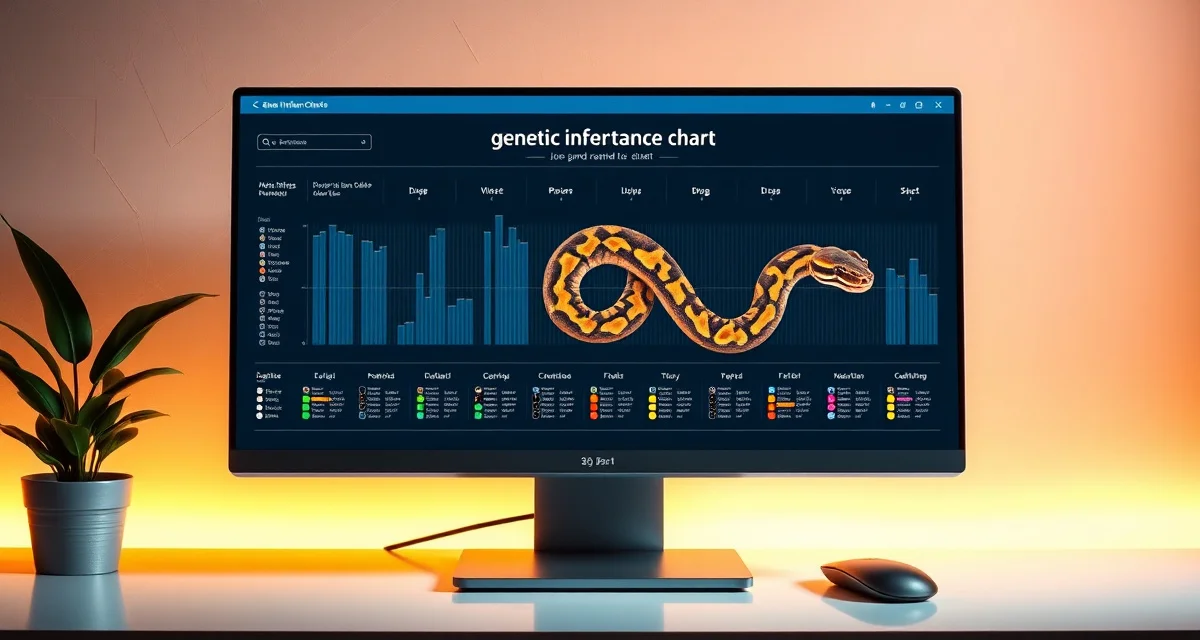
Ball Python Genetic Calculator: How to Use Them and Understand the Results
Breeders using integrated software report 30% less time on administrative tasks, and genetic calculator work is part of the planning process that makes each breeding project defensible before you've invested a season's worth of pairings. Understanding how to use calculators correctly, and how to interpret results, separates systematic breeders from those who guess.
TL;DR
- Ball python breeding operations require systematic record-keeping from pre-season preparation through end-of-season sales.
- Females at 1,200-1,500g or more are the target weight before introducing them to a breeding male.
- Ovulation detection is the key event that anchors pre-lay shed and lay date calculations.
- Clutch profitability guide depends on understanding actual cost basis per animal, not just gross sale revenue.
- Well-documented animals with complete feeding histories and clear genetic records consistently sell faster and at higher prices.
Genetic calculators don't eliminate uncertainty, but they give you the probability framework you need to evaluate whether a pairing is worth pursuing.
How Ball Python Genetic Calculators Work
Ball python genetic calculators take the genetic identities of two parent animals and output the expected probability of each offspring type. They work by applying Mendelian genetics guide rules to the specific inheritance type of each gene:
- Co-dominant genes (pastel, cinnamon, spider, etc.): Single copy produces the visual mutation, double copy produces the super form
- Recessive genes (pied, clown, albino, axanthic, etc.): Single copy is visually normal but heterozygous (het); double copy produces the visual
- Dominant genes (pinstripe, spider in strict dominant terms): Always express when present; super forms vary
When you input two parents into a calculator, you're telling it: "Parent A carries these genes in these dosages; Parent B carries these genes in these dosages. What comes out?"
Popular Tools
Morph Market's genetic calculator: Available on the Morph Market website, this is the most widely used calculator in the ball python hobby. It handles most commonly kept morphs with reasonable accuracy.
World of Ball Pythons (WoBP) calculator: Another community-trusted option. WoBP also has extensive morph database resources alongside the calculator.
Gene Wizard and similar tools: Specialized calculators with additional features like saved pairing history.
All of these tools implement the same underlying genetic logic. If you input identical parent genotypes into any of them, you'll get the same percentages.
Reading the Output Correctly
A calculator output showing "25% pied" does not mean that in every clutch of four eggs from this pairing, exactly one will be pied. It means each individual egg has a 25% probability of being pied.
In any given clutch, you might get 0 pieds, 2 pieds, or all pieds. The 25% is the long-run average across many clutches, not a guarantee per clutch. Small clutches (3-4 eggs) can deviate notably from calculator expectations simply by chance.
This matters for planning. If you're counting on a specific pairing to produce pied animals this season, you need to understand that with a 25% rate and a 6-egg clutch, you have roughly a 17% chance of getting zero pieds. Plan around probability, not certainty.
What Calculators Don't Handle
Calculators are only as accurate as the genetic identities you input. Common sources of error:
Incorrect het assignments: If you input a het pied animal but the animal isn't actually het (you're assuming based on lineage, not proven status), the calculator gives you accurate results for inaccurate inputs.
Unknown genes: If a parent has a gene that wasn't identified or documented, the calculator can't account for it. Surprises in the hatchling bin are often explained by a gene the parent was carrying that wasn't known.
Allelic complexity: Some genes share the same locus (cinnamon and black pastel, for example). Calculators handle these if you input the correct allelic status, but you need to know the relationship to input correctly.
Sex-linked genes: Banana/coral glow inheritance (sex-linked recessive) requires understanding which parent carries the gene. Calculators handle this, but the output can be confusing if you haven't read the explanation carefully.
Verifying Results Through Clutch Records
Genetic calculators are hypothesis generators. Clutch records are how you verify them. Over multiple clutches from the same pairing or similar pairings, you can compare your actual hatchling ratios to the expected percentages.
If your actual results consistently deviate from the calculator's predictions, one of three things is happening:
- The parent's genetic identity is different from what you input (het status is unverified, or there's an unknown gene)
- You're dealing with small sample size variation (just chance, given small clutch sizes)
- The gene has an unusual inheritance pattern that the calculator hasn't been updated to reflect
HatchLedger's clutch records connect hatchling morph outcomes to parent genetics, letting you track actual ratios over multiple clutches and compare them to calculator predictions.
Using Calculators for Project Planning
The best use of genetic calculators is before breeding season starts: evaluating whether a specific pairing produces the target animal often enough to justify the resources.
Example analysis:
- Goal: produce visual clown pieds
- Pairing: clown female x pied male (both visual)
- Calculator output: 25% clown pied hatchlings
- Average clutch size from this female: 6 eggs
- Expected clown pieds per clutch: 1.5 (some clutches will have 0, some will have 2-3)
Is that rate good enough for your goals? That's a business question, not a calculator question. But the calculator gives you the data to make the decision.
The HatchLedger reptile breeder software stores each animal's genetic profile so you can plan pairings based on complete, accurate data rather than reconstructing genetic identities from memory at the start of each season.
Frequently Asked Questions
What is the best approach to using ball python genetic calculators effectively?
Verify that parent genetic identities are accurate before relying on calculator outputs, understand that percentages are probabilities not guarantees, and use clutch records over multiple seasons to validate calculator predictions against actual results. Calculators are planning tools, not certainty generators.
How do professional breeders use ball python genetic calculators?
Experienced breeders use calculators during pre-season planning to evaluate whether specific pairings produce target animals at sufficient rates to justify resources, compare predicted ratios against multi-season clutch data to catch errors in recorded genetic identities, and update calculator inputs when proven het status is confirmed or disconfirmed through clutch results.
What records should every reptile breeder maintain per animal?
At minimum: acquisition date and source, morph and genetic documentation, feeding log, weight history, any veterinary treatments, and breeding history including pairing dates, clutch of origin for captive-bred animals, and offspring records. These records serve your own management, buyer documentation, regulatory compliance, and long-term genetic tracking.
How should reptile breeders document genetics for buyers?
A complete genetic record for sale includes the animal's visual morph name, confirmed het genes and their basis (parentage documentation or proven-out production), possible het genes with probability percentages, hatch date, and parent morph information. Including clutch-of-origin records lets buyers independently verify the claims.
Sources
- USARK (United States Association of Reptile Keepers)
- Association of Reptilian and Amphibian Veterinarians (ARAV)
- World of Ball Pythons (WoBP genetics reference database)
- MorphMarket (reptile industry marketplace)
- Reptiles Magazine (Bowtie Inc.)
Get Started with HatchLedger
Every part of a ball python breeding operation -- from pairing records to clutch documentation to financial tracking -- works better when the data is connected rather than scattered across notebooks and spreadsheets. HatchLedger is built for exactly that. Try it free with up to 20 animals.