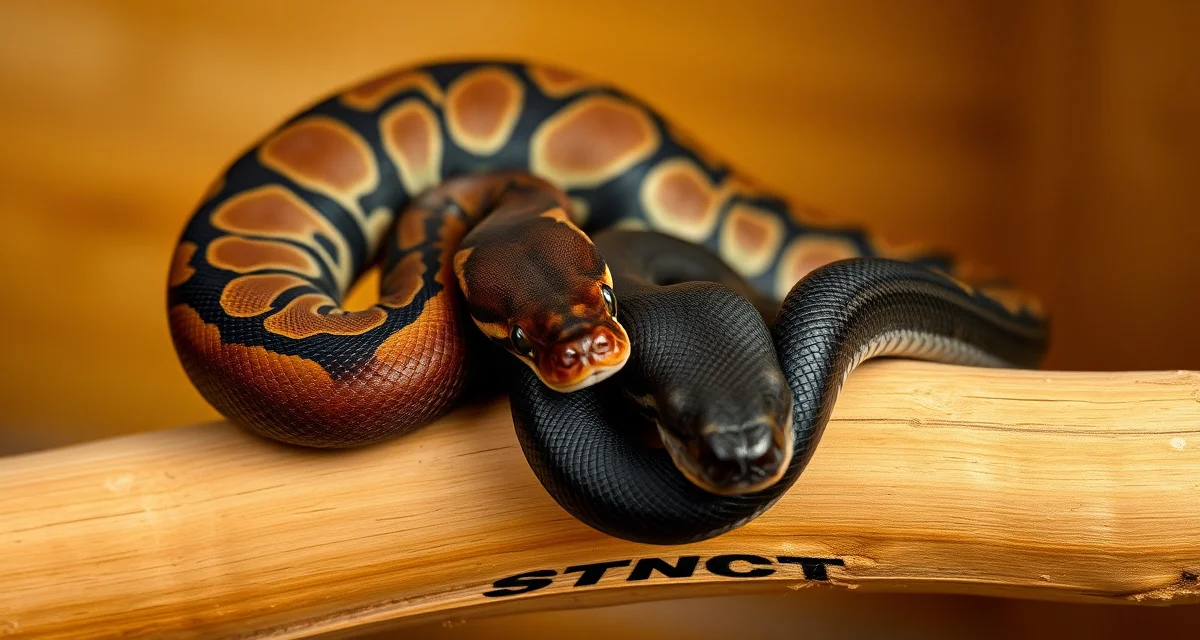
Ball Python Cinnamon and Black Pastel Morph Guide: Advanced Breeding Projects
By HatchLedger Editorial Team · Published 2025-04-28 · Updated Mar 13, 2026
Breeders using integrated software report 30% less time on administrative tasks, and cinnamon/black pastel projects reward careful planning and good records. These darkening genes transform combination animals in ways that make them distinctive, but they also interact with each other in a way that requires genetic precision.
TL;DR
- Ball python breeding operations require systematic record-keeping from pre-season preparation through end-of-season sales.
- Females at 1,200-1,500g or more are the target weight before introducing them to a breeding male.
- Ovulation detection is the key event that anchors pre-lay shed and lay date calculations.
- Clutch profitability guide depends on understanding actual cost basis per animal, not just gross sale revenue.
- Well-documented animals with complete feeding histories and clear genetic records consistently sell faster and at higher prices.
Cinnamon and black pastel are two of the most useful "darkening" genes in the ball python hobby. They're not the same mutation, but they're allelic, meaning an animal can't carry both in double dose, and their interaction produces specific outcomes breeders need to understand.
Cinnamon: Characteristics and Expression
The cinnamon mutation darkens the background coloration of ball pythons and reduces the brown tones in favor of darker, richer colors. Single-copy cinnamon animals have a distinctive reddish-brown or cinnamon-colored background with altered pattern. The pattern elements often appear darker and more defined than in normals.
Super cinnamon (two copies) produces near-black animals. The pattern is heavily reduced, and the base coloration approaches solid dark brown/black.
Cinnamon in combination with other morphs adds depth and contrast:
- Cinnamon pastel: the darkening of cinnamon against pastel's brightening creates strong contrast
- Cinnamon pied: dark patterned zones against pied's white
- Cinnamon albino: cinnamon's effects applied to albino's yellow-white background
Black Pastel: Related but Different
Black pastel (BP) is allelic with cinnamon, meaning they're mutations at the same locus. Single-copy BP animals are typically darker than cinnamon singles, with a more uniformly dark background and reduced pattern contrast.
Super black pastel produces very dark, near-solid black animals.
The allelic relationship: If an animal carries one copy of cinnamon and one copy of black pastel (a "het compound" animal at the cinnamon/BP locus), it has a specific appearance sometimes called "Mahogany" or "Mahogany Black Pastel" depending on lineage. These compound heterozygotes are distinct from supers of either gene.
The Super-Lethal Consideration
When cinnamon or black pastel homozygous animals are produced, they're often described as near-black and have been sold successfully. However, there have been reports of developmental issues in some super cinnamon and super black pastel hatchlings.
The data on this is not as definitively established as spider wobble, but it's worth being aware of. Monitor super cinnamon and super black pastel hatchlings carefully for any developmental abnormalities and be transparent with buyers if any concerns emerge.
Planning Cinnamon and Black Pastel Projects
Since cinnamon and black pastel are co-dominant with allelic relationship:
- Cinnamon x Normal: 50% cinnamon, 50% normal
- Black Pastel x Normal: 50% BP, 50% normal
- Cinnamon x Black Pastel: 25% super cinnamon, 25% compound het (mahogany), 25% BP, 25% normal (approximately)
For combination projects:
- Cinnamon Pastel (Pewter): an extremely popular single-generation goal. Combining cinnamon's darkening with pastel's brightening. Pewter is the combination name for cinnamon pastel.
Pewter: One of the most commonly produced "working" combination morphs. Pewter animals have the enhanced yellow of pastel with the darkened background of cinnamon, creating high-contrast animals. Pewter combined with pieds, clowns, and BEL complex genes produces animals that combine the contrast benefit of both parent genes.
Darkening Gene Combinations
Beyond cinnamon and black pastel, other darkening genes in the hobby:
GHI: As discussed in its own article, GHI produces near-black super animals.
Mahogany/Huffman: Allelic with cinnamon/black pastel. More darkening but similar category.
Chocolate: Another darkening gene with distinct expression characteristics.
The category of "darkening" genes is large and complex. Working with multiple darkening genes in a single project requires understanding which are allelic (at the same locus) and which are not.
Market Positioning
Pewter (cinnamon pastel) is a mature, well-known combination with steady demand as a component animal in more complex breeding projects. Single-gene cinnamon and black pastel are entry-level animals.
The real value in cinnamon/BP projects is as components of three- and four-gene combinations where the darkening adds contrast that makes the combination more visually striking.
Research current market prices for your specific target combinations before committing resources.
Record-Keeping for Allelic Genes
Allelic relationships require careful documentation. An animal that carries both cinnamon and black pastel (a compound het) has a different genetic value than a super cinnamon or super black pastel. Documenting which specific genes an animal carries, not just "darkening gene het," is essential for planning pairings.
HatchLedger's morph tracking lets you record cinnamon and black pastel as distinct genes, preserving the information needed to plan accurate pairings and predict offspring correctly.
The HatchLedger reptile breeder software connects these gene records to clutch outcomes, validating your genetic understanding through actual results.
Frequently Asked Questions
What is the best approach to ball python cinnamon and black pastel breeding projects?
Understand the allelic relationship between cinnamon and black pastel before planning pairings, and document which specific gene each animal carries. Target combination animals that benefit from the darkening effect (pastel-cinnamon pewter, cinnamon pied) rather than single-gene production. Monitor super cinnamon and super black pastel hatchlings for any developmental concerns.
How do professional breeders handle cinnamon and black pastel genetics guide?
Experienced breeders maintain clear documentation distinguishing cinnamon from black pastel in each animal's record and understand the allelic relationship's implications for pairing planning. They focus on combination animals where the darkening gene adds the most visual and commercial value.
What records should every reptile breeder maintain per animal?
At minimum: acquisition date and source, morph and genetic documentation, feeding log, weight history, any veterinary treatments, and breeding history including pairing dates, clutch of origin for captive-bred animals, and offspring records. These records serve your own management, buyer documentation, regulatory compliance, and long-term genetic tracking.
How should reptile breeders document genetics for buyers?
A complete genetic record for sale includes the animal's visual morph name, confirmed het genes and their basis (parentage documentation or proven-out production), possible het genes with probability percentages, hatch date, and parent morph information. Including clutch-of-origin records lets buyers independently verify the claims.
What is Ball Python Cinnamon and Black Pastel Morph Guide: Advanced Breeding Projects?
This guide covers advanced breeding projects using cinnamon and black pastel ball python morphs — two allelic darkening genes that can't be combined in double dose but produce distinctive results in combination animals. It walks breeders through genetic interactions, pairing strategies, clutch planning, and record-keeping practices. HatchLedger users report 30% less time on admin tasks when they apply the systematic workflows outlined here, from pre-season female conditioning through end-of-season sales documentation.
How much does Ball Python Cinnamon and Black Pastel Morph Guide: Advanced Breeding Projects cost?
The guide itself is free editorial content published on HatchLedger. There's no purchase required to read it. If you use HatchLedger's breeding management software to track the pairings, clutches, and genetic records described in the guide, subscription pricing applies to that platform separately. The breeding projects discussed — cinnamon and black pastel combinations — vary widely in cost depending on the morphs paired, but the guide helps you calculate accurate cost basis per animal so you understand real profitability.
How does Ball Python Cinnamon and Black Pastel Morph Guide: Advanced Breeding Projects work?
Cinnamon and black pastel are allelic mutations, meaning they occupy the same gene locus. The guide explains how to plan pairings that leverage these darkening genes in combination with other morphs, how to detect ovulation to anchor your lay date timeline, and how to document every clutch accurately. Females are conditioned to 1,200–1,500g before introduction to a male, and systematic records — feeding histories, genetic lineage, weights — are maintained throughout the season.
What are the benefits of Ball Python Cinnamon and Black Pastel Morph Guide: Advanced Breeding Projects?
Using cinnamon and black pastel strategically produces visually distinctive combination animals that command stronger market prices. Breeders who document complete feeding histories and clear genetic records consistently sell animals faster and at higher prices. The guide also helps you move beyond gross sale revenue to understand true cost basis per animal, making your operation more profitable. Integrated record-keeping workflows reduce administrative overhead by roughly 30%, freeing more time for actual husbandry.
Who needs Ball Python Cinnamon and Black Pastel Morph Guide: Advanced Breeding Projects?
This guide is written for intermediate-to-advanced ball python breeders who already understand basic morph genetics and want to work with more complex allelic gene interactions. It's especially useful for breeders scaling up their operations who need systematic record-keeping, accurate clutch profitability analysis, and reliable ovulation tracking. Hobbyists looking to produce high-value combination animals with cinnamon or black pastel will find the pairing strategy and documentation frameworks immediately applicable.
How long does Ball Python Cinnamon and Black Pastel Morph Guide: Advanced Breeding Projects take?
The breeding season itself typically spans several months, from pre-season female conditioning through incubation and hatchling sales. Females must reach target weight (1,200–1,500g) before pairings begin. After confirmed ovulation, pre-lay shed and lay date follow predictable timelines breeders can calculate in advance. Incubation runs approximately 55–60 days. End-to-end, a single clutch project from initial pairing to final hatchling sale commonly takes six to nine months when all phases are tracked properly.
Related Articles
Sources
- USARK (United States Association of Reptile Keepers)
- Association of Reptilian and Amphibian Veterinarians (ARAV)
- World of Ball Pythons (WoBP genetics reference database)
- MorphMarket (reptile industry marketplace)
- Reptiles Magazine (Bowtie Inc.)
Get Started with HatchLedger
Every part of a ball python breeding operation -- from pairing records to clutch documentation to financial tracking -- works better when the data is connected rather than scattered across notebooks and spreadsheets. HatchLedger is built for exactly that. Try it free with up to 20 animals.