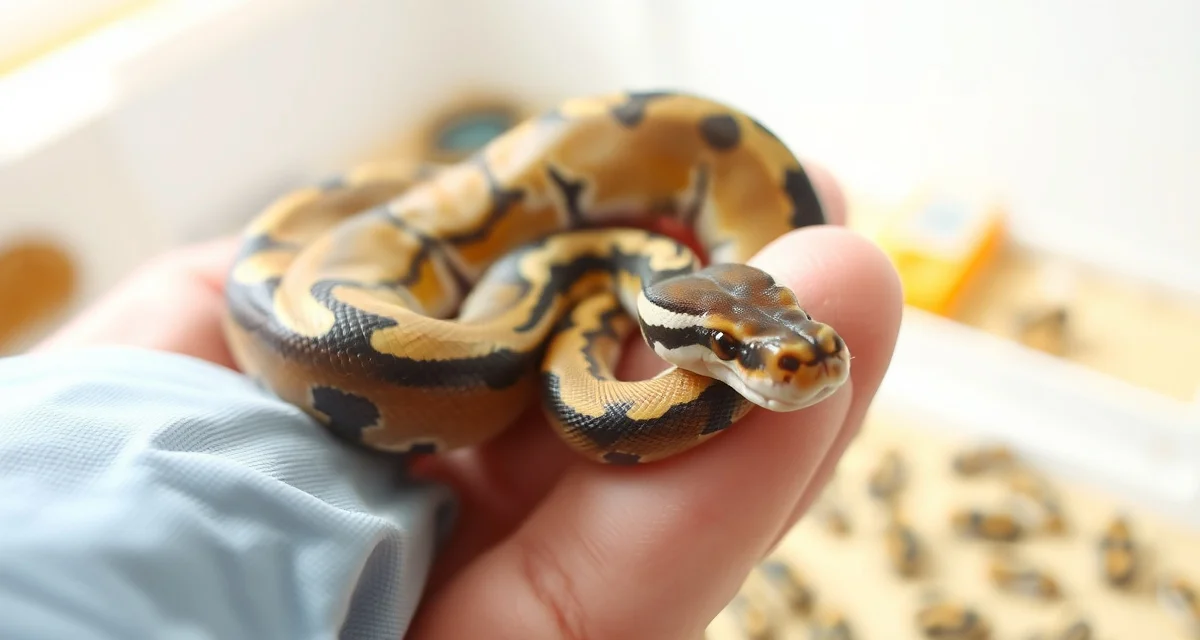
Ball Python New Morph Identification and Research: Advanced Breeder Guide
Breeders using integrated software report 30% less time on administrative tasks, and one application of that efficiency is staying current with the rapidly evolving ball python morph landscape. New morphs appear in the hobby regularly, and the breeder who accurately identifies and correctly represents unfamiliar morphs has a real advantage over those who guess.
TL;DR
- Ball python breeding operations require systematic record-keeping from pre-season preparation through end-of-season sales.
- Females at 1,200-1,500g or more are the target weight before introducing them to a breeding male.
- Ovulation detection is the key event that anchors pre-lay shed and lay date calculations.
- Clutch profitability guide depends on understanding actual cost basis per animal, not just gross sale revenue.
- Well-documented animals with complete feeding histories and clear genetic records consistently sell faster and at higher prices.
Ball python morphs have expanded from a handful of established mutations to hundreds of named variants, combinations, and modifiers. Keeping up requires systematic research and a willingness to admit uncertainty.
The Current State of Ball Python Morphs
The ball python hobby is in an unusual situation: the species has been selectively bred intensively enough, and for long enough, that even experienced breeders encounter animals whose exact genetics guide they can't immediately determine. The number of named morphs and combinations runs into the hundreds, and new ones appear every few years.
Some current frontiers:
New recessive discoveries: Researchers and breeders continue to find animals with novel phenotypes that prove to be recessive. Rigorous proving-out through breeding tests establishes these as new morphs.
Modifier genes: Genes that don't produce a distinctive phenotype on their own but alter the expression of other morphs. These are some of the most complex to identify because they require specific combinations to detect.
Line variations: Within established morphs, some breeders have developed lines with distinctive expression through selective breeding. These aren't new mutations but represent consistent expression variation within a known morph.
Imported animals: The occasional importation of ball pythons from different regions of Africa introduces animals with potentially different genetics that may or may not represent new mutations.
How New Morphs Are Established
When a breeder encounters an unusual animal, the process of establishing it as a new morph typically follows these steps:
Observation and documentation: Photographing and describing the animal's phenotype in detail. What's different about it compared to known morphs?
Breeding tests: Breeding the animal to normals to determine inheritance pattern. Co-dominant mutations show in the first-generation offspring; recessive mutations show only after breeding the offspring together.
Allelism testing: Testing whether the new mutation complements or fails to complement existing mutations in the same visual category. Non-complementing mutations are at the same locus (allelic).
Community review: Sharing observations and breeding data with experienced breeders and the broader community for validation.
Naming: A successfully established new morph gets a community-recognized name, often from the discoverer but sometimes through community consensus.
This process takes years and multiple breeding seasons. Claims of "new morphs" that haven't been through breeding tests should be treated with appropriate skepticism.
Identifying Unfamiliar Animals
When you encounter an animal you can't immediately identify:
Start with established references: The Ball Python Genetics website (BHB Reptiles genetics references), dedicated morph forums, and experienced community members are your first resources.
Compare against documented examples: Look for photographic comparisons with animals of known genetics. Pay attention to pattern elements, scale characteristics, and color distribution.
Consider genetic context: If you know the parents' genetics, the offspring should mathematically be possible from those genetics. Use that to narrow possibilities.
Ask experienced breeders: The ball python community includes breeders with decades of experience who have seen unusual morphs. A good photo and description often gets useful input.
Don't over-identify: "I think this might be a possible het clown" is different from "this is a clown." Don't state certainty you don't have.
When You Think You Have Something New
If an animal's phenotype doesn't match any known morph:
Document thoroughly: Multiple photos in consistent lighting, from consistent angles. Document the phenotype as objectively as possible.
Do breeding tests: Breed to a known normal animal. Observe first-generation offspring. If any express an unusual phenotype, it's co-dominant; if not, breed the offspring together and observe for novel phenotypes.
Keep records meticulously: Every breeding test, every clutch outcome, every observation needs to be dated and documented.
Be patient: Establishing a new morph through breeding tests takes a minimum of one breeding season for co-dominants (first-generation results) and 2-3 seasons for recessives (proving the gene out).
Consult before marketing: Don't sell animals as a "new morph" before breeding tests establish the inheritance pattern. Premature marketing of unproven morphs has caused notable problems in the community.
Staying Current with the Morph Landscape
Resources for staying informed:
- Ball Python community forums: Some of the oldest and most experienced breeders in the hobby are active on long-standing forums
- Morph Market announcements: The platform sometimes highlights new or verified morphs
- Reputable breeders' websites and social media: Following acknowledged experts in specific morph areas
- Ball Python genetics references: Maintained by knowledgeable community members
HatchLedger's morph database is updated as the morph landscape evolves, reflecting new established morphs as they're documented by the community.
Documenting Uncertain Identifications
For any animal whose morph identification is uncertain, document the uncertainty:
"This animal shows a phenotype consistent with [possible morph A] but may also be [possible morph B]. Identification uncertain pending breeding tests."
This is honest and appropriate. Breeding tests will eventually resolve the uncertainty. HatchLedger's morph records support uncertainty documentation, letting you record tentative identifications with notes about the basis for uncertainty.
The HatchLedger reptile breeder software connects morph records to breeding and clutch outcomes, which is exactly the data you need to resolve identification uncertainties through breeding tests.
Frequently Asked Questions
What is the best approach to ball python new morph identification and research?
Consult established references and experienced community members before declaring an unknown morph, document unusual phenotypes thoroughly with photos and descriptions, and conduct breeding tests before claiming any new genetic discovery. Maintain appropriate uncertainty in your records until breeding data resolves it.
How do professional breeders handle unfamiliar ball python morphs?
Experienced breeders compare unfamiliar animals against thorough reference materials and consult community experts when genuinely uncertain. They document their reasoning and maintain explicit uncertainty designations in their records for animals they can't definitively identify. They don't market uncertain identifications as confirmed genetics.
What records should every reptile breeder maintain per animal?
At minimum: acquisition date and source, morph and genetic documentation, feeding log, weight history, any veterinary treatments, and breeding history including pairing dates, clutch of origin for captive-bred animals, and offspring records. These records serve your own management, buyer documentation, regulatory compliance, and long-term genetic tracking.
How should reptile breeders document genetics for buyers?
A complete genetic record for sale includes the animal's visual morph name, confirmed het genes and their basis (parentage documentation or proven-out production), possible het genes with probability percentages, hatch date, and parent morph information. Including clutch-of-origin records lets buyers independently verify the claims.
Sources
- USARK (United States Association of Reptile Keepers)
- Association of Reptilian and Amphibian Veterinarians (ARAV)
- World of Ball Pythons (WoBP genetics reference database)
- MorphMarket (reptile industry marketplace)
- Reptiles Magazine (Bowtie Inc.)
Get Started with HatchLedger
Every part of a ball python breeding operation -- from pairing records to clutch documentation to financial tracking -- works better when the data is connected rather than scattered across notebooks and spreadsheets. HatchLedger is built for exactly that. Try it free with up to 20 animals.