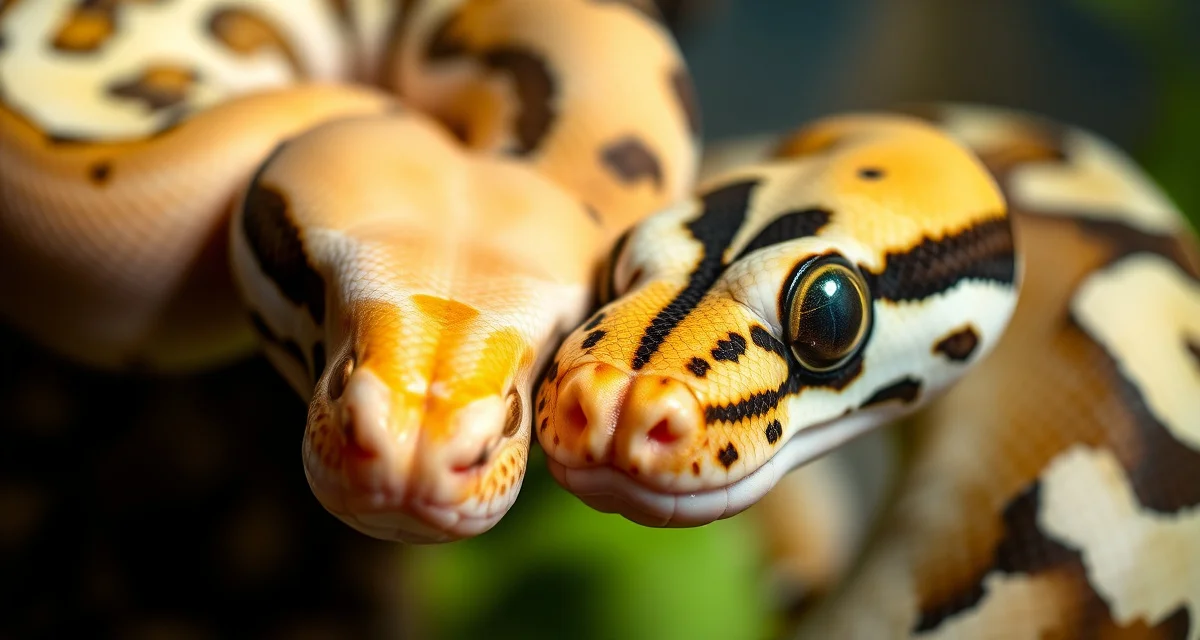
Ball Python GHI Morph and Black-Eyed Leucistic Combinations: Advanced Breeder Guide
Breeders using integrated software report 30% less time on administrative tasks, and high-value combination projects like GHI and BEL complex combinations are exactly where that time savings matters most. These are complex multi-gene projects where genetic tracking errors have real financial consequences.
TL;DR
- Ball python breeding operations require systematic record-keeping from pre-season preparation through end-of-season sales.
- Females at 1,200-1,500g or more are the target weight before introducing them to a breeding male.
- Ovulation detection is the key event that anchors pre-lay shed and lay date calculations.
- Clutch profitability guide depends on understanding actual cost basis per animal, not just gross sale revenue.
- Well-documented animals with complete feeding histories and clear genetic records consistently sell faster and at higher prices.
The GHI (Gotta Have It) morph and the Blue-Eyed Leucistic (BEL) complex represent two of the most visually striking and commercially notable genetic systems in ball python breeding. Understanding each system thoroughly is prerequisite knowledge for working with them profitably.
GHI: What It Is and How It Expresses
GHI is a co-dominant mutation that produces animals with notably darkened pattern and enhanced contrast. Single-copy GHI animals show darkened background coloration, reduced brown tones in favor of near-black, and often a distinctive iridescence. The pattern elements appear crisper and more defined than in normals.
Super GHI (two copies) produces near-black animals with minimal visible pattern. The dark base color is close to solid black in the best examples.
GHI combines extremely well with other morphs:
- GHI Mojave: Adding Mojave to GHI can produce animals with strikingly dark coloration and distinctive pattern modification
- GHI pastel: Pastel brightens the areas GHI darkens, creating unusual contrast
- GHI pied: The dark GHI coloration combined with pied's white patches produces dramatic contrast
- GHI clown: The darker background intensifies the clown pattern
GHI is not always easy to identify at hatch; animals can look confusingly dark or unusual in ways that might be mistaken for other mutations. Experience with GHI-specific expression is important for accurate morph identification.
The BEL (Blue-Eyed Leucistic) Complex
The BEL complex is a group of co-dominant mutations that, when combined in specific ways, produce leucistic (reduced to absent pigmentation) animals with blue eyes. The visual leucistic is the "super form" of these combinations.
BEL complex members:
- Mojave: One of the most common BEL complex members. Single copy is moderately distinctive; widely used in combinations.
- Lesser: Similar to Mojave in single copy, sometimes difficult to distinguish. Part of the same complex.
- Butter: Similar to Lesser.
- Russo: Part of the complex, somewhat rarer.
- Phantom: Part of the complex.
- Mocha: Part of the complex.
Producing BEL animals:
- Mojave x Mojave: 25% Blue-Eyed Lucy
- Lesser x Lesser: 25% Blue-Eyed Lucy
- Mojave x Lesser: 50% BEL (they interact to produce leucistic)
- Other complex members in various combinations also produce BEL animals
The exact visual appearance of BEL animals varies slightly depending on which complex members are combined. Some BEL animals are pure white with blue eyes; others have slight yellow tinting or a "dirty" appearance. Mojave-Mojave super forms often show yellow on the dorsal surface. The "cleanest" BEL animals (most prized) come from specific combinations.
Planning GHI Breeding Projects
GHI is a co-dominant mutation, so single-copy animals express visually and "super GHI" (two copies) is the homozygous form. You don't need to worry about hidden carriers; every GHI animal is visually identifiable.
Planning GHI combinations:
- GHI x Normal: 50% GHI offspring
- GHI x GHI: 25% Super GHI, 50% GHI, 25% normal
- GHI x other co-dominant: Calculate each gene independently
For combinations with recessive morphs, you need to build the het population first (unless purchasing animals already carrying the recessive gene).
Planning BEL Complex Projects
BEL projects can be approached several ways:
Direct super form production: Breed two animals of the same BEL complex member. 25% will be visual leucistic.
Cross-complex production: Breed two animals with different BEL complex members (e.g., Mojave x Lesser). 50% of offspring will be leucistic.
Adding additional co-dominant genes to BEL: A pastel Mojave x Mojave pairing will produce pastel BEL animals along with the standard genetic outcomes.
Adding recessive genes: To produce a clown BEL, you need animals that carry both the recessive clown gene and BEL complex genes. This requires building het populations or purchasing double het animals.
Visual Identification Challenges
Distinguishing between BEL complex members in single copy can be genuinely difficult, particularly between Mojave and Lesser, or between Butter and Lesser. This matters commercially because buyers want accurate morph designations.
When identification is uncertain, be transparent: "Mojave or Lesser (uncertain)" is better than a confident but potentially wrong declaration. The genetics guide you claim determines the potential value of offspring from the buyer's pairings.
Current Market for GHI and BEL
GHI: Single-copy GHI animals trade for $100-300 depending on quality. Combination GHI animals (GHI pastel, GHI Mojave, etc.) command premiums. Super GHI animals have a smaller market but still find buyers interested in near-black animals.
BEL complex: Single-copy Mojave and Lesser animals are in the $60-150 range. Visual BEL animals are in the $150-400 range depending on cleanliness and quality. BEL combinations with other morphs (pastel BEL, banana BEL, clown BEL) command notable premiums.
Do current market research before committing resources to these projects.
Record-Keeping for Complex Genetics
Both GHI combinations and BEL projects require careful tracking of which specific complex members each animal carries. Recording "Mojave" vs. "Mojave or Lesser (uncertain)" is important for future breeding planning and buyer communication.
HatchLedger's morph tracking tools let you record each identified gene for every animal, with notes for uncertain identifications. When you're planning a BEL project and need to know which of your animals carries Mojave vs. Lesser vs. both, your records should have that information clearly.
For the financial side, HatchLedger's reptile breeder software tracks per-clutch P&L connected to the specific genetic outcomes, helping you evaluate which BEL or GHI combinations are generating the best returns in your specific market.
Frequently Asked Questions
What is the best approach to GHI and BEL complex ball python breeding projects?
Understand which specific BEL complex members you're working with before planning pairings (Mojave, Lesser, Butter, etc. produce different outcomes in combination). Plan GHI projects by working out the co-dominant inheritance for each gene. Research current market prices for your target combinations before committing resources.
How do professional breeders handle GHI and BEL complex genetics?
Experienced breeders maintain accurate records distinguishing between BEL complex members (not just labeling everything "BEL complex"), understand how different complex members interact to produce leucistic animals, and research which specific combinations produce the most highly valued leucistic animals for the current market.
What records should every reptile breeder maintain per animal?
At minimum: acquisition date and source, morph and genetic documentation, feeding log, weight history, any veterinary treatments, and breeding history including pairing dates, clutch of origin for captive-bred animals, and offspring records. These records serve your own management, buyer documentation, regulatory compliance, and long-term genetic tracking.
How should reptile breeders document genetics for buyers?
A complete genetic record for sale includes the animal's visual morph name, confirmed het genes and their basis (parentage documentation or proven-out production), possible het genes with probability percentages, hatch date, and parent morph information. Including clutch-of-origin records lets buyers independently verify the claims.
Sources
- USARK (United States Association of Reptile Keepers)
- Association of Reptilian and Amphibian Veterinarians (ARAV)
- World of Ball Pythons (WoBP genetics reference database)
- MorphMarket (reptile industry marketplace)
- Reptiles Magazine (Bowtie Inc.)
Get Started with HatchLedger
Every part of a ball python breeding operation -- from pairing records to clutch documentation to financial tracking -- works better when the data is connected rather than scattered across notebooks and spreadsheets. HatchLedger is built for exactly that. Try it free with up to 20 animals.