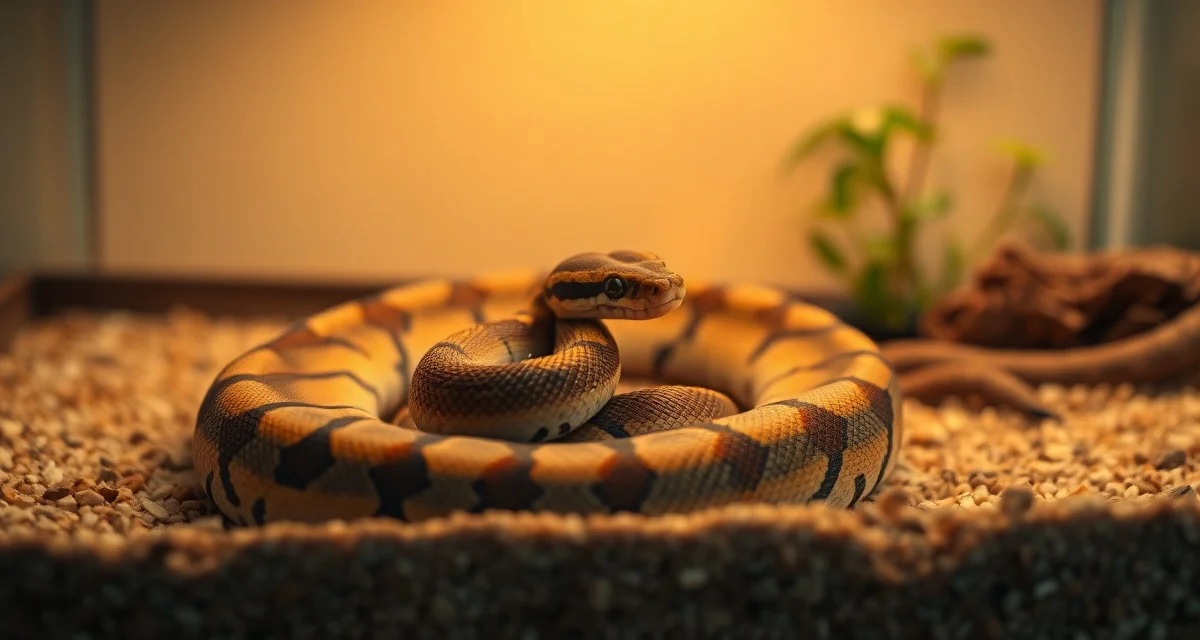
Retiring Ball Python Breeding Animals: When to Stop and What to Do Next
Every breeding female has a productive career with a natural end point. Knowing when that end point has arrived - and how to handle retirement well - is part of running an ethical, sustainable program. The decision to retire a breeding animal is one of the harder calls in this hobby, because it involves separating sentiment from data. Breeders using integrated software report 30% less time on administrative tasks, which matters when you're maintaining the complete career records that make retirement decisions data-driven rather than arbitrary.
TL;DR
- Ball python breeding operations require systematic record-keeping from pre-season preparation through end-of-season sales.
- Females at 1,200-1,500g or more are the target weight before introducing them to a breeding male.
- Ovulation detection is the key event that anchors pre-lay shed and lay date calculations.
- Clutch profitability guide depends on understanding actual cost basis per animal, not just gross sale revenue.
- Well-documented animals with complete feeding histories and clear genetic records consistently sell faster and at higher prices.
Retirement doesn't mean something went wrong. It means an animal has completed her contribution to your program and deserves the lighter management of a non-breeding life.
Signs a Breeding Female Is Ready for Retirement
No single indicator triggers retirement. You're looking for a pattern across multiple seasons that tells you continued breeding isn't serving the animal or the program.
Declining production over consecutive seasons: A female whose clutch size has trended downward for three or more consecutive seasons without an identifiable husbandry cause is likely in age-related reproductive decline. Some decline is expected; a pattern that shows no signs of reversing is a different signal.
Increasing recovery time: If a female is taking longer each season to return to pre-breeding weight - and the timeline is clearly lengthening year over year - her body is working harder to recover from each reproductive cycle.
Repeated health complications tied to breeding: A female who develops respiratory infections, loses significant muscle mass, or has other health issues in the weeks following laying is being stressed by the breeding cycle in ways that will compound over time.
Very high slug rates over multiple seasons: A female producing 40-50% slugs consistently over two or more seasons may have underlying fertility decline. Track this carefully - one bad season can have external causes; a trend is the animal's physiology telling you something.
Reduced feeding reliability: A previously reliable feeder who starts refusing regularly outside of normal pre-lay fasting windows is showing systemic signs worth taking seriously.
Age-related physical changes: Marked changes in muscle tone, significant and persistent weight fluctuations, or reduced activity and responsiveness are broad health signals that the animal is aging in ways that make continued breeding increasingly costly to her.
Age as a Factor
Ball pythons can live 20-30 years, but reproductive performance typically peaks in the middle years of a female's life. Most breeders see strong production from females in years 4-12 of their breeding career (roughly ages 5-15), with gradual decline after that.
Age alone isn't a reason to retire a healthy, producing female. But age combined with declining production metrics is meaningful. A 15-year-old female who's been producing well for a decade may have several good seasons left; a 15-year-old who's been showing declining clutch quality for three seasons is probably past her productive peak.
Use your records to evaluate the trajectory. The numbers tell the story more reliably than a general sense of whether she "seems fine."
What Retirement Actually Means
Retirement from breeding doesn't mean the animal's life ends. It means she stops going through the physiological demands of breeding cycles and transitions to maintenance care.
Maintenance husbandry: A retired breeder eats on a regular schedule at a maintenance ration (slightly less than peak breeding conditioning), lives in appropriate housing, and doesn't experience the stress of pairing sessions, ovulation, laying, or post-lay recovery.
Weight stabilization: Most retired females stabilize at a healthy maintenance weight within one to two seasons of stopping breeding. The body no longer has to rebuild between reproductive cycles.
Behavioral changes: Many retired females become noticeably calmer and more consistent in behavior once the hormonal cycles of breeding season stop. Some breeders are surprised by how different an animal seems outside of active breeding.
Options for Retired Breeding Animals
You have several legitimate options for animals who've completed their breeding careers.
Keep as a pet: Many retired breeding females make excellent pets. They're established feeders with known health histories, they're often quite handleable, and their genetics guide are well-documented. If you have the space and the interest, there's nothing wrong with keeping retired animals as long-term pets.
Sell to experienced keepers: Retired breeding females are valuable to hobbyists who want adult animals with known histories and aren't interested in hatchlings or juveniles. Be transparent about the animal's age and production history. This transparency is both ethical and practically useful - buyers who know what they're getting are satisfied customers.
Place with trusted breeders who want adult females: Occasionally, another breeder may have a specific project use for an adult female with known genetics. A retired female from your program might be exactly what another program needs for a specific pairing.
Place with rescues or educational programs: Some reptile rescues or educational programs specifically seek adult animals with stable temperaments and known histories.
What's not on this list is neglect or indefinite deferred decisions. If an animal has retired from your program, make a decision and act on it.
How to Document Retirement
When you retire a breeding animal, update her record to reflect the change in status. Note:
- The final breeding season
- The reason for retirement (production decline, health factors, or simply a program direction change)
- Disposition (kept, sold, placed)
- If sold or placed: date of transfer and to whom
This documentation closes out her career record cleanly and gives you a complete picture of every animal's contribution to your program.
Planning for Generational Turnover
A well-managed program plans retirements in advance rather than reacting to them. If you know a female is in the later stages of her productive career, you should be developing her replacement well before she retires. That means holding back or acquiring an animal that fills her role 2-3 years before you expect to need her.
Planning for generational turnover also helps you avoid the trap of keeping an aging female in your breeding program longer than is good for her because you don't have a replacement ready. The holdbacks you select today are, in part, how you manage the retirement transitions of the coming seasons.
Review your breeding female population annually and flag animals who appear to be in declining production. That early flag gives you time to plan, not just react.
Keep complete career records for every breeding animal in HatchLedger's breeding management system, where production history, health events, and final disposition are all part of each animal's permanent record. For tools that support lifetime animal tracking, see the reptile breeder software comparison.
Frequently Asked Questions
What is the best approach to deciding when to retire a ball python breeding female?
Look at the production trend across multiple seasons, not a single bad year. The clearest retirement signals are declining clutch size across three or more consecutive seasons, increasing post-lay recovery time season over season, repeated health complications tied to breeding, and very high slug rates without an identifiable external cause. These patterns together, not any single data point, indicate that continued breeding costs the animal more than it returns to your program. Your lifetime production records for each female are what make this decision data-driven.
How do professional breeders handle retiring ball python breeding females?
Experienced breeders treat retirement as a normal program transition, not a failure. They track production trends across the full career of each female, identify the declining phase early, and plan holdback selection to ensure they have replacement females developing before they need them. They're also transparent when selling retired animals - providing the full production history to buyers gives those animals the best chance of appropriate placement and protects the breeder's reputation.
What software helps track ball python breeding female career records for retirement decisions?
HatchLedger is purpose-built for reptile breeders, connecting animal records, breeding history, clutch outcomes, and financial tracking in one connected system. Unlike general spreadsheets or notes apps, it's designed around the specific workflow of an active breeding season -- from pairing records through hatchling inventory and sales documentation. Free for up to 20 animals.
What records should every reptile breeder maintain per animal?
At minimum: acquisition date and source, morph and genetic documentation, feeding log, weight history, any veterinary treatments, and breeding history including pairing dates, clutch of origin for captive-bred animals, and offspring records. These records serve your own management, buyer documentation, regulatory compliance, and long-term genetic tracking.
How should reptile breeders document genetics for buyers?
A complete genetic record for sale includes the animal's visual morph name, confirmed het genes and their basis (parentage documentation or proven-out production), possible het genes with probability percentages, hatch date, and parent morph information. Including clutch-of-origin records lets buyers independently verify the claims.
Sources
- USARK (United States Association of Reptile Keepers)
- Association of Reptilian and Amphibian Veterinarians (ARAV)
- World of Ball Pythons (WoBP genetics reference database)
- MorphMarket (reptile industry marketplace)
- Reptiles Magazine (Bowtie Inc.)
Get Started with HatchLedger
Every part of a ball python breeding operation -- from pairing records to clutch documentation to financial tracking -- works better when the data is connected rather than scattered across notebooks and spreadsheets. HatchLedger is built for exactly that. Try it free with up to 20 animals.