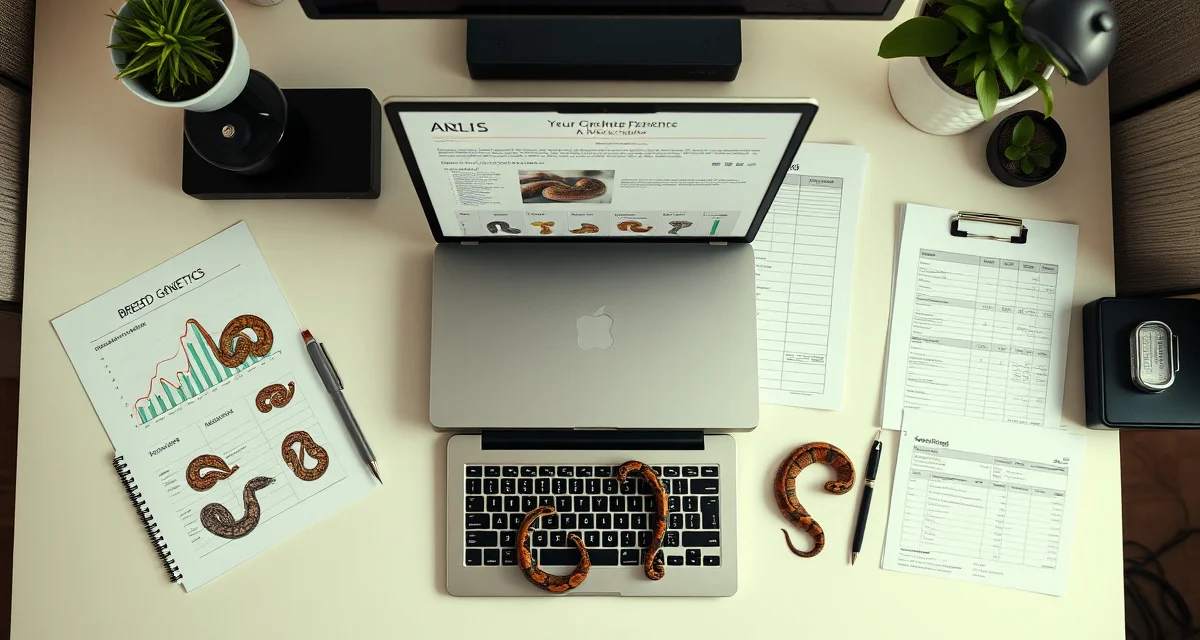
Ball Python Breeding Project Planning: How to Build Multi-Gene Morphs
By HatchLedger Editorial Team · Published 2025-04-21 · Updated Mar 13, 2026
Breeders using integrated software report 30% less time on administrative tasks, which is time you can reinvest in the work that actually moves the needle: planning better projects. A breeding project without a clear multi-year plan is just random pairings. A breeding project with a plan is a capital allocation strategy with a timeline and a projected outcome.
TL;DR
- Ball python breeding operations require systematic record-keeping from pre-season preparation through end-of-season sales.
- Females at 1,200-1,500g or more are the target weight before introducing them to a breeding male.
- Ovulation detection is the key event that anchors pre-lay shed and lay date calculations.
- Clutch profitability guide depends on understanding actual cost basis per animal, not just gross sale revenue.
- Well-documented animals with complete feeding histories and clear genetic records consistently sell faster and at higher prices.
Ball python breeding projects can span 3-5 years from initial purchase to producing the target morph. Planning ahead keeps you from investing in animals that don't fit your goals and helps you build toward specific market targets rather than producing whatever comes out.
Start with the End in Mind
Before you buy a single animal for a new project, define exactly what you want to produce. Be specific:
- What morph combination is the target?
- What market are you selling into (wholesale, retail, export, specialty)?
- What's the approximate retail value of the finished animal?
- How many do you want to produce per season?
A vague goal like "I want to produce pieds" is less useful than "I want to produce clown pied males in the 350-500g range for the hobby retail market, targeting $800-1,500 each, producing 5-10 per season."
Specificity lets you work backward to determine exactly which animals you need.
Working Backward from Your Target
Take the clown pied example. Both clown and pied are recessive traits, so both parents need to carry both genes for you to produce visual animals.
- Target: Clown pied (visual clown, visual pied)
- Required: Both parents must be het clown AND het pied
- Option A: Start with an animal that's visual for one trait and het for the other (e.g., visual pied 100% het clown x het pied het clown)
- Option B: Breed your way into the double het population from animals that are het for each single gene separately (longer, requires an intermediate generation)
Option A gets you to target morphs faster but requires purchasing animals that are already het for both genes, which costs more upfront. Option B takes longer but may allow you to start with less expensive animals.
Calculate the cost of each path, including purchase prices, housing costs per year, and feeding costs across the generation timeline.
Project Timelines by Morph Type
Single recessive projects (e.g., producing visual clowns when you start with hets): This is a one-generation project. Breed het to het, produce 25% visual offspring.
Double recessive projects (e.g., clown pied): Minimum one generation if you have double hets, but typically 2+ generations if you're building het populations.
Co-dominant + recessive combinations (e.g., pastel pied): Faster than double recessive because you can see the co-dominant gene immediately. Breed pastel het pied to het pied, produce pastel pieds and super pastel pieds in the first generation.
Three-gene combinations: These can take 3-4 generations to fully realize and require a larger collection to work efficiently. Not recommended for breeders producing fewer than 10 clutches per season.
Acquisition Strategy
Once you know what you need, think carefully about how to acquire it:
Buying finished breeding animals: Fastest path to production but highest upfront cost. A proven female double het for two recessive traits can cost $1,000-3,000+ depending on the traits.
Buying juveniles and growing them up: Lower upfront cost, but adds 1-2 years before you can breed. The animal needs to reach appropriate weight and age before pairing.
Trading: Many breeders will trade animals rather than selling, particularly within the community. If you have animals that complement what another breeder is working on, a trade can be mutually beneficial.
Breeding into the project from existing animals: If you already have animals that carry some of the target genes, you can start there and breed toward the goal. This is the slowest path but has the lowest cash outlay.
Managing Project Costs
Building the cost tracking for a breeding project from the start gives you a clear picture of your actual P&L when the target animals finally sell. Project costs include:
- Purchase prices for all animals in the project
- Housing costs (enclosures, equipment, electrical)
- Feeding costs over the project timeline
- Veterinary costs
- Show fees or listing fees when selling
Most breeders notably underestimate the cost of carrying animals for 2-3 years while building toward a target morph. A female you pay $800 for as a juvenile costs another $200-400 in housing and feeding over two years before she produces her first clutch.
HatchLedger's P&L tracking lets you tag costs to specific animals and projects, giving you an accurate running cost that makes the final ROI calculation accurate rather than estimated.
Tracking Project Progress
A breeding project that spans multiple years needs regular check-ins:
- Are you on track to produce target animals in the expected timeframe?
- Have market conditions changed? Is the target morph still commanding the price you planned for?
- Did an animal in the project get sick, die, or turn out to not carry the expected genes?
- Have new morphs emerged that make a different combination more valuable?
Update your project plan annually, at minimum. The ball python market moves. A morph that was selling for $3,000 when you started a project might be at $800 by the time you produce it. Plan for price degradation on any morph that's currently at a premium.
When to Abandon a Project
Not every project should run to completion. Consider cutting losses when:
- The target morph has seen notable price drops that make the ROI unattractive
- A key animal in the project dies or turns out to carry unexpected genetics guide
- You've been offered a high price for animals in the project that exceeds their likely value as breeding stock
- A better opportunity has emerged that would be more efficiently pursued with the resources tied up in the current project
There's no shame in selling out of a project. The alternative is continuing to feed, house, and breed toward a goal that no longer makes financial sense. Use your records to make a clear-eyed evaluation.
Integration with Broader Collection Planning
Your breeding projects don't exist in isolation. They share space, resources, and time with your entire collection. Keep track of how many active projects you're running simultaneously and whether you have the resources to run them all effectively.
Most professional breeders who've been in the hobby for 5+ years have learned this through experience: running 3 focused projects well beats running 8 projects poorly. The HatchLedger reptile breeder platform gives you a collection-wide view that makes it easy to see which projects are consuming the most resources and producing the best returns.
Frequently Asked Questions
What is the best approach to ball python breeding project planning?
Start by defining the exact morph combination you want to produce and working backward to determine what animals you need. Calculate the full project timeline based on how many generations are required and the growth timeline of any animals you'll need to buy as juveniles. Build in realistic cost tracking from the first acquisition.
How do professional breeders handle ball python breeding project planning?
Experienced breeders maintain project plans that span multiple years and update them annually, accounting for market changes, animal availability, and actual vs. projected costs. They typically run a small number of focused projects rather than many diffuse ones, and they use financial tracking to evaluate whether projects are still worth continuing as market conditions evolve.
What records should every reptile breeder maintain per animal?
At minimum: acquisition date and source, morph and genetic documentation, feeding log, weight history, any veterinary treatments, and breeding history including pairing dates, clutch of origin for captive-bred animals, and offspring records. These records serve your own management, buyer documentation, regulatory compliance, and long-term genetic tracking.
How should reptile breeders document genetics for buyers?
A complete genetic record for sale includes the animal's visual morph name, confirmed het genes and their basis (parentage documentation or proven-out production), possible het genes with probability percentages, hatch date, and parent morph information. Including clutch-of-origin records lets buyers independently verify the claims.
What is Ball Python Breeding Project Planning: How to Build Multi-Gene Morphs?
Ball python breeding project planning for multi-gene morphs is a structured approach to selectively pairing ball pythons over multiple generations to produce animals carrying specific combinations of genetic traits. Rather than making random pairings, breeders define a target morph, identify the animals needed to reach it, and map out a 3-5 year roadmap covering purchases, pairings, and projected offspring—turning a hobby into a capital allocation strategy with measurable outcomes.
How much does Ball Python Breeding Project Planning: How to Build Multi-Gene Morphs cost?
Planning a multi-gene ball python project itself has no fixed cost, but the financial investment depends heavily on which morphs you're targeting. Founder animals carrying rare recessive or co-dominant genes can range from a few hundred to several thousand dollars each. The planning framework—whether pen-and-paper or breeding management software—helps you model cost basis per animal, project clutch profitability, and avoid expensive purchases that don't fit your genetic roadmap.
How does Ball Python Breeding Project Planning: How to Build Multi-Gene Morphs work?
The process starts by defining your target morph, then working backward to identify which genes are required and which animals you need to acquire. You pair proven animals strategically each season, track ovulation events to anchor pre-lay shed and lay date calculations, document every clutch and feeding record, and evaluate offspring against your multi-year plan. Software tools can reduce administrative overhead by around 30%, freeing more time for animal care and project decisions.
What are the benefits of Ball Python Breeding Project Planning: How to Build Multi-Gene Morphs?
A structured breeding plan eliminates guesswork and prevents costly mismatched purchases. It gives you a timeline with projected outcomes, a clear cost basis for each animal, and documented genetic and feeding histories that make animals easier to sell at higher prices. Buyers consistently pay more for well-documented snakes. Planning also lets you spot when a project is off-track early, before you've sunk additional seasons of investment into animals that won't reach your target.
Who needs Ball Python Breeding Project Planning: How to Build Multi-Gene Morphs?
Any ball python keeper moving beyond casual pairings benefits from formal project planning—particularly those working toward complex multi-gene combinations like combos involving multiple recessives. It's especially valuable for breeders treating their collection as a business, since tracking actual costs versus gross revenue determines real profitability. Hobbyists scaling up, full-time reptile breeders, and anyone targeting specific high-value market morphs will get the most from a disciplined planning approach.
How long does Ball Python Breeding Project Planning: How to Build Multi-Gene Morphs take?
Most multi-gene ball python projects run 3-5 years from initial animal acquisition to consistently producing the target morph. The timeline depends on how many generations are needed to stack the required genes, female growth rates (females should reach 1,200-1,500g before breeding), and annual clutch success rates. Projects combining two or more recessive traits typically take longer than those using co-dominant genes, since recessives require het-to-het pairings to express visually.
Related Articles
Sources
- USARK (United States Association of Reptile Keepers)
- Association of Reptilian and Amphibian Veterinarians (ARAV)
- World of Ball Pythons (WoBP genetics reference database)
- MorphMarket (reptile industry marketplace)
- Reptiles Magazine (Bowtie Inc.)
Get Started with HatchLedger
Every part of a ball python breeding operation -- from pairing records to clutch documentation to financial tracking -- works better when the data is connected rather than scattered across notebooks and spreadsheets. HatchLedger is built for exactly that. Try it free with up to 20 animals.