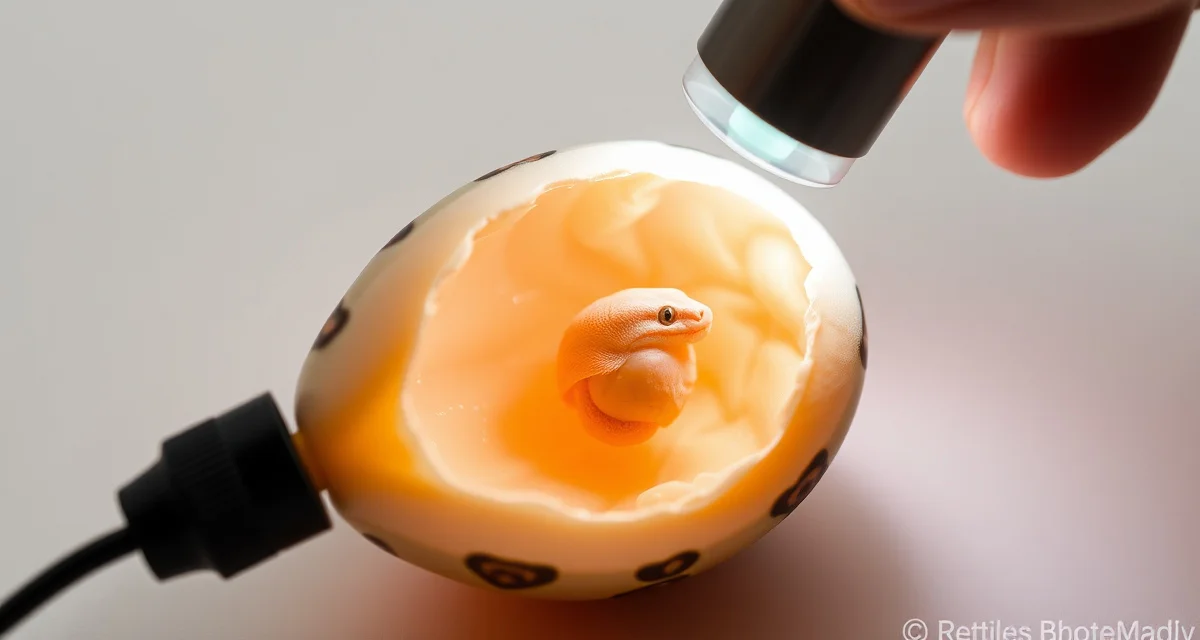
Ball Python Egg Candling: What to Look For
Egg candling is one of those skills that takes about 10 minutes to learn and a couple of seasons to actually get good at. The principle is simple, shine a bright light through the egg to see what's inside. In practice, knowing what you're looking at, when to candle, and how to interpret what you see takes experience.
TL;DR
- Ball python breeding operations require systematic record-keeping from pre-season preparation through end-of-season sales.
- Females at 1,200-1,500g or more are the target weight before introducing them to a breeding male.
- Ovulation detection is the key event that anchors pre-lay shed and lay date calculations.
- Clutch profitability guide depends on understanding actual cost basis per animal, not just gross sale revenue.
- Well-documented animals with complete feeding histories and clear genetic records consistently sell faster and at higher prices.
Breeders using integrated software report 30% less time on administrative tasks, giving you more time for the careful observation that makes egg candling useful.
Why Candling Matters
The main reason to candle ball python eggs is to assess viability, to distinguish fertile developing eggs from infertile or compromised ones. Secondary reasons include:
- Monitoring development progress through incubation
- Identifying stuck eggs that need intervention
- Getting an early read on clutch fertility for planning purposes
Candling won't change what happens inside an egg. But it gives you information that affects how you manage the clutch and what you tell buyers when you know the likely hatch composition.
The Ball Python Egg Candling Guide
Step 1: Wait Until the Right Time to Candle
Don't candle immediately after pulling the clutch. The earliest you'll see meaningful development is 7-10 days into incubation. Before that, you're mostly confirming that there are yolk structures inside, which isn't particularly informative.
The most useful candle window is 14-21 days into incubation. By this point, fertile eggs should show visible blood vessel development, and clear (infertile) or compromised eggs will look noticeably different.
Step 2: Set Up Your Candling Environment
You need a bright, focused light source and a dark environment. A high-lumen penlight or flashlight works well. A dedicated egg candler (designed for poultry eggs) works even better, the shape allows you to press it directly against the egg surface.
Do this in a dark room or closet for maximum contrast. The difference in what you can see in a lit room versus a dark room is notable.
Step 3: Hold the Egg Correctly
Gently cup the egg in your palm and press the light source against the wider end or side. Don't squeeze. Don't hold the light too close to the narrower end where the air cell typically develops.
Ball python eggs are relatively large and have thick shells compared to many other reptile eggs, you'll need a bright light to see through them well.
Step 4: Identify What You're Seeing
Fertile, developing egg: You'll see a web of pink/red blood vessels spreading through the interior of the egg. Early on (day 7-14), these may be subtle. By day 21-30, they should be clearly visible. As incubation progresses, the embryo itself becomes visible as a dark mass.
Infertile (clear) egg: The interior looks uniformly clear or shows only a yellow yolk without vessel development. These eggs typically look "watery" compared to fertile eggs.
Dead embryo (collapsed or compromised): The interior may look reddish-brown or opaque without the organized vessel pattern of a healthy egg. These eggs often develop a dent or soft spot at the top and may start to smell.
Late-stage development: In the final two weeks of incubation, the entire interior appears dark, there's not much to see because the embryo now fills the egg. This is normal.
Step 5: Log What You Observe
After candling, log your observations for every egg in the clutch. Note:
- Which eggs appear fertile/developing
- Which eggs appear clear or compromised
- Any unusual observations (spots, soft areas, etc.)
- The date and day of incubation
This log gives you context for what happens at hatch. If an egg you noted as questionable at day 21 still hatches, that's useful data. If it doesn't, your log confirms it was identified early.
Step 6: Don't Over-Candle
Handling eggs means temperature disruption, even brief exposure to cooler air. It's not catastrophic, but you don't want to candle more than necessary. Two to three candling sessions per clutch (at day 14-21, around day 35, and near the expected hatch window) gives you good information without excessive disturbance.
Step 7: Know When Candling Indicates Action
If an egg develops a distinctive dent or soft spot and is stuck to other eggs, you may need to intervene. Separate the compromised egg if it's at risk of rupturing and contaminating healthy eggs.
If an egg looks clear at day 21, don't discard it prematurely. Some eggs are harder to read than others. Keep a suspected clear egg in incubation for another 2 weeks before deciding. False negatives (fertile eggs that candle poorly) exist.
The ball python breeding hub has guidance on handling problem eggs when candling reveals issues.
The reptile breeder software comparison explains how breeders with integrated tools track candling observations alongside other incubation data.
Common Candling Mistakes
Candling too early. Before day 14, there's rarely enough development to see clearly. You're more likely to disturb eggs than gain useful information.
Using an insufficiently bright light. Ball python eggs are thick-shelled. A dim flashlight won't give you the contrast you need. Use a high-lumen light source.
Discarding suspected clear eggs too quickly. Wait until day 35 before writing off an egg that looks potentially infertile. Some eggs are genuinely difficult to read.
Not logging observations. Candling data without records is just impressions. Log what you see for every egg at every candle session.
What is the best approach to ball python egg candling guide?
Candle between day 14-21 as your first assessment window, using a bright light in a dark environment. Look for blood vessel development in fertile eggs and note which eggs appear clear or compromised. Log observations for every egg. Repeat around day 35 for a second assessment, and check frequently in the final two weeks for pipping activity.
How do professional breeders handle ball python egg candling guide?
Professional breeders candle on a schedule, log every observation, and use the data to anticipate hatch composition. They don't over-candle, two to three sessions per clutch is typically sufficient. When candling indicates a compromised egg, they act based on the egg's position and condition, not on panic.
What software helps manage ball python egg candling guide?
HatchLedger allows breeders to log incubation observations including candling results alongside pairing data and expected hatch windows. When you can pull up a clutch's full incubation history at hatch, including which eggs candled clearly and which were questionable, you have context for understanding the clutch outcome.
Sources
- USARK (United States Association of Reptile Keepers)
- Association of Reptilian and Amphibian Veterinarians (ARAV)
- World of Ball Pythons (WoBP genetics guide reference)
- MorphMarket (industry marketplace data)
- Reptiles Magazine (Bowtie Inc.)
Track Your Incubation Data in HatchLedger
Get Started with HatchLedger
Every part of a ball python breeding operation -- from pairing records to clutch documentation to financial tracking -- works better when the data is connected rather than scattered across notebooks and spreadsheets. HatchLedger is built for exactly that. Try it free with up to 20 animals.