Co-Dominant Ball Python Genetics and Super Forms
By HatchLedger Editorial Team · Published 2025-04-28 · Updated Mar 13, 2026
Co-dominant genetics sit at the heart of most ball python breeding programs. The most widely produced morphs in the hobby, including Pastel, Mojave, Cinnamon, and dozens of others, are co-dominant traits. Understanding how these genes work, what super forms look like, and how to plan pairings effectively is fundamental knowledge for any serious breeder.
TL;DR
- Ball python breeding operations require systematic record-keeping from pre-season preparation through end-of-season sales.
- Females at 1,200-1,500g or more are the target weight before introducing them to a breeding male.
- Ovulation detection is the key event that anchors pre-lay shed and lay date calculations.
- Clutch profitability guide depends on understanding actual cost basis per animal, not just gross sale revenue.
- Well-documented animals with complete feeding histories and clear genetic records consistently sell faster and at higher prices.
This guide covers co-dominant inheritance in detail, explains super form genetics, addresses allelism, and walks through the planning considerations that matter when you're running a real breeding operation.
What Does Co-Dominant Mean?
In strict genetic terminology, co-dominance describes a relationship between two alleles where both are expressed simultaneously in the heterozygote. The classic example from genetics textbooks is blood type, where type AB blood expresses both A and B antigens.
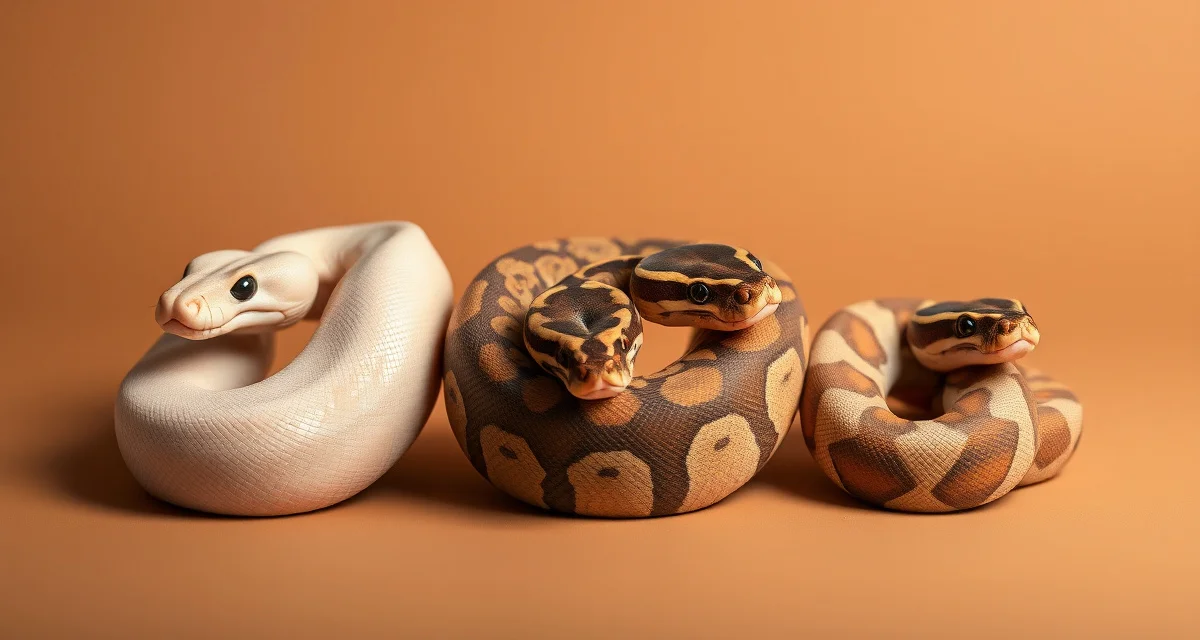
In ball python breeding, the term is used more loosely to describe a specific inheritance pattern: animals with one copy of the gene (heterozygous) look different from animals with two copies (homozygous, called the "super" form), and both look different from animals with no copies (normal wild-type). This is technically incomplete dominance rather than true co-dominance, but the ball python community uses "co-dominant" almost universally.
The practical implication is that there are three distinct phenotypes for every co-dominant morph:
- Wild-type (no copies)
- Standard morph (one copy)
- Super form (two copies)
How Co-Dominant Pairings Work
Single-Copy x Normal
When you pair a co-dominant morph to a wild-type normal:
- 50% of offspring will be single-copy visual
- 50% will be normal wild-type
Single-Copy x Single-Copy
Pairing two single-copy animals together produces:
- 25% super form (two copies)
- 50% single-copy visual
- 25% normal
This pairing is the standard way to produce super forms. The 25% normal offspring represent animals with no gene value from a single-gene perspective.
Super Form x Normal
Pairing a super form to a normal produces:
- 100% single-copy animals
Every offspring will be visual for the gene. This is particularly useful when you need to guarantee that all offspring carry a specific co-dominant gene for a combo project.
Super Form x Single-Copy
- 50% super form
- 50% single-copy
No normals produced. Both types of offspring are visual. This pairing is efficient when you have super forms and want to maximize visual output.
Key Co-Dominant Morphs and Their Super Forms
Pastel / Super Pastel
Pastel is arguably the most common co-dominant gene in the hobby. Single-copy Pastels show brightened yellow tones, reduced pattern contrast, and a white belly edge. Super Pastels are dramatically brighter with more severely reduced pattern, approaching pale yellow and white in some lines.
Pastel is often called a "multiplier" gene because it improves the expression of almost every morph it's added to. Most serious breeding programs include Pastel in some form, even if only as a component in complex combos.
Mojave / Super Mojave (Blue-Eyed Lucy)
Mojave is one of the most prized co-dominant genes. The single-copy Mojave shows angular, reduced-pattern blotches with tan blushing. The Super Mojave, however, is a pure white or cream animal with striking blue eyes, commonly called a Blue-Eyed Lucy (BEL).
BEL animals can be produced through multiple allelic genes at the same locus (Mojave, Lesser, Butter, Russo, Phantom). Pairing any two of these allelic genes together also produces BEL animals, which has made BEL production accessible from multiple directions.
Lesser / Butter / Super Lesser-Butter (BEL)
Lesser and Butter are allelic to Mojave. Single-copy Lesser and Butter are lighter, more yellow-toned versions of normal with reduced pattern. Super Lesser and Super Butter are both BEL animals. Pairing Lesser x Mojave also produces BEL, since they're at the same gene locus.
Cinnamon / Super Cinnamon
Cinnamon darkens the animal notably with a deep brown, red-toned coloration and reduced pattern. The Super Cinnamon is nearly black. Cinnamon and Black Pastel are allelic to each other at the same locus, and Cinnamon x Black Pastel produces an intermediate super-like animal.
Super Cinnamon animals may exhibit a wobble similar to Spider, and ethical considerations about producing wobble animals apply here.
Black Pastel / Super Black Pastel
Black Pastel produces darker animals with a purple-brown overlay and clean pattern. Super Black Pastel is intensely dark, nearly black with some retained pattern. Allelic with Cinnamon as noted above.
Enchi / Super Enchi
Enchi enhances orange and reduces pattern in a way that's often subtle in single-copy animals but dramatic in combos. Super Enchi is a noticeably brighter, more orange-dominant animal. Enchi is widely used as a combo enhancer because of its color-boosting effect on other morphs.
Orange Dream / Super Orange Dream
OD (Orange Dream) brightens orange tones with a characteristic reduced head pattern. Super OD is a white or near-white animal. OD is particularly valued in combos where it contributes clean dorsal patterning and enhanced orange.
Pinstripe / Super Pinstripe
Pinstripe creates a clean dorsal banding with reduced lateral pattern. Super Pinstripe is an extremely pattern-reduced, high-contrast animal. Pinstripe stacks well with other genes and is a popular combo component in both single-dominant and complex morph projects.
Spotnose / Super Spotnose
Spotnose produces a subtle pattern change with a spotted or pocked nose area. The Super Spotnose is a dramatic white or light-colored animal with heavily reduced pattern. Spotnose is allelic with several other genes (Ball, Woma, Desert Ghost depending on interpretation).
Allelism: When Co-Dominant Genes Share a Locus
Some of the most commercially important co-dominant relationships involve genes that are allelic, meaning they occupy the same position (locus) on the chromosome. When two allelic genes meet in the same animal, interesting things happen:
- You can't have two copies of different alleles in the same animal (since there are only two chromosome copies)
- Pairing two allelic-gene animals together produces animals that express both alleles simultaneously
- The visual outcome of an allelic combination is often distinctly different from either single-gene parent
The BEL complex (Mojave, Lesser, Butter, Russo, Phantom) is the most commercially notable allelic group. Understanding which genes are allelic matters for pairing planning because the outcomes are different from what a standard co-dom x normal pairing produces.
The ball python morph calculator accounts for allelism in pairing predictions, which is why using a calculator rather than doing this math manually is so important for complex pairings.
Planning Super Form Projects
Producing super forms requires two animals carrying the same co-dominant gene. The fastest route is single-copy x single-copy, which produces 25% super forms. Many breeders reserve super form animals from this pairing for use in their own breeding program (pairing super to single-copy guarantees 50% super offspring in subsequent clutches).
The strategic question is when to sell super forms versus keep them as breeding animals. Super forms of popular morphs command price premiums over single-copy animals. But a super form in your own breeding collection produces more single-copy animals than single-copy x single-copy pairings, which can increase output of visual animals from a given breeding season.
This is a financial modeling exercise. Knowing the market value of your super forms, your single-copy animals, and the expected clutch size from each pairing type lets you run the numbers. The HatchLedger platform connects your genetic records to your financial tracking, which means you can actually run these comparisons against real data from your operation rather than working from rough estimates. Breeders using integrated software report 30% less time on administrative tasks because this kind of cross-data analysis doesn't require assembling information from multiple sources.
Super Forms with Health Considerations
Several co-dominant super forms are associated with neurological conditions that affect animal welfare. The wobble associated with Spider (dominant, not co-dominant, but related context) and the neurological issues seen in some Super Cinnamon and Super Black Pastel animals are the most well-documented.
If you're working with genes where super forms carry welfare concerns, you need to be informed about the current state of the discussion in the breeding community and make deliberate choices. Ethical breeding practice means understanding these issues and having a clear position on producing and selling affected animals.
Genetic Record-Keeping for Co-Dominant Projects
Co-dominant projects require less multi-generation tracking than recessive projects, since there are no hidden carriers to track. But the complexity of running multiple co-dom genes simultaneously, tracking which animals carry which combos, and linking pairing outcomes to financial records still requires more than a casual spreadsheet.
The reptile breeder software comparison shows how different tools compare for genetic record management. For co-dominant projects, the key features are accurate phenotype recording for every animal, easy retrieval of which animals carry specific genes when planning pairings, and financial tracking that connects genetic value to your breeding P&L.
Frequently Asked Questions
What is the best approach to co-dominant ball python genetics?
Understand the three-phenotype model (normal, single-copy, super form) and plan pairings based on which outcomes you're targeting. Use a morph calculator for all pairings involving multiple genes, especially allelic genes where the standard co-dom pairing math doesn't apply. Track genetic records for every animal in your collection so pairing planning doesn't require reconstructing history from memory.
How do professional breeders handle co-dominant ball python genetics?
Professional breeders treat co-dominant genes as the foundational layer of their breeding program, using them to create combo animals that combine co-dom enhancers with high-value recessive genes. They maintain accurate genetic records for every animal, use morph calculators for pairing planning, and make informed decisions about super form production based on market value and their own breeding program needs.
What records should every reptile breeder maintain per animal?
At minimum: acquisition date and source, morph and genetic documentation, feeding log, weight history, any veterinary treatments, and breeding history including pairing dates, clutch of origin for captive-bred animals, and offspring records. These records serve your own management, buyer documentation, regulatory compliance, and long-term genetic tracking.
How should reptile breeders document genetics for buyers?
A complete genetic record for sale includes the animal's visual morph name, confirmed het genes and their basis (parentage documentation or proven-out production), possible het genes with probability percentages, hatch date, and parent morph information. Including clutch-of-origin records lets buyers independently verify the claims.
What is Co-Dominant Ball Python Genetics and Super Forms?
Co-dominant ball python genetics refers to a inheritance pattern where a single copy of a gene produces a visually distinct morph, and two copies produce a 'super form' with an even more dramatic appearance. Common co-dominant morphs include Pastel, Mojave, Cinnamon, and Spider. Unlike recessive traits, co-dominant genes are visible in every animal that carries them, making them foundational to most ball python breeding programs and morph combinations.
How much does Co-Dominant Ball Python Genetics and Super Forms cost?
Co-dominant ball python morphs vary widely in price depending on the specific gene, rarity, and combination. Basic co-dominant morphs like Pastel or Cinnamon hatchlings often sell for $50–$150, while super forms typically fetch $150–$400. Rarer co-dominant genes or high-demand combos can command $500 or more. Prices shift with market trends, breeder reputation, and whether the animal carries additional recessive or other co-dominant genes.
How does Co-Dominant Ball Python Genetics and Super Forms work?
Co-dominant genes work by expressing a phenotypic change when even one copy is present. When a ball python inherits one co-dominant allele, it displays the morph visually. When it inherits two copies — one from each parent — it expresses the super form, which is homozygous for that gene. Breeders can predictably produce super forms by pairing two animals carrying the same co-dominant trait together.
What are the benefits of Co-Dominant Ball Python Genetics and Super Forms?
Co-dominant morphs offer several practical advantages for breeders. Every carrier is visually identifiable, eliminating guesswork about genetic status. Super forms are reliably produced by pairing two copies of the same gene. These morphs stack well with other traits, enabling complex, high-value combinations. For newer breeders, co-dominant genes provide immediate visual feedback and a straightforward entry point into understanding ball python inheritance and morph production.
Who needs Co-Dominant Ball Python Genetics and Super Forms?
Anyone involved in ball python breeding benefits from understanding co-dominant genetics — from hobbyists producing their first clutches to professional breeders running multi-animal operations. If you're purchasing morphs, planning pairings, or evaluating animals for resale, knowing how co-dominant traits are inherited helps you assess genetic value accurately. Breeders working toward specific multi-gene projects particularly need this foundation to predict outcomes and avoid costly pairing mistakes.
How long does Co-Dominant Ball Python Genetics and Super Forms take?
Co-dominant traits express immediately — every hatchling either shows the morph or doesn't, with no waiting required. From a breeding timeline perspective, producing super forms takes at least one full season: pairing two co-dominant animals, incubating the clutch roughly 55–60 days, and hatching. Planning a multi-gene project involving co-dominant traits across generations may take two to three seasons depending on your founding animals and target combination.
Sources
- World of Ball Pythons (WoBP genetics reference database)
- USARK (United States Association of Reptile Keepers)
- Association of Reptilian and Amphibian Veterinarians (ARAV)
- Ball Python genetics community resources
- MorphMarket (morph identification and pricing data)
Get Started with HatchLedger
Every part of a ball python breeding operation -- from pairing records to clutch documentation to financial tracking -- works better when the data is connected rather than scattered across notebooks and spreadsheets. HatchLedger is built for exactly that. Try it free with up to 20 animals.