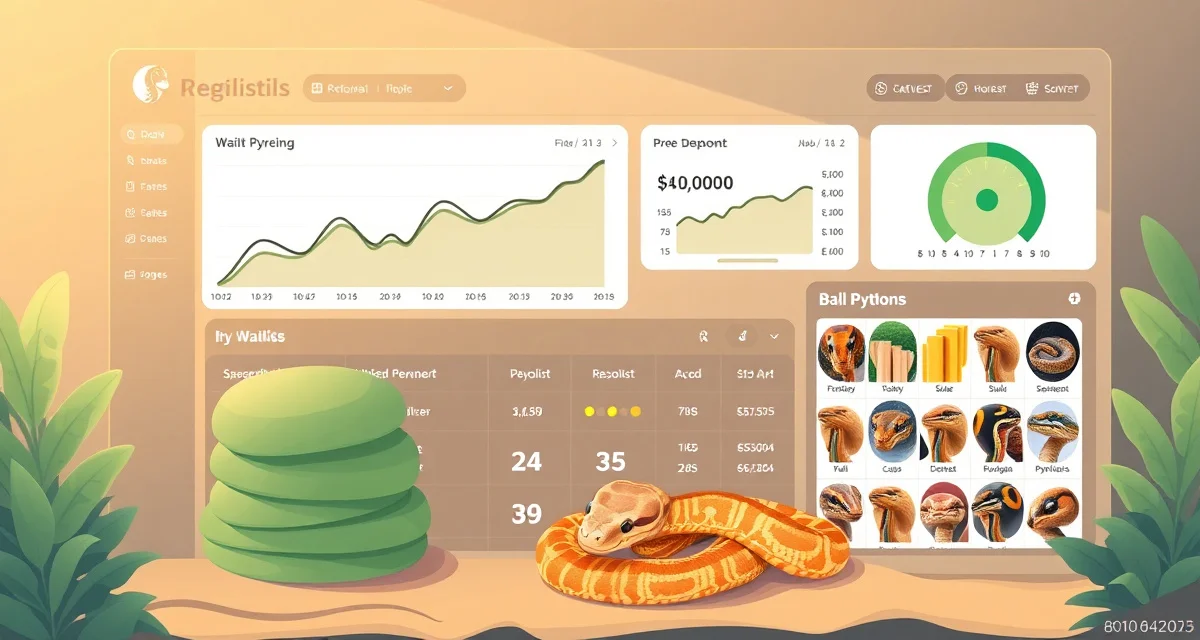
Case Study: How a Waitlist Generated $40K Pre-Season
Pre-selling animals before they hatch sounds like a fantasy for most breeders who are used to listing on MorphMarket and waiting for buyers to find them. But it's a real strategy, and it fundamentally changes the financial dynamics of a breeding operation. When buyers have committed deposits before your season starts, you know your revenue before your eggs are laid.
TL;DR
- Ball python breeding operations require systematic record-keeping from pre-season preparation through end-of-season sales.
- Females at 1,200-1,500g or more are the target weight before introducing them to a breeding male.
- Ovulation detection is the key event that anchors pre-lay shed and lay date calculations.
- Clutch profitability guide depends on understanding actual cost basis per animal, not just gross sale revenue.
- Well-documented animals with complete feeding histories and clear genetic records consistently sell faster and at higher prices.
This case study walks through how a mid-scale breeder built a waitlist that generated $40,000 in pre-season deposit commitments, what it took to get there, and how it changed their operation.
The Context: Before the Waitlist
The breeder in this case study had been producing ball pythons for five years before implementing a waitlist strategy. Their operation included 40-50 animals, 12-15 pairings per season, and revenue of $18,000-25,000 per year from MorphMarket sales.
The MorphMarket experience was frustrating in specific ways:
- Animals sat unsold for 3-6 weeks during peak season when competition was highest
- Pricing pressure from competing listings forced periodic price reductions
- Buyers ghosted after extended messaging without committing
- Revenue was unpredictable: some seasons moved quickly, others stalled
The breeder was producing genuinely good animals. The problem was sales infrastructure, not genetics guide or quality.
Building the Foundation: What Came First
A waitlist doesn't work without an audience. Before any waitlist mechanics, the breeder spent six months building visibility:
Consistent Instagram presence. Three posts per week: new hatchlings, breeding pairs, behind-the-scenes care content. Not random, a deliberate mix of animal showcase content (what buyers want to see) and educational content (what establishes expertise). Follower count grew from 1,200 to 4,800 over six months.
Email list building. A simple landing page with a sign-up form offering "early access to hatchlings." Promoted through Instagram bio link and occasional posts. Built to 680 subscribers by the time the waitlist launched.
MorphMarket profile improvement. Updated all photos to consistent, high-quality shots. Added detailed descriptions including genetic documentation. Improved response time to under two hours during business hours. Seller rating improved, listing views increased.
This foundation work is what most breeders skip. They want to open a waitlist immediately, but nobody joins a waitlist from a breeder they've never heard of.
Launching the Waitlist
The waitlist launched in April, before the breeding season began in earnest. The structure was simple:
Waitlist tiers by genetic interest:
- Tier A: High-value combos (Banana Clown, Pied combos, BEL combos), $250 deposit
- Tier B: Single recessive visuals and strong co-dom combos, $150 deposit
- Tier C: Standard co-dom animals and hets, $75 deposit
Deposits were non-refundable but fully transferable to any animal in the collection if the specific requested animal wasn't produced.
The ask was specific: Waitlist members were asked what they were looking for in terms of genes, sex preference, price range, and timeline (they understand this is a pre-season commitment). This specificity served two purposes: it filtered serious buyers from casual lookers, and it gave the breeder information to plan pairings around actual buyer demand.
Communication was transparent: The waitlist email announced exactly which pairings were planned for the season, what the expected offspring ratios were, what the timeline would be for hatching, and what would happen if specific animals weren't produced.
The Response
Within 60 days of launching:
- 23 paid deposits at various tier levels
- $40,000 in total deposit commitments (some buyers deposited for multiple animals or at higher amounts than the minimum)
- A clear picture of which genetics were in highest demand
The $40,000 wasn't revenue yet. It was committed deposits against animals that hadn't hatched. But the effect on the breeder's financial position was immediate: they knew before a single egg was laid that the season was going to be profitable, regardless of MorphMarket competition.
What Happened During the Season
Animals started hatching in August. Waitlist buyers were contacted as relevant animals became available, given 48 hours to complete payment or pass. Only 2 of 23 depositors passed on their first offer. Both found suitable alternatives from the season and completed their purchases.
Total waitlist revenue: $52,000 (deposits plus final payments on 21 successful transactions).
Total MorphMarket revenue from remaining animals: $9,000 (animals produced beyond waitlist commitments).
Total season revenue: $61,000, up from an average of $22,000 in previous seasons.
The additional $39,000 wasn't entirely from higher prices. Some of it was from better-matched sales (waitlist buyers were specifically seeking the animals, so there was less price negotiation). Some was from reduced listing effort and MorphMarket fee exposure. And some was genuinely from being able to price appropriately because buyers were committed rather than shopping.
What Made It Work
The audience already existed. The six months of content building before the waitlist launch created the pool of engaged followers who became waitlist members. Without that foundation, the waitlist would have launched to silence.
The deposits were real commitment. Non-refundable deposits filtered out buyers who were browsing. Everyone who put money down was serious. The conversion rate from deposit to completed sale was 91%.
Communication was consistent. Waitlist members received monthly updates during the season: how conditioning was going, first lock observations, expected hatch windows. This kept them engaged and reduced the anxiety of waiting months for an animal.
Record-keeping supported the operation. With 23 waitlist buyers, each with specific animal preferences, deposit amounts, and communication histories, managing this without a system would have been chaotic. The breeder used HatchLedger to track which animals from each clutch matched which waitlist requests, logging buyer preferences against projected genetic outcomes.
The HatchLedger platform connects husbandry logs to clutch outcomes and financial data, which is exactly what supporting a waitlist operation requires. Breeders using integrated software report 30% less time on administrative tasks. Managing 23 active buyer relationships alongside a full breeding season is only feasible if the record-keeping doesn't consume hours you don't have.
Year Two: Scaling the Waitlist
After a successful first waitlist season, the breeder expanded the approach. The Instagram following had grown to 8,000. The email list had 1,400 subscribers. The second-season waitlist launched with 47 deposits before the breeding season began.
The process itself had also been refined: clearer pairing announcements, better communication timing, and an improved deposit structure that matched buyer commitment levels more precisely to the genetic value of what they were seeking.
The reptile breeder software comparison covers tools that support this kind of integrated sales management alongside breeding operations.
Frequently Asked Questions
What is the best approach to ball python waitlist revenue case study?
Build an engaged audience before launching a waitlist, through consistent social media content and email list building over at least three to six months. Make the waitlist structure clear and simple with genuine deposit commitments that filter serious buyers. Communicate transparently throughout the season so buyers stay engaged and confident in their purchase.
How do professional breeders handle ball python waitlist revenue case study?
Professional breeders with established waitlists treat buyer relationship management as a core business function. They communicate regularly throughout the breeding season, match specific animals to specific buyer preferences as hatchlings emerge, and use their waitlist data to inform which genetic pairings to prioritize in subsequent seasons.
What records should every reptile breeder maintain per animal?
At minimum: acquisition date and source, morph and genetic documentation, feeding log, weight history, any veterinary treatments, and breeding history including pairing dates, clutch of origin for captive-bred animals, and offspring records. These records serve your own management, buyer documentation, regulatory compliance, and long-term genetic tracking.
How should reptile breeders document genetics for buyers?
A complete genetic record for sale includes the animal's visual morph name, confirmed het genes and their basis (parentage documentation or proven-out production), possible het genes with probability percentages, hatch date, and parent morph information. Including clutch-of-origin records lets buyers independently verify the claims.
Sources
- USARK (United States Association of Reptile Keepers)
- Association of Reptilian and Amphibian Veterinarians (ARAV)
- World of Ball Pythons (WoBP genetics reference database)
- MorphMarket (reptile industry marketplace)
- Reptiles Magazine (Bowtie Inc.)
Get Started with HatchLedger
Every part of a ball python breeding operation -- from pairing records to clutch documentation to financial tracking -- works better when the data is connected rather than scattered across notebooks and spreadsheets. HatchLedger is built for exactly that. Try it free with up to 20 animals.