10 Common Ball Python Breeding Mistakes to Avoid
Every breeder makes mistakes, especially early on. Some are costly, some are just frustrating, and a few are genuinely dangerous for your animals. These ten mistakes come up repeatedly in online communities and from breeders reflecting on what they'd do differently.
TL;DR
- Ball python breeding operations require systematic record-keeping from pre-season preparation through end-of-season sales.
- Females at 1,200-1,500g or more are the target weight before introducing them to a breeding male.
- Ovulation detection is the key event that anchors pre-lay shed and lay date calculations.
- Clutch profitability guide depends on understanding actual cost basis per animal, not just gross sale revenue.
- Well-documented animals with complete feeding histories and clear genetic records consistently sell faster and at higher prices.
1. Breeding Females Before They're Ready
Breeding a female at too low a body weight is probably the most common costly mistake beginners make. If your female isn't at 1,200 grams at minimum, and ideally 1,500 grams or more, wait another season. The risks are real: all-slug clutches, dystocia, prolonged post-lay anorexia, and a shortened productive lifespan.
One more season of growth almost always produces better outcomes than forcing an underconditioned female into breeding.
2. Not Tracking Pairing Dates
Without a record of when introductions happened and which male was used, you can't calculate expected ovulation timing, pre-lay shed timing, or hatch dates. When something goes wrong mid-season, you have no data to work backward from.
Track every introduction: date, which male, how long, and whether breeding behavior was observed. This becomes critical when you're managing five or ten females at once.
3. Ignoring Ovulation
If you're not checking females frequently enough during breeding season, you'll miss the ovulation event. Miss that, and your expected timeline for pre-lay shed and hatch date is guesswork. Watch your females closely from November through February and document any swelling event you observe.
4. Temperature Errors in the Incubator
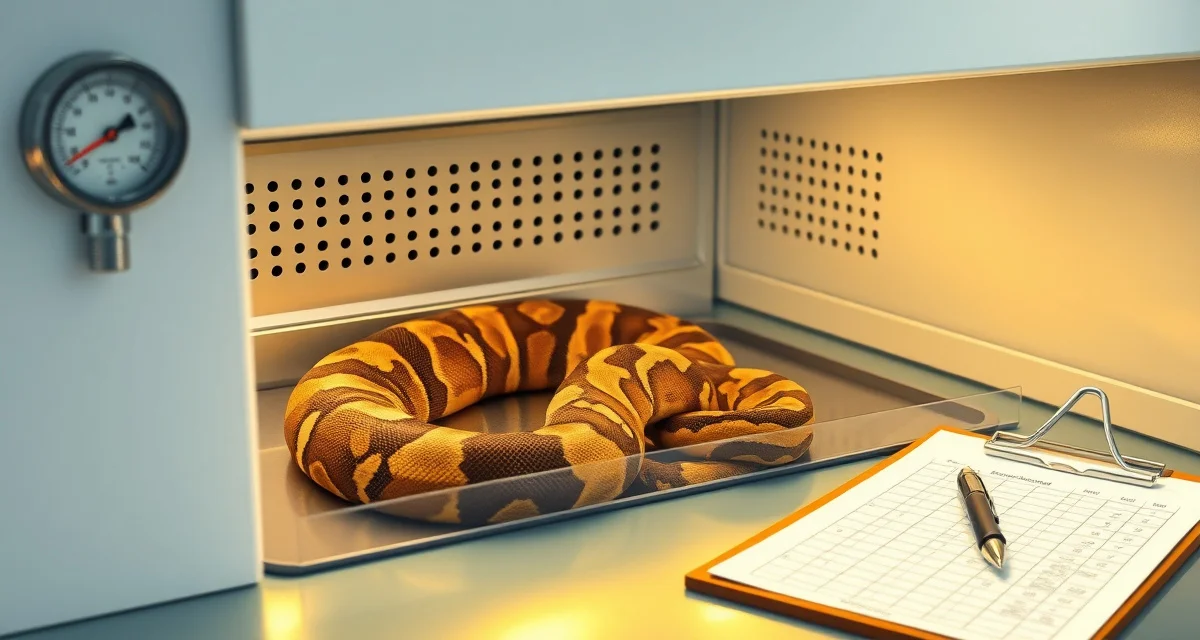
Not calibrating your incubator before the season is a mistake that can cost you an entire clutch. Incubator displays are frequently off by two or more degrees. Running a secondary probe and comparing readings before you put eggs in is basic practice that too many beginners skip.
A two-degree error at 90°F versus 88°F sustained over 60 days isn't a small thing.
5. Buying genetics guide Without Doing the Research
Buying an animal because it "looks cool" without understanding the genetics you're acquiring is how you end up with a collection that doesn't make productive pairings. Before you buy any breeder, understand what it contributes to a pairing and what pairings you'd need to realize its potential.
Run the genetics through a calculator. Read the specific morph page. Know what you're buying and why.
6. Misrepresenting Genetics When Selling
Overstating het percentages, claiming 100% het status without documentation, or mislabeling morphs is the fastest way to destroy your reputation in a small community. Ball python buyers talk. Forums and social media remember misrepresented animals.
Err on the conservative side. When in doubt, be honest about uncertainty.
7. No Feeding Records for Hatchlings
Selling a hatchling that hasn't established feeding is unfair to the buyer and damaging to your reputation when the animal refuses to eat for the new owner. Every hatchling should have a minimum of 3 to 5 documented meals before it leaves your collection.
Document every feeding attempt and outcome. That record protects both you and the buyer.
8. Neglecting Financial Tracking
Feeling busy and profitable isn't the same as being profitable. If you're not tracking what you spent on breeding stock, feed, electricity, and supplies against your actual sale revenue, you don't know if your operation is making or losing money.
Many breeders who run for several years without tracking find out when they finally do the math that they've been losing money on certain projects the whole time.
9. Not Having a Vet Relationship
Ball pythons get sick, get mites, have respiratory infections, and sometimes need emergency intervention during difficult lays. Finding a reptile vet after an emergency starts is worse than having one before you need them. Establish a relationship with a reptile-capable vet before breeding season starts.
10. Scaling Too Fast
It's easy to get excited after a good first season and buy ten more females. Animal care degrades when you expand faster than your systems, space, and time can support. Growing too fast leads to overlooked health issues, missed feeding responses, and animals that don't get the attention they need.
Grow your collection at a pace where you can genuinely care for every animal well.
Building Better Systems
Most of these mistakes share a root cause: insufficient recordkeeping and planning. When you track pairings, weights, ovulation, feeding records, and financials systematically, you catch problems earlier and make better decisions.
The ball python breeding hub goes deeper on building a professional operation. Compare the reptile breeder software options available to find what works for your operation size and management style.
Frequently Asked Questions
What are the most common ball python breeding mistakes?
Breeding females at too low a weight, not tracking pairing dates, incubator calibration errors, and neglecting financial tracking are among the most common and costly mistakes. Most are preventable with basic recordkeeping discipline.
How do professional breeders avoid ball python breeding errors?
They build systematic processes: weight thresholds before breeding, calibrated equipment, documented pairing logs, and regular financial reconciliation. Experience catches edge cases, but systems prevent the common mistakes.
What software helps prevent ball python breeding mistakes through better records?
HatchLedger is purpose-built for reptile breeders, connecting animal records, breeding history, clutch outcomes, and financial tracking in one connected system. Unlike general spreadsheets or notes apps, it's designed around the specific workflow of an active breeding season -- from pairing records through hatchling inventory and sales documentation. Free for up to 20 animals.
What records should every reptile breeder maintain per animal?
At minimum: acquisition date and source, morph and genetic documentation, feeding log, weight history, any veterinary treatments, and breeding history including pairing dates, clutch of origin for captive-bred animals, and offspring records. These records serve your own management, buyer documentation, regulatory compliance, and long-term genetic tracking.
How should reptile breeders document genetics for buyers?
A complete genetic record for sale includes the animal's visual morph name, confirmed het genes and their basis (parentage documentation or proven-out production), possible het genes with probability percentages, hatch date, and parent morph information. Including clutch-of-origin records lets buyers independently verify the claims.
Sources
- USARK (United States Association of Reptile Keepers)
- Association of Reptilian and Amphibian Veterinarians (ARAV)
- World of Ball Pythons (WoBP genetics reference database)
- MorphMarket (reptile industry marketplace)
- Reptiles Magazine (Bowtie Inc.)
Get Started with HatchLedger
Every part of a ball python breeding operation -- from pairing records to clutch documentation to financial tracking -- works better when the data is connected rather than scattered across notebooks and spreadsheets. HatchLedger is built for exactly that. Try it free with up to 20 animals.