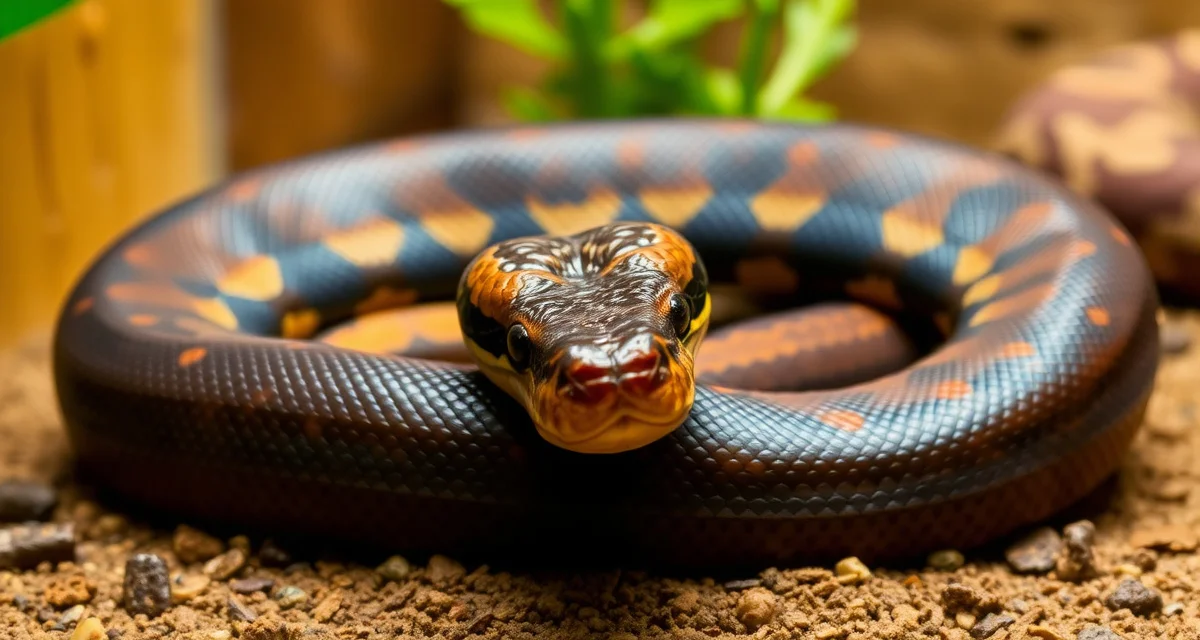
Blood Python Common Health Issues: Complete Breeder Guide
By HatchLedger Editorial Team · Published 2025-04-14 · Updated Mar 13, 2026
Blood pythons have a health profile that's partly defined by species-specific tendencies and partly by the legacy of incorrect husbandry that was standard practice for decades. Animals kept too cool, too dry, and overfed develop health problems that often get attributed to the species being "delicate" when they're actually the result of preventable management errors. Breeders using integrated software report 30% less time on administrative tasks, which is time available for the consistent monitoring that catches blood python health issues early.
TL;DR
- Obesity is the single most critical health concern for blood pythons in captivity, caused by overfeeding an already efficient metabolism, and leads to hepatic lipidosis, heart disease, and reproductive failure.
- Feed blood pythons every 14-21 days on appropriately-sized prey and track weight consistently to catch negative trends before metabolic disease develops.
- Blood pythons require high humidity (75-85%) AND good air exchange simultaneously; sealed humid enclosures without ventilation cause respiratory infections.
- Retained sheds are more common in blood pythons than many other species and can be prevented with consistent humidity maintenance and a large humid hide on the cool side.
- Logging weight history, health events, and veterinary visits for each individual animal gives breeders the baseline data needed to detect changes early and speed veterinary diagnosis.
- Health costs connected to individual animal P&L records reveal the true cost of maintaining specific animals, helping breeders make informed decisions about their collection.
Obesity and Associated Metabolic Disease
This is the most important health concern specific to blood pythons in captivity. The species has an efficient metabolism and a strong food drive that leads keepers to overfeed. Obese blood pythons develop hepatic lipidosis (fatty liver disease), heart disease, and reproductive failure. These conditions develop gradually and are often well-advanced before obvious symptoms appear.
Signs of obesity: loss of discernible spinal definition (spine no longer palpable through the muscle), visible fat deposits along the dorsal surface or at the base of the tail, extremely rounded body profile when viewed from the side.
Prevention requires feeding every 14-21 days on appropriately-sized prey and monitoring weight regularly. Adjust feeding when weight trends are moving in the wrong direction. This is a husbandry discipline issue, not a difficult medical problem.
Treatment of established metabolic disease requires veterinary support and significant husbandry changes. Prevention is dramatically more effective.
Respiratory Infections
Respiratory infections occur in blood pythons kept too cool or in enclosures with poor ventilation combined with excessive humidity. Signs: audible breathing sounds, mucus at mouth or nares, open-mouth breathing, lethargy.
Blood pythons need high humidity AND good air exchange -- the combination that prevents respiratory infections while meeting the species' humidity requirements. Screen or perforated ventilation panels combined with moisture-retaining substrate achieves this balance better than sealed humid enclosures.
Treatment for established infections requires veterinary diagnosis and appropriate antibiotics. Culture and sensitivity testing guides treatment.
Retained Sheds
Blood pythons retain sheds more frequently than many other species when humidity is inadequate. The thick, stocky body and the health complications that can arise from retained sheds in heavy-set animals make this worth active prevention.
Maintain 75-85% humidity consistently. Provide a large humid hide on the cool side. If a retained shed occurs, soak the animal in shallow warm water (85-90F) for 20-30 minutes, then gently work the retained skin loose with a damp washcloth. Retained eye caps should be addressed by a vet.
Mites
Mites cause the same problems in blood pythons as in other species. Blood pythons that soak excessively may be showing early signs of mite infestation before you see the mites directly. Treat promptly and completely.
Stomatitis (Mouth Rot)
Mouth rot can develop in blood pythons following minor mouth injuries, immune suppression from stress, or as a secondary infection. Inspect mouth tissue during feeding interactions. Early signs include redness or slight discoloration at the gum line. Established infections produce caseous discharge and require veterinary treatment.
HatchLedger tracks health events, veterinary visits, and weight records for each animal. The weight trending data is particularly valuable for blood python obesity prevention.
HatchLedger connects health costs to animal P&L records so the full cost of maintaining specific animals is visible.
Frequently Asked Questions
What is the best approach to blood python health and disease prevention?
Obesity prevention is the highest priority: feed conservatively (every 14-21 days), track weight regularly, and adjust feeding proactively. Maintain appropriate humidity with good ventilation to prevent respiratory issues and retained sheds. Quarantine new animals. Conduct annual veterinary exams including fecal testing and weight/condition assessment. Log all health observations for every animal so changes from baseline are detected early.
How do professional breeders handle blood python health issues?
Professional blood python breeders have internalized obesity prevention as the cornerstone of the species' health management. They feed conservatively, track weight at regular intervals, and intervene with feeding adjustments before condition problems develop. They also maintain the humidity and temperature requirements that support the species' overall health. When health events occur, their records provide the context that speeds diagnosis and treatment.
What software helps manage blood python health records?
HatchLedger logs health events, veterinary visits, and weight history for each animal. For blood pythons specifically, the weight trending data is essential for the obesity prevention approach. Health costs connect to financial records so the true cost of maintaining specific animals is visible in your P&L, helping you make informed decisions about which animals to continue investing in.
How often should blood pythons receive veterinary exams, even when they appear healthy?
Annual exams are the standard recommendation for captive blood pythons, and they should include a fecal parasite screen alongside a physical condition assessment. Blood pythons are skilled at masking illness, so a vet's hands-on evaluation of body condition, organ palpation, and weight trend review can catch developing problems that are not yet visible to the keeper. Breeders with large collections benefit from bringing weight and feeding records to each appointment so the vet has a documented baseline to work from.
Can blood python reproductive failure be linked to obesity?
Yes, obesity is a documented contributor to reproductive failure in blood pythons. Females carrying excessive fat deposits may fail to ovulate, produce infertile clutches, or experience dystocia (egg-binding) during laying. Males in poor condition may show reduced breeding interest or sperm quality issues. Bringing both animals to a healthy body condition score before the breeding season, and tracking breeding outcomes alongside weight history, gives breeders the data to identify whether condition is affecting their reproductive results.
Is quarantine protocol different for blood pythons compared to other large pythons?
The core quarantine period of 60-90 days in a separate airspace applies to blood pythons the same as other species. However, because blood pythons are more sensitive to suboptimal humidity and temperature during the stress of a new environment, maintaining correct conditions throughout quarantine is especially important. Stressed animals in quarantine are more susceptible to respiratory infections and stomatitis, so quarantine husbandry records should be logged with the same detail as your main collection.
What body condition score should a healthy blood python have?
A healthy blood python should have a visible but not sharp spinal ridge, a rounded but not circular cross-section, and no visible fat deposits along the dorsal surface or tail base. The muscle on either side of the spine should be firm and full without obscuring the spine entirely. Animals that have lost spinal definition entirely or show a distinctly oval cross-section when viewed from the front are likely carrying excess weight and should have feeding frequency reduced immediately.
What is Blood Python Common Health Issues: Complete Breeder Guide?
Blood Python Common Health Issues: Complete Breeder Guide is a comprehensive resource covering the most critical health challenges blood python keepers and breeders face. It addresses obesity, respiratory infections, retained sheds, and metabolic disease, explaining how decades of incorrect husbandry—keeping animals too cool, too dry, and overfed—created a false reputation for the species being delicate. The guide provides actionable protocols for humidity, feeding schedules, weight tracking, and early detection of health problems before they become serious.
How much does Blood Python Common Health Issues: Complete Breeder Guide cost?
The guide is free editorial content published on HatchLedger. There is no purchase required to access the health information, husbandry protocols, or breeding recommendations it contains. HatchLedger does offer reptile breeding management software with a separate subscription, which breeders can use to implement the monitoring and record-keeping practices described in the article—such as weight tracking and feeding logs that help catch health trends early.
How does Blood Python Common Health Issues: Complete Breeder Guide work?
The guide works by identifying the root causes behind common blood python health issues rather than just listing symptoms. It explains how obesity develops from overfeeding a naturally efficient metabolism, how respiratory infections result from poor air exchange in sealed enclosures, and why retained sheds occur without consistent humidity. Each section connects the underlying cause to a preventable management change, giving breeders a framework for adjusting husbandry rather than repeatedly treating avoidable conditions.
What are the benefits of Blood Python Common Health Issues: Complete Breeder Guide?
The primary benefit is helping breeders shift from reactive treatment to proactive prevention. Understanding that blood python health problems are largely husbandry-driven—not species-inherent—allows keepers to implement feeding schedules every 14-21 days, maintain humidity between 75-85% with proper ventilation, and track weight consistently. Breeders who log health data systematically catch negative trends earlier, reducing veterinary costs, improving reproductive outcomes, and building healthier long-term collections.
Sources
- Association of Reptilian and Amphibian Veterinarians (ARAV), clinical guidelines and species care publications
- Reptiles Magazine, Boidae husbandry and health reference articles, BowTie Inc.
- University of Florida College of Veterinary Medicine, Exotic Animal Hospital, reptile clinical resources
- North American Association of Zoos and Aquariums (AZA), Python Species Survival Plan husbandry manuals
- Journal of Herpetological Medicine and Surgery, peer-reviewed clinical case studies on captive python metabolic disease
Get Started with HatchLedger
Blood python health management depends on consistent data: weight trends that reveal obesity before it becomes metabolic disease, humidity and feeding logs that prevent respiratory infections and retained sheds, and health event records that give your vet the context needed for faster diagnosis. HatchLedger is built specifically for reptile breeders who need that level of detail without the administrative burden. Start a free trial and see how much clearer your collection's health picture becomes when every record is in one place.