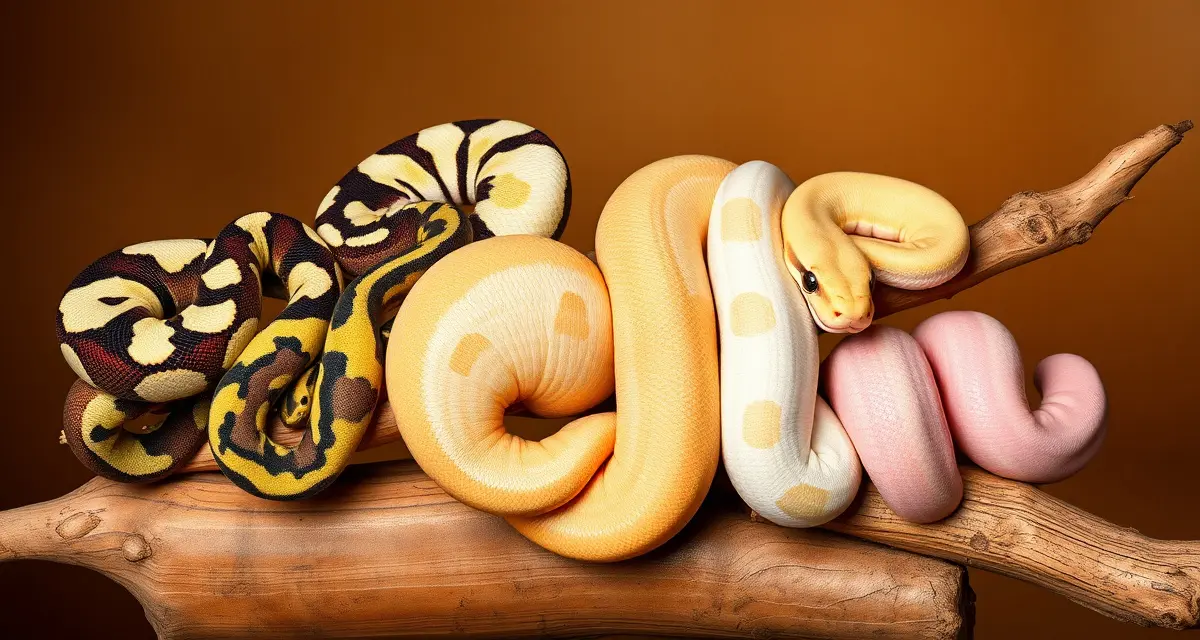
10 Best Ball Python Morphs to Breed in 2025
Choosing the right morphs to work with is the single most important business decision you'll make as a ball python breeder. Pick something with strong demand, manageable production cost, and enough visual appeal to keep buyers excited. These are the ten morphs worth building a program around in 2025.
TL;DR
- Multi-recessive Clown combos like Pied Clown and Albino Clown command the strongest prices in the current market, making het production now a smart two-to-three season investment.
- Blue-Eyed Leucistics (BELs) remain in consistent high demand, and starting a Lesser or Butter project is one of the most accessible entry points into high-value combo production.
- Axanthic line purity (VPI, Snake Keeper, TSK) is critical because different lines are genetically incompatible, making accurate record-keeping essential for this project.
- Pastel and Enchi are not standalone business morphs but are nearly irreplaceable as building blocks in multi-gene projects, and most serious breeders carry them in multiple animals.
- Breeders who track genetics, clutch outcomes, and sales data in dedicated software report spending roughly 30% less time on administrative work.
- Starting with het Albino stock rather than visual Albinos is a cost-effective entry strategy that still gives you a shot at visuals plus a full clutch of sellable hets.
- GHI is still climbing in popularity, and the GHI Mojave combo is widely considered one of the cleanest and most impressive-looking multi-gene animals in the hobby.
1. Clown
The Clown gene is a recessive that produces one of the most distinctive pattern alterations in the hobby. Visual Clowns have a dramatically reduced and rearranged dorsal pattern with a clean side and a characteristic "alien head" facial patterning.
The market for Clowns has stabilized after years of price drops. Multi-recessive Clown combos, especially Pied Clown and Albino Clown combinations, command strong prices. If you don't already have a Clown project running, getting into het production now positions you to produce high-value combos in two to three seasons.
2. Pied
The Piebald morph remains one of the most beloved in the hobby. The white and pattern combination, and the wild variation in how much white an individual animal shows, keeps buyer interest high. High-white Pieds continue to command premiums.
Female Pieds are always in demand for building projects. If you can produce Pied females with strong visual quality and proven lineage, you have animals that breeders will pay serious money for.
3. Banana / Coral Glow
The Banana (and its genetic equivalent Coral Glow) is a co-dominant morph with unique sex-linkage characteristics. Banana males tend to produce Banana offspring more frequently than expected, which gives them distinct value in certain project pairings. Visually, Bananas have a striking yellow-orange ground color with brown spots.
Clean Banana animals with good expression are consistent sellers. Multi-gene Banana combinations, especially with other popular morphs, move quickly on MorphMarket.
4. Pastel
Pastel is the utility player of ball python genetics. It brightens colors and helps clean up patterns in almost any combo. Paired with nearly any other gene, Pastel makes the result more visually impressive. Super Pastels are striking in their own right.
Because Pastel is co-dominant and extremely common, single-gene Pastels aren't a business in themselves. But as part of multi-gene ball python projects, they're almost irreplaceable. Most serious breeders have Pastel in multiple animals in their collection.
5. Enchi
Enchi is an underrated co-dominant that notably reduces dorsal patterning and introduces yellow-orange tones. Super Enchis are particularly clean-looking animals. More importantly, Enchi makes most combos dramatically more attractive.
Enchi's relative accessibility as a gene and its strong combo appeal make it a smart building block morph. It's not glamorous on its own but worth having in your program.
6. Lesser / Butter
Lesser and Butter are allelic (they produce the same phenotype and work together to create a Blue-Eyed Leucistic), making them highly versatile breeding tools. A single-copy Lesser looks similar to other Blue Eye complex morphs, and crossing with Mojave, Phantom, or other BEL complex genes produces the stunning white BEL combination.
BELs consistently remain in strong demand. If you're not producing them, you're leaving money on the table. Starting a Lesser project is one of the most accessible entry points into producing high-value combo animals.
7. Axanthic
Axanthic is a recessive that removes yellow pigment, producing grey and white animals. Different Axanthic lines (VPI, Snake Keeper, TSK) are not compatible with each other, so line purity matters in your reptile genetics record-keeping.
Multi-recessive Axanthic combos with Pied and Clown are among the most visually striking animals in the hobby. The grey-and-white expression in Axanthic Pieds is genuinely beautiful and commands strong prices. Building an Axanthic project takes patience but pays well.
8. GHI
GHI (Gotta Have It) is a co-dominant morph with a dark, striking appearance that combines exceptionally well with other morphs. The Super GHI is a very dark, nearly black animal with brown tones. In combination with Mojave, GHI produces the GHI Mojave, one of the cleanest and most impressive-looking combo morphs in the hobby.
GHI is still climbing in popularity. The right GHI combos sell fast and hold price well.
9. Orange Dream
Orange Dream is a co-dominant that enhances orange tones and pattern reduction. What makes it special commercially is its role in producing the Freeway (Orange Dream + Yellowbelly complex) and other clean, bright multi-gene animals.
Orange Dream female combinations are particularly valuable since the Yellowbelly complex is sex-dependent in some contexts. Getting female ODs with additional genes puts you in a strong position for production.
10. Albino
Classic Albino never goes out of style. The market for standard Albinos has compressed from the early days of the hobby, but multi-recessive Albino combinations (Albino Pied, Albino Clown, Albino Spider) remain high-value animals with steady demand.
Starting with het Albino stock rather than visual Albinos is a cost-effective entry. Two het Albinos give you a shot at visuals and a full clutch of potential hets to sell or work with in future projects.
Building Your Morph Portfolio
The smartest approach is to combine a few of these morphs into complementary projects rather than scattering your breeding resources across every gene available. A Clown and Pied project that shares female carriers serves both goals. A Lesser and Mojave program that produces BELs is achievable with modest startup capital.
Visit the ball python breeding hub for a deeper look at building a breeding operation around specific morph goals. And before you lock in your pairings, run them through the reptile breeder software comparison resources to see what tracking tools will help you manage genetics, production, and sales in one place.
Breeders who track their genetics, clutch outcomes, and sales data in dedicated software report spending roughly 30% less time on administrative work. That's time back for the animals and the actual craft of breeding.
Frequently Asked Questions
What are the best ball python morphs to breed in 2025?
Clown, Pied, Banana, Lesser, and GHI are consistently strong performers in the current market. The highest returns come from multi-recessive combinations and morphs with growing demand and limited supply.
How do professional breeders choose which ball python morphs to work with?
They evaluate market demand, production cost, time to produce visuals, and the combo potential of each gene. The best projects combine a high-demand end product with accessible entry genetics.
What software helps manage ball python morph breeding programs?
HatchLedger tracks your full genetics inventory, clutch outcomes, and financial data per project, giving you the information to make data-driven decisions about which morphs to continue and which to retire.
How long does it typically take to produce visual recessives like Clown or Pied from het stock?
With a standard breeding timeline, you're looking at two to three seasons minimum from the time you acquire het animals to the time you produce and grow out visual offspring. Females need to reach breeding weight, clutches take roughly 60 days to incubate, and hatchlings need several months before you can accurately assess quality and sell them. Planning your project timeline before you buy your first animals helps you set realistic revenue expectations.
Is it better to start with one morph project or run multiple projects at the same time?
Most experienced breeders recommend starting with one or two focused projects rather than spreading across many genes at once. Running complementary projects, such as Clown and Pied that share female carriers, lets you maximize the productivity of each animal in your collection. Trying to work too many unrelated recessives simultaneously increases holding costs and makes it harder to produce enough animals in any single category to build a market reputation.
How important is MorphMarket pricing data when deciding which morphs to breed?
Current MorphMarket listings are one of the most useful real-time signals available to breeders evaluating which morphs to pursue. Tracking sold listings rather than asking prices gives you a more accurate picture of what buyers are actually paying. Pairing that data with your own production cost estimates, including feeding, housing, and time to produce visuals, helps you identify which projects have genuine margin and which are more competitive than they appear.
Do I need to track het probability percentages for animals I sell?
Yes, accurately representing het status is both an ethical obligation and a practical business concern. Animals sold as "possible het" or "66% het" carry different market values, and buyers expect that language to reflect actual clutch outcomes. Keeping detailed clutch records that document which pairings produced each animal makes it straightforward to assign and communicate accurate het probabilities at the point of sale.
Sources
- World of Ball Pythons (MorphMarket Community Resources), MorphMarket
- Ball Python Genetics and Morph Identification, VPI (Vida Preciosa International)
- Reptile Breeder Business Practices, National Reptile Breeders' Expo (NARBC)
- Herpetoculture and Captive Breeding Guidelines, Society for the Study of Amphibians and Reptiles (SSAR)
- Ball Python Husbandry and Breeding, Reptiles Magazine (BowTie Inc.)
Get Started with HatchLedger
If you're building a morph program around any of the genes covered here, keeping clean records from day one, including genetics inventory, clutch outcomes, het probabilities, and per-project financials, is what separates breeders who scale from those who stay stuck guessing. HatchLedger is built specifically for ball python, retic, and hognose operations, so every feature maps to how you actually work. Try it free and see how much clearer your breeding decisions become when the data is all in one place.