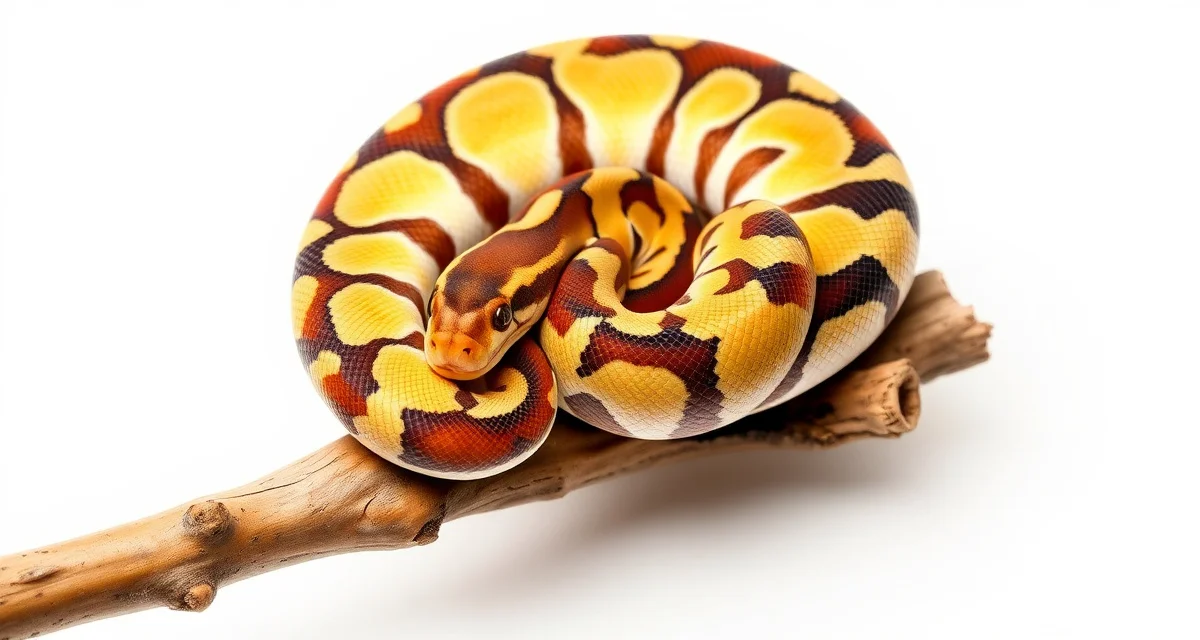
Multi-Gene Ball Python Breeding Projects
The most valuable ball pythons in today's market are multi-gene animals combining two or more recessive genes with one or more co-dominant morphs. A Banana Clown Pied. A Pastel GHi Piebald. An Axanthic Leopard Clown. These animals command prices that justify years of planning, but they also require years of planning to produce. Understanding how to structure a multi-gene project is the difference between hitting your target in 4 seasons and never quite getting there.
The Math of Multi-Gene Recessive Projects
Every recessive gene you add to a project multiplies the number of generations required and the number of eggs you need to see your target animal.
A single recessive project: breed het × het, get 25% visuals. Straightforward.
A two-recessive project (say, Clown + Pied): to produce a Clown Pied, you need an animal that's homozygous for both genes simultaneously. The probability of hitting a visual Clown Pied from a double het × double het pairing is 25% × 25% = 6.25%. From a typical ball python clutch of 6-8 eggs, you might expect a Clown Pied in roughly 1 in 2 clutches statistically, but that's a statistical average across many clutches, not a guarantee.
A three-recessive project: 25% × 25% × 25% = 1.56% chance per egg. Expect to produce around 60 eggs before hitting your target. That's multiple seasons from multiple pairs.
This math is why most multi-recessive projects are built around two recessives plus co-dominant modifiers rather than three or more recessives.
Banana Clown Pied: A Case Study
This is one of the most sought-after multi-gene animals in the ball python hobby. Breaking down how to get there illustrates the general approach.
The genes: Banana (co-dominant), Clown (recessive), Pied (recessive).
What you need to produce it: An animal that is Banana (at least single copy) and homozygous Clown and Pied (or bred from at least one visual of each recessive crossed with a double-het partner).
The most efficient path:
Generation 1 (year 1-2): Acquire or produce double het Clown Pied animals. The most efficient source is breeding a visual Clown to a visual Pied, all offspring are 100% het Clown and 100% het Pied. These are double hets.
Add Banana: Acquire a Banana male (single copy) to use on your double het females in subsequent pairings, or breed your double hets to Banana animals to produce animals carrying all three genes.
Generation 2 (year 2-3): Breed double het Clown Pied × double het Clown Pied. From this pairing you expect 6.25% Clown Pieds. You also produce hets, possible hets, and some visual Clowns and Pieds as "byproducts." Combine with the Banana gene by using a Banana het Clown het Pied male on double het females.
With Banana in the pairing: A Banana het Clown het Pied × het Clown het Pied pairing gives you a shot at Banana Clown Pied at 6.25% of offspring, plus Banana Clown, Banana Pied, Clown Pied, and a range of single-gene animals.
Realistic timeline: 3-4 years from starting the project with acquired foundational animals to producing the target animal. Longer if starting from scratch with unrelated normals.
Axanthic Projects: Working with Multiple Lines
Axanthic is a recessive gene that exists in multiple unrelated lines: TSK (The Snake Keeper), VPI (Vida Preciosa International), Marcus Enc, and others. These lines are not compatible, breeding a TSK Axanthic to a VPI Axanthic produces double het offspring that will never produce visual Axanthics when bred together (they each carry one copy of different, non-allelic genes).
When planning an Axanthic project, you must confirm that all of your Axanthic animals are from the same line. Mixing lines is a waste of multiple seasons of breeding. This is one of the most common mistakes new multi-gene breeders make.
Track the lineage source of every Axanthic in your collection in your morph genetics records. It should be part of every Axanthic animal's record: "TSK Axanthic line" or "VPI Axanthic line" clearly noted.
Managing Byproducts
Every multi-gene project produces more byproduct animals than target animals. From a Clown × Pied het Clown het Pied project, you'll produce:
- Visual Clowns
- Visual Pieds
- Double hets (valuable as future breeders or sales animals)
- Single hets
- Possible hets
- Normals
The byproducts fund the project. A well-run multi-gene project should be at minimum cost-neutral, with high-value byproduct sales covering feed, housing, and overhead while you build toward target animals. Price your hets accurately using current market data and track all sales in your reptile breeder financial tracking records.
GHi Clown and High-Contrast Combos
The GHi (Gotta Have It) gene combines with recessives in ways that dramatically increase the visual impact. A GHi Pied produces an animal with strong blushing and pattern disruption over the Pied's white sections. A GHi Clown produces the "Double Agent", one of the most visually striking ball pythons available.
GHi is co-dominant, which means you can add it to any existing het animals with one generation of breeding. The GHi gene's super form (Super GHi) is a near-black snake with reduced pattern, visually interesting but not the goal in most combination projects.
When adding GHi to a recessive project, use a GHi male carrying your recessive hets. A GHi het Clown × het Clown pairing gives you a 25% chance of Clown offspring (half of which will be GHi Clowns) and a 50% chance of GHi animals carrying no visual Clown but potentially het.
Record-Keeping for Multi-Season Projects
A multi-gene project that spans 3-4 seasons requires records that survive that entire time and stay connected. The key data to track:
- Every animal's full genetic makeup (visual + confirmed hets + possible hets)
- Pairing records with outcomes for each season
- Holdback decisions and the reasoning behind them
- Which animals were sold, to whom, and what was documented for the buyer
HatchLedger's linked animal records make multi-season morph project tracking practical. When you're planning pairings in year 3, you can pull up an animal's full history, its parents, its siblings that were sold, any proving-out data, without digging through spreadsheets or notebooks.
Pairing Strategy
The most efficient use of a high-value male in a multi-gene project is pairing him with multiple females simultaneously. A double het male can breed 4-6 females in a season. Each female represents another shot at your target animals.
Track pairing history per male. A male that's been used heavily for 4 seasons may be worth selling to recoup capital while the next generation of males comes up. Or he may be worth keeping if he's a specific combination that's hard to replace.
Document every pairing with dates, introduction method, observed copulation, and eventual clutch outcomes. The males that produce the best ratios of target animals from documented pairings are the ones worth keeping. The ones that consistently miss expected outcomes might indicate the genetics aren't what you thought they were, which is information you only have if you track outcomes carefully.