How to Ship Snakes Legally FAQ
Shipping snakes legally requires understanding carrier policies, state regulations, and animal welfare standards all at once. Getting one of these wrong can mean fines, confiscation, or worse. Here's what you need to know.
TL;DR
- USPS does not allow snake shipments for most senders, FedEx and UPS are the only major legal carrier options for reptile breeders.
- Both FedEx and UPS require a pre-approved live animal account before you can ship; you cannot walk in off the street and ship a ball python.
- Hawaii bans all live snake imports entirely, and dozens of other states have varying regulations that must be verified before accepting a deposit.
- Packaging must include a secure primary container, ventilation, appropriate temperature regulation, and exterior labeling stating "Live Harmless Reptiles."
- Some states, including California, require a health certificate from a licensed veterinarian for incoming live animals.
- Documenting every shipment, genetics, tracking number, destination state legality, and buyer agreement terms, protects you in the event of disputes or DOA claims.
- Connecting sale records to individual animal records in HatchLedger creates a complete chain of custody from hatch to delivery.
Is It Legal to Ship Snakes Through the Mail?
USPS does not allow live reptile shipments for most senders. Only USPS-licensed mailers with special permits can ship certain live animals through the postal service, and snakes are generally excluded.
The primary legal carriers for reptile shipments are FedEx and UPS, and both have specific policies for live animals that you must follow.
Can You Ship Snakes Through FedEx?
FedEx allows live reptile shipments under their Live Animals program, but only through accounts that have been pre-approved for live animal shipping. You cannot walk into a FedEx store and ship a ball python. You need a pre-existing shipper account with the live animal designation, and the shipment must meet their packaging and labeling requirements.
FedEx requires overnight delivery for live reptiles. They also reserve the right to refuse shipments based on weather conditions at origin or destination.
Can You Ship Snakes Through UPS?
UPS has similar policies. Live reptile shipments require a pre-established account with live animal authorization. Overnight or express shipment is standard. Packages must be labeled as containing live animals and meet packaging requirements.
UPS's willingness to accept live animal shipments varies by location and even by individual employee interpretation of policy. Some drop-off locations refuse live animal packages regardless of paperwork.
What States Are Ball Pythons Restricted In?
Hawaii bans all live snake imports. Arizona, California, Georgia, Idaho, Indiana, Iowa, Kansas, Kentucky, Louisiana, Maine, Maryland, Massachusetts, Michigan, Minnesota, Missouri, Mississippi, Montana, Nebraska, Nevada, New Hampshire, New Jersey, New York, North Dakota, Ohio, Pennsylvania, Rhode Island, South Dakota, Tennessee, Texas, Utah, Vermont, Virginia, Washington, Wisconsin, and Wyoming each have varying levels of exotic species regulation that may affect shipping or possession.
Always verify current regulations for the specific state before shipping. Laws change, and enforcement varies.
What Packaging Is Required for Legal Snake Shipments?
Standard requirements include:
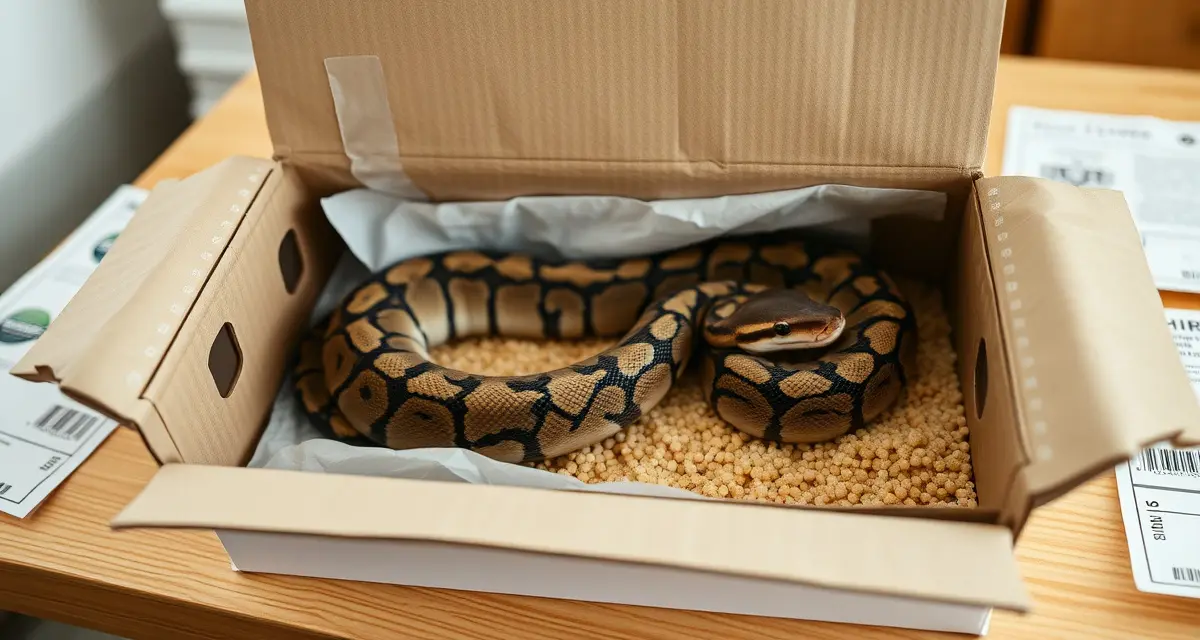
- A secure primary container (a cloth bag or escape-proof plastic container) inside a sturdy cardboard outer box
- Enough substrate or padding to prevent injury during transit
- Ventilation holes that allow airflow but don't allow escape
- Exterior labeling clearly stating "Live Harmless Reptiles" or similar
- A box strong enough to withstand normal shipping handling
Temperature regulation is also required. Heat packs or cold packs may be necessary depending on weather conditions, and they must be placed in a way that prevents direct contact with the animal.
Do You Need a Health Certificate to Ship Snakes?
Some states require a health certificate from a licensed veterinarian for incoming live animals. California is one of the more well-known examples. Even where not legally required, having a health certificate is a professional practice that protects both you and the buyer.
A health certificate documents that the animal was examined and appeared healthy at time of shipment. If an animal arrives ill or dies in transit, that documentation matters.
How Do You Protect Yourself Legally When Shipping?
Keep records of everything. Document the animal you shipped (genetics, ID, weight, health status), the buyer's information, the destination state's legal status for that species, the carrier, tracking number, and ship date.
Your agreement with the buyer should specify what happens in the case of DOA (dead on arrival) and what transit delays you're responsible for versus those caused by the carrier.
The ball python breeding hub covers broader business considerations. For individual shipment documentation, connecting your sale records to your animal records in HatchLedger, including ball python morph calculator data for genetic verification, creates a complete chain of custody that's valuable if disputes arise. Breeders managing high-volume operations may also benefit from reviewing reptile breeder record-keeping practices to ensure every sale is fully documented before the animal leaves the facility.
Frequently Asked Questions
What is the best approach to shipping snakes legally?
Use FedEx or UPS with a pre-approved live animal account, ship overnight, meet all packaging requirements, verify destination state legality before accepting a deposit, and document every shipment with tracking and compliance notes.
How do professional breeders handle legal snake shipping?
Experienced shippers have established carrier accounts, maintain a pre-shipment checklist they run through for every sale, use appropriate heat or cold packs based on weather conditions, and keep detailed records of every shipment.
What software helps manage snake shipping documentation?
HatchLedger lets you log shipment details alongside individual animal records, creating a complete history from hatch to sale including destination, carrier, tracking, and compliance documentation.
What temperature range is safe for shipping snakes, and how do heat packs help?
Most ball pythons and other common species ship safely when the package interior stays between 70°F and 85°F. Heat packs rated for 40 or 72 hours are commonly used in cold weather, placed between the outer box and the inner container rather than directly against the animal. In summer months, many breeders skip heat packs entirely and ship early in the week to avoid packages sitting in hot warehouses over weekends.
Can you ship snakes to a PO box or does it have to be a physical address?
FedEx and UPS do not deliver to PO boxes, so all live animal shipments must go to a physical street address. Many breeders require buyers to provide a home or work address where someone can receive the package immediately upon delivery, since leaving a live animal on a doorstep in extreme temperatures creates both welfare and liability concerns.
What happens if a snake arrives dead on arrival (DOA)?
DOA policies vary by breeder, but the standard professional practice is to require photo or video documentation of the unopened package and the animal within a set time window after delivery, often one to two hours. Most breeders cover DOA replacement or refund only when the carrier caused the delay, not when the buyer missed the delivery or failed to be available. Your written sale agreement should spell out these terms clearly before the animal ships.
Do you need a USDA license to ship reptiles commercially?
The USDA's Animal Welfare Act primarily covers warm-blooded animals, so most reptile breeders are not required to hold a USDA license solely for shipping snakes. However, some states have their own licensing requirements for commercial reptile dealers, and breeders selling above certain volume thresholds should verify whether their state classifies them as a dealer requiring a permit.
Sources
- FedEx Live Animals Shipping Policy, FedEx Corporation
- UPS Live Animals Acceptance Guidelines, United Parcel Service
- Lacey Act Enforcement and Exotic Species Regulations, U.S. Fish and Wildlife Service
- State Exotic Animal Laws Database, Animal Legal Defense Fund
- Reptile and Amphibian Health and Welfare Guidelines, Association of Reptilian and Amphibian Veterinarians (ARAV)
Get Started with HatchLedger
Shipping snakes legally means keeping tight records at every step, from the animal's genetics and health status to the carrier account used and the destination state's current regulations. HatchLedger is built specifically for reptile breeders who need that documentation organized and accessible, not scattered across spreadsheets and email threads. Start your free trial and see how connecting your animal records to your sale and shipment history protects your business on every transaction.