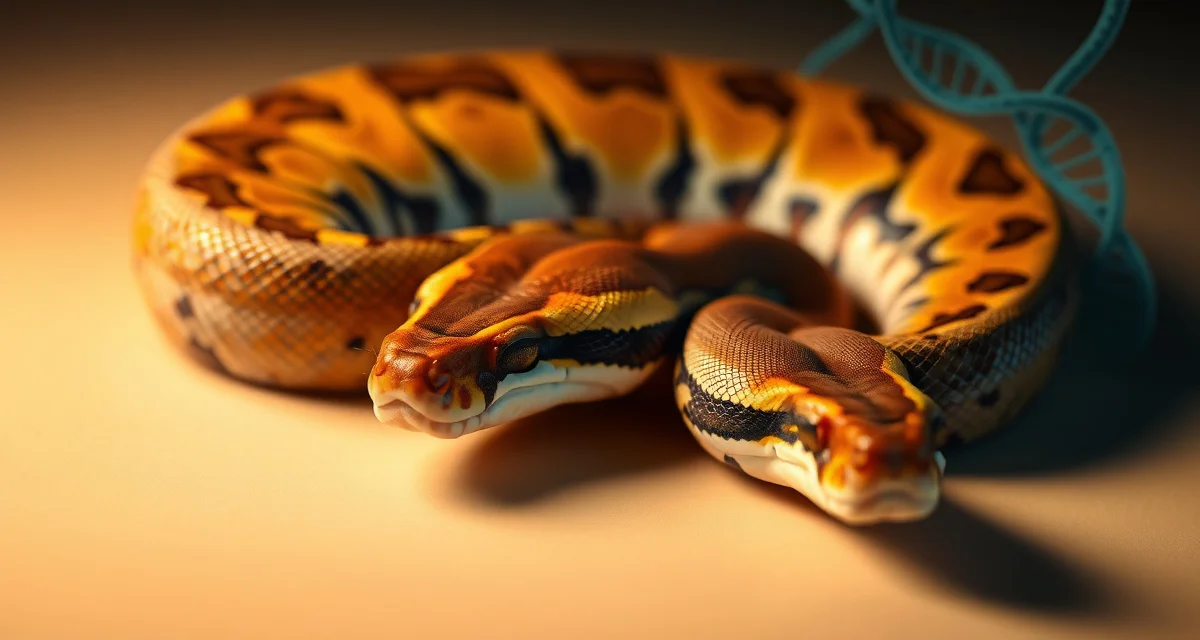
What Does Het Mean for Ball Pythons FAQ
If you've spent more than five minutes looking at ball python listings on MorphMarket, you've seen the word "het" everywhere. Here's exactly what it means and why it matters for buyers and breeders.
TL;DR
- "Het" is short for heterozygous and means a ball python carries one copy of a recessive gene without visually expressing it.
- A het Pied looks identical to a normal ball python but can pass the Pied gene to offspring.
- 100% het means the gene is confirmed through parentage; possible het (pos het) reflects a statistical probability, not a guarantee.
- In a het x het Pied pairing, visually normal offspring are 66% possible hets because 2 out of 3 non-visual animals statistically carry the gene.
- Possible hets can be a cost-effective entry into recessive projects, but a 50% possible het that doesn't carry the gene can cost two to three seasons of proving work.
- Every animal in a serious collection should have a documented genetics profile tracking confirmed and possible het status at specific percentages.
What Does Het Mean in Ball Pythons?
Het is short for heterozygous. In genetics, heterozygous means an organism carries two different versions of a particular gene, one from each parent. In ball python breeding, "het" specifically refers to an animal that carries one copy of a recessive gene without visually expressing that gene.
A het Pied ball python looks like a normal. But it's carrying the Pied gene invisibly, and it can pass that gene to offspring.
Why Are Hets Valuable?
Because they're the path to producing recessive visual morphs. Recessive traits only appear visually when an animal carries two copies of the gene. To produce a visual Pied, you need both parents to carry the Pied gene. That means you need either two visual Pieds, or a visual Pied paired with a het Pied, or two het Pieds paired together.
The last option (het x het) is the most common entry point. When you buy a het, you're buying genetic potential. You're buying the ability to access a recessive trait in future offspring.
What Is the Difference Between 100% Het and Possible Het?
100% het: The animal is confirmed to carry the gene. This confirmation comes from parentage, where both parents had genetics that guarantee every offspring carries the gene, or from a combination where the animal had to inherit the gene to exist with its appearance.
Possible het (pos het): The animal may or may not carry the gene. This typically comes from pairings where some offspring were guaranteed hets and others were not. For example, in a het x het Pied pairing, 1 in 4 animals is a visual Pied, 2 in 4 are het Pied, and 1 in 4 carries no Pied gene at all. The visually normal animals from that clutch are "66% possible het" Pieds since 2 out of 3 of the non-visual animals statistically carry the gene.
The percentage in "possible het" reflects the probability that the animal actually carries the gene. It's a statistical estimate, not a guarantee.
How Is Het Percentage Calculated?
It comes from the expected ratios of a given pairing. If a visual recessive is paired with a het, 50% of offspring will be visual and 50% will be het. All visually normal offspring are 100% het.
If a het is paired with a normal, no visuals will be produced (since you need two copies for visual expression), but 50% of offspring will be hets. The other 50% carry no copies. Since you can't tell them apart visually, they're all "50% possible hets."
The ball python morph calculator calculates these ratios automatically for any pairing you input.
How Do You Prove a Possible Het?
You breed it. Pair a possible het with a visual animal or another het for the same gene and see if you produce any visuals. This is called "proving out" an animal. It takes time (you need to grow the animal to breeding weight, breed it, incubate eggs, and wait for hatches) and there's always an element of chance in whether you hit visuals in any given clutch.
Some breeders sell proven hets at a premium because the genetic claim has been confirmed through actual production rather than just parentage.
Should You Buy Possible Hets?
At the right price, yes. A 100% het Pied female might cost $400 to $700 depending on the market. A 50% possible het Pied female might run $150 to $250. If you're willing to do the proving work over a season or two, possible hets can be a cost-effective entry into recessive projects.
The risk is that you spend two or three seasons working an animal that turns out to not carry the gene. That's a real cost in time and resources. Price possible hets accordingly.
How Do You Track Het Status for Every Animal?
This is essential recordkeeping for any serious collection. Every animal should have a documented genetics profile, including what it's confirmed het or possible het for, and at what percentage.
The ball python breeding hub covers genetics management in depth. In HatchLedger, you can assign confirmed and possible genetics to each animal in your collection, track how genetics were confirmed (through parentage or proving), and connect those records to offspring when you breed the animal. Keeping accurate clutch and offspring records ensures that het percentages are passed down correctly through your breeding lines.
Frequently Asked Questions
What does het mean for ball pythons?
Het is short for heterozygous. It means the animal carries one copy of a recessive gene without visually expressing it. Het animals can pass the gene to offspring, making them valuable for producing recessive visual morphs.
How do professional breeders handle het tracking in their collections?
They document the genetics of every animal including confirmed and possible hets, record how each genetic claim was established, and track proving attempts when working with possible hets to confirm or eliminate a gene from a line.
What software helps manage ball python het records?
HatchLedger tracks full genetics profiles for every animal including het status, possible het percentages, and genetic confirmation history, connecting that data to clutch records and offspring genetics.
Can a ball python be het for more than one gene at the same time?
Yes. A ball python can carry recessive genes for multiple traits simultaneously. For example, an animal can be 100% het Pied and 100% het Clown at the same time. Each gene is inherited and tracked independently, which is why detailed genetics records for every animal in a collection matter so much.
Does het status change if an animal fails to produce visuals after several pairings?
Technically, no. A confirmed 100% het animal remains a 100% het regardless of what it produces, because the genetic status is based on parentage. However, for possible hets, each clutch that fails to produce visuals does statistically reduce the likelihood that the animal carries the gene. Many breeders treat an animal as a non-carrier after two or three unsuccessful proving attempts, though this is a practical decision rather than a genetic certainty.
Is het the same thing as a carrier in other reptile species?
The concept is the same. In hognose snakes, retics, and other species with recessive morphs, "het" or "carrier" both describe an animal that holds one copy of a recessive gene without expressing it visually. The terminology and the underlying genetics are identical across species, though the specific genes and morph names differ.
Sources
- USARK (United States Association of Reptile Keepers), industry standards and reptile genetics education resources
- MorphMarket, ball python morph listings and breeder community genetics documentation practices
- Mendelian Genetics principles, National Human Genome Research Institute, National Institutes of Health
- Ball Python Genetics and Morph Guide, Reptiles Magazine (Bowtie Inc.)
- The Reptile Report, industry news and breeder education covering recessive morph genetics
Get Started with HatchLedger
HatchLedger is built specifically for reptile breeders who need to track confirmed and possible het status, proving history, and offspring genetics across an entire collection without losing data between seasons. If you're working recessive projects with Pieds, Clowns, or any other het-dependent morph, try HatchLedger free and see how much cleaner your genetics records can be.