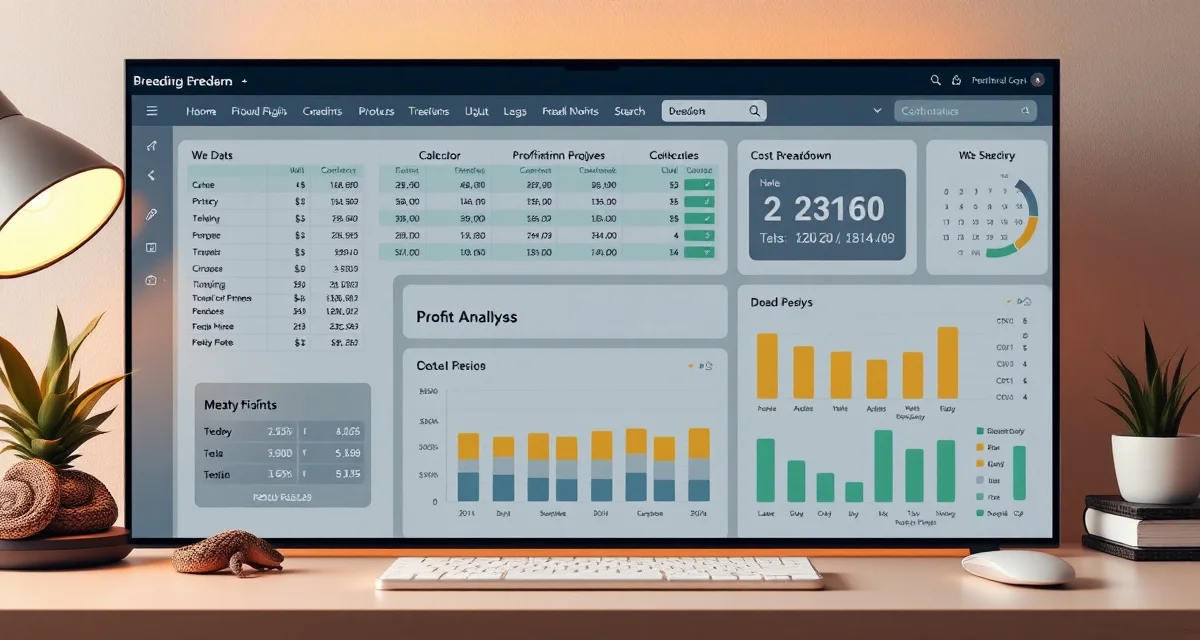
Breeding Program Financial Tracking: Know What You're Actually Making
By HatchLedger Editorial Team · Published 2025-04-16 · Updated Mar 13, 2026
Most reptile breeders significantly overestimate their profitability. They count revenue from hatchling sales without accounting for the full cost basis of those sales. They forget to allocate breeder acquisition costs. They don't track feeder spend. They don't count their time.
Financial tracking in a breeding program doesn't have to be sophisticated, but it has to be comprehensive. You need to know what you're spending, what you're earning, and whether specific parts of your program are profitable.
Revenue Categories
Hatchling Sales
The primary revenue source for most breeding programs. Track every sale:
- Date of sale
- Buyer name and contact
- Animal ID
- Morph and genetic description
- Sale price
- Payment method
- Shipping cost (billed to buyer vs. absorbed by seller)
Breeder Sales
When you sell adult breeders or hold-backs you've grown out, document the sale and the full cost history of that animal including acquisition cost, feeding costs, and time in the collection.
Event Sales (Expos)
Track expo sales separately, including your booth cost, travel, and any incidentals against the revenue from that event. Many breeders discover that expos are their least profitable sales channel when full costs are included.
Expense Categories
Animal Acquisition
Every animal you purchase goes into the expense record at full purchase price. This cost needs to be allocated against future revenue, either from the animal's breeding production or from a future sale of the animal itself.
For a breeding female purchased for $800, that $800 is part of the cost basis of every clutch she produces. A simple approach: allocate 10-20% of her purchase price per breeding season over a 5-8 year productive life. If she produces 2 clutches per year, each clutch carries roughly 5-10% of her acquisition cost.
Feeder Costs
Track feeder purchases by date and amount. This is one of the most commonly overlooked expenses in breeding program accounting. A collection of 50 animals eating weekly or biweekly generates substantial feeder spend annually. Large breeders spend $2,000-$8,000+ per year on feeders.
Allocate feeder costs to breeding vs. non-breeding animals separately if you want to calculate clutch-specific cost basis accurately.
Incubation Supplies
Substrate, incubation containers, thermostats, incubators, and incubation-specific equipment have costs that belong in the expense record. Large incubators can cost $300-$1,000 or more. Allocate equipment costs across expected use lifetime.
Shipping Supplies
Boxes, insulation, heat packs, bags, and postage or airline cargo fees are real expenses. Track them per shipment and by season.
Veterinary Costs
All vet costs are expenses against the breeding program, whether for routine fecal testing, illness treatment, or emergency care.
Electricity and Space
Advanced financial tracking includes utility costs attributable to the reptile room. This requires some estimation but improves the accuracy of your profitability picture.
Clutch-Level Profitability
The most useful financial analysis for a breeding program is profitability by clutch:
Clutch cost basis:
- Allocated female acquisition cost (per clutch)
- Allocated male acquisition cost (per clutch)
- Season feeder costs allocated to these breeders
- Incubation supplies for this clutch
- Shipping costs for this clutch's sales
Clutch revenue:
- Sum of all hatchling sales from this clutch
Net margin = Revenue - Cost Basis
When you run this analysis across all your clutches over a season, you learn which morph projects are actually profitable and which are generating revenue without profit. A clutch of 6 normal-looking animals from an expensive piebald project may generate $600 in revenue against $400 in cost basis. The same clutch from an established project with lower-cost parents might net $550 on similar revenue.
HatchLedger calculates clutch cost basis and profitability automatically from your recorded expenses and sales data, giving you per-clutch P&L without manual spreadsheet work.
Related content: Clutch Profit Loss Tracking | Reptile Breeder Financial Tracking | Reptile Breeding Financial Tracking
Related Articles
FAQ
What is Breeding Program Financial Tracking: Know What You're Actually Making?
Breeding program financial tracking means systematically recording every dollar flowing in and out of your reptile breeding operation — hatchling sales, breeder acquisitions, feeder costs, enclosures, utilities, and time. The goal is to know your true profit margin, not just your gross revenue. Most breeders overestimate profitability because they only count what they earn, not what they spend. Comprehensive tracking reveals which morphs, pairings, and sales channels actually make money.
How much does Breeding Program Financial Tracking: Know What You're Actually Making cost?
Financial tracking itself costs nothing beyond your time and a spreadsheet or dedicated tool like HatchLedger. The real question is what poor tracking costs you: breeders who skip it routinely sell animals below their true cost basis, subsidize unprofitable pairings for years, and miscount expo revenue by ignoring booth fees and travel. The investment in tracking pays back quickly once you identify where money is actually being lost.
How does Breeding Program Financial Tracking: Know What You're Actually Making work?
You assign every animal in your collection a cost basis — acquisition price, feeding expenses, vet costs, and allocated overhead. When that animal sells or produces a clutch, those costs transfer to revenue against the sale price. You also track program-level expenses like electricity, equipment, and your time. Over each breeding season, you can then calculate per-animal, per-pairing, and per-sales-channel profitability rather than just total revenue.
What are the benefits of Breeding Program Financial Tracking: Know What You're Actually Making?
Accurate financial tracking shows you which pairings are profitable, which morphs recover their cost basis fastest, and which sales channels like expos actually drain margin when full costs are included. It prevents you from reinvesting in underperforming parts of your program. It also makes tax filing straightforward, supports pricing decisions with real data, and gives you a defensible valuation if you ever want to sell part or all of your collection.
Who needs Breeding Program Financial Tracking: Know What You're Actually Making?
Any breeder producing animals for sale benefits from financial tracking — from hobbyists with two pairs to full-time operations with hundreds of animals. It becomes especially critical once you're reinvesting profits into new breeders, attending expos, or scaling up enclosure space. If you've ever wondered whether you're actually making money or just moving money around, you need financial tracking. It's the difference between running a business and running an expensive hobby.
How long does Breeding Program Financial Tracking: Know What You're Actually Making take?
Setting up a tracking system initially takes a few hours — building your animal roster, logging acquisition costs, and categorizing your recurring expenses. Ongoing maintenance is light: log feeder purchases when you buy them, record sales immediately, and do a monthly reconciliation. Most breeders spend under 30 minutes per week once the system is established. Seasonal clutch periods require more entry time, but that's also when the data is most valuable.
What should I look for when choosing Breeding Program Financial Tracking: Know What You're Actually Making?
Look for a system that tracks individual animal cost basis, not just program-level totals. It should handle multiple revenue categories — hatchling sales, breeder sales, expo events — separately. Feeder and supply expense logging should be straightforward enough that you'll actually use it. Integration with your animal ID system prevents double entry. Whether you use HatchLedger, a spreadsheet, or another tool, prioritize comprehensiveness and consistency over complexity.
Is Breeding Program Financial Tracking: Know What You're Actually Making worth it?
Yes — if you're selling animals, financial tracking is worth it without question. Breeders who track comprehensively consistently find at least one part of their program that was losing money they didn't know about. More importantly, it shifts your decisions from gut feel to data: which pairings to repeat, what to charge, whether to do that expo. Even a single pricing correction or dropped unprofitable pairing typically saves more than the time tracking ever costs.
Sources
- USARK business resources for reptile breeders
- Reptile industry financial planning guides
- MorphMarket seller resources