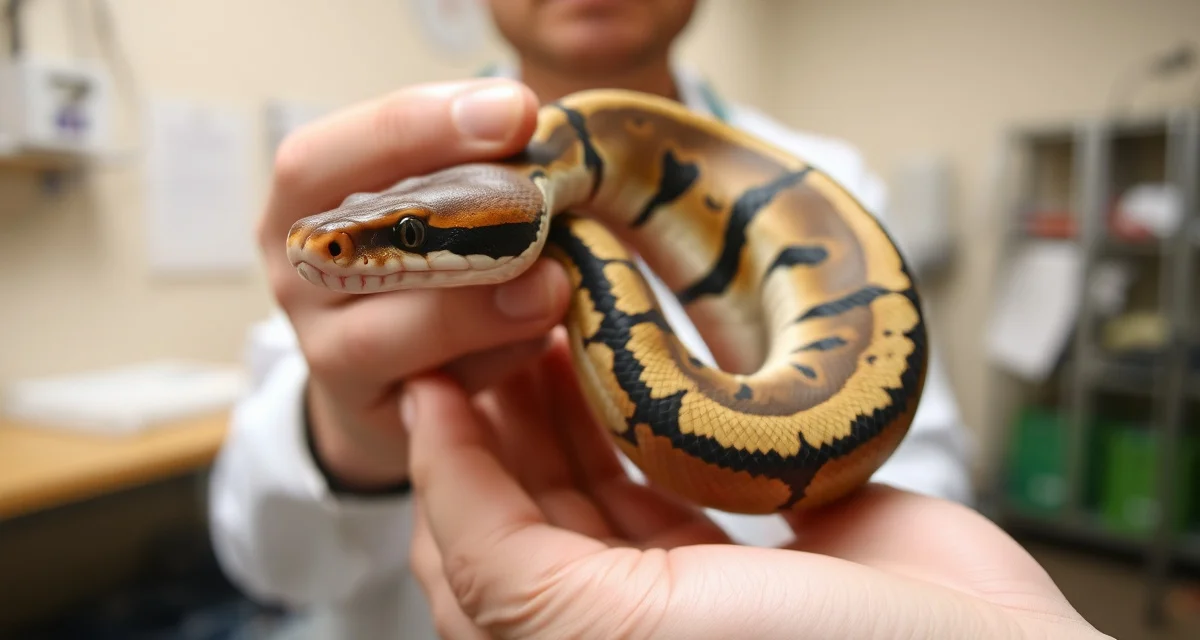
Reptile Body Condition Scoring for Snake Breeders
Body condition assessment is one of the most useful and most overlooked skills in reptile breeding. A scale tells you a number. Visual and tactile assessment of body condition tells you whether that number is appropriate for the animal in front of you. Understanding how to evaluate body condition quickly and accurately improves your feeding decisions, breeding timing, and early health problem detection.
What Body Condition Scoring Measures
Body condition scoring (BCS) is a standardized assessment of an animal's fat reserves and muscle mass relative to its skeletal structure. In snakes, this translates to evaluating:
- Vertebral column prominence (can you see or feel the spine?)
- Lateral muscle fullness (are the flanks rounded or sunken?)
- Tail base tapering
- Overall profile when viewed from above
For breeders, BCS matters most for breeding females (who need adequate fat reserves before and after breeding) and for catching animals that are losing condition before the weight loss becomes severe.
The Scale
A practical 5-point scale for snakes:
1 - Severely underweight: Dorsal scales are tenting. Vertebral column is prominently visible from above, each vertebra forms a raised ridge. Skin is loose and hangs from the body. Lateral flanks are deeply concave. Tail is sharply tapered with visible spine. This animal is in danger and needs immediate veterinary attention and aggressive feeding support.
2 - Underweight: Spine is clearly palpable with light pressure and slightly visible from above in good lighting. Flanks are noticeably flat. The animal lacks the smooth rounded profile of a healthy animal. Tail base is thinner than appropriate for the animal's size. Needs increased feeding frequency and monitoring.
3 - Ideal: Smooth, rounded profile when viewed from above. Spine is palpable with firm pressure but not visible and not protrusive. Flanks are gently rounded. Tail base tapers smoothly. Skin is supple and tight. This is where you want breeding animals to be at pairing time.
4 - Heavy/Overweight: The spine is not palpable even with moderate pressure, there's a significant layer of fat over it. Animal has a wide, flat-sided profile when viewed from above. Flanks are convex (bulging outward). The animal moves less freely. Breeding females at this condition may have reduced follicle development and can have difficulty with egg-laying.
5 - Obese: Rolls of fat visible. Animal is severely impeded in movement. Skin may be stretched. Internal organ function and reproductive capacity are compromised. Rare in properly managed collections.
Practical Assessment Technique
From above: Look down at the animal's back. A BCS 3 animal should have a smooth, oval cross-section. A BCS 1-2 animal will have a triangular or square cross-section with the spine forming the top point. A BCS 4-5 animal will be wide and flat-sided.
Tactile check: Run your thumb along the dorsal surface. At BCS 3, you should feel the spine with moderate pressure, it's there, but padded. At BCS 2, it's immediately palpable with light touch and feels sharp. At BCS 4, you press through a significant layer of fat before feeling it.
Tail base: The area immediately posterior to the cloaca. In a healthy animal, the tail base has a smooth gradual taper. In an underweight animal, the tail narrows sharply and the spine is visible. In an overweight animal, the tail base may appear thicker than expected.
Flanks: With the animal resting flat, look at its sides. Healthy animals have gently convex sides. Underweight animals have flat or concave sides. Overweight animals have noticeably convex sides.
BCS Targets for Breeding Animals
Females going into breeding season: BCS 3, ideally with some body reserve (toward the upper end of 3). Breeding is metabolically expensive, and females that start the season underweight will struggle to produce quality clutches or may not produce at all.
Males during breeding season: BCS 3. Males often go off feed during active breeding season. Starting in good condition means they can afford some weight loss during cycling without dropping to an unhealthy condition.
Post-lay females: Females typically lose significant condition during gestation. A female that was BCS 3 at pairing may be BCS 2 after laying. She needs to recover condition before being bred again. The standard recommendation is waiting at least one full season before re-breeding, and using weight and condition recovery as the actual criterion rather than just time elapsed.
Females in follicle development: Monitor condition as follicles develop. Females developing follicles are building significant internal structures. They need adequate food intake and should be entering follicle development at BCS 3, not 2.
Weight vs. Body Condition
Weight alone is insufficient. A ball python at 1,800g can be in excellent condition or in poor condition depending on its frame size. A large-framed female at 1,800g might be underweight. A small-framed female at 1,800g might be heavy.
The most useful practice is tracking weight over time in combination with periodic BCS notes. A weight trend (increasing, stable, or decreasing) plus a BCS note at each weigh-in gives you both the number and the context.
In HatchLedger, reptile weight tracking lets you log weights with notes. Add a BCS annotation at each weigh-in, "BCS 3, good condition pre-breeding" or "BCS 2.5, recovering from clutch, increase feeding", and you build a health history that's useful for making feeding and breeding decisions.
Species-Specific Notes
Ball pythons: Generally carry fat reserves well. A healthy adult female at peak breeding condition should have a smooth, rounded profile. The spine should require deliberate pressure to palpate.
Blood pythons: Stocky build by nature. These animals should have significant girth relative to length. A blood python that looks "fat" by ball python standards may actually be in ideal condition. The spine in a well-conditioned blood python should be well-padded and only palpable with firm pressure.
Boa constrictors: Similar to ball pythons for assessment. Tail base is a good indicator, boas in good condition have a smoothly tapering tail without visible vertebrae.
Carpet pythons: Naturally more slender than boas or ball pythons. The spine will be slightly more prominent in a healthy carpet than in a healthy ball python at the same BCS. Assess based on the appropriate profile for the species.
Common Scenarios
Animal is eating well but losing condition: Warrants investigation. Possible causes include parasites, internal disease (crypto), or inadequate prey size. Track feeding and weight together, an animal eating every 10 days but still declining may need larger prey or medical attention.
Female won't eat post-clutch: Normal for several weeks. Focus on condition assessment rather than forcing feeding. When she's alert and showing feeding response, offer food. Log every offering in your feeding records so you can track the recovery timeline.
New acquisition in poor condition: Quarantine, vet check including fecal testing, and a conservative feeding ramp-up. Don't overfeed a thin snake quickly, it can cause regurgitation and fatty liver disease. Steady improvement over weeks is the goal.
Incorporating regular BCS assessment into your weekly or biweekly animal checks takes less than 30 seconds per animal once you're practiced. The information it provides is among the most useful you can have for making feeding and breeding decisions.