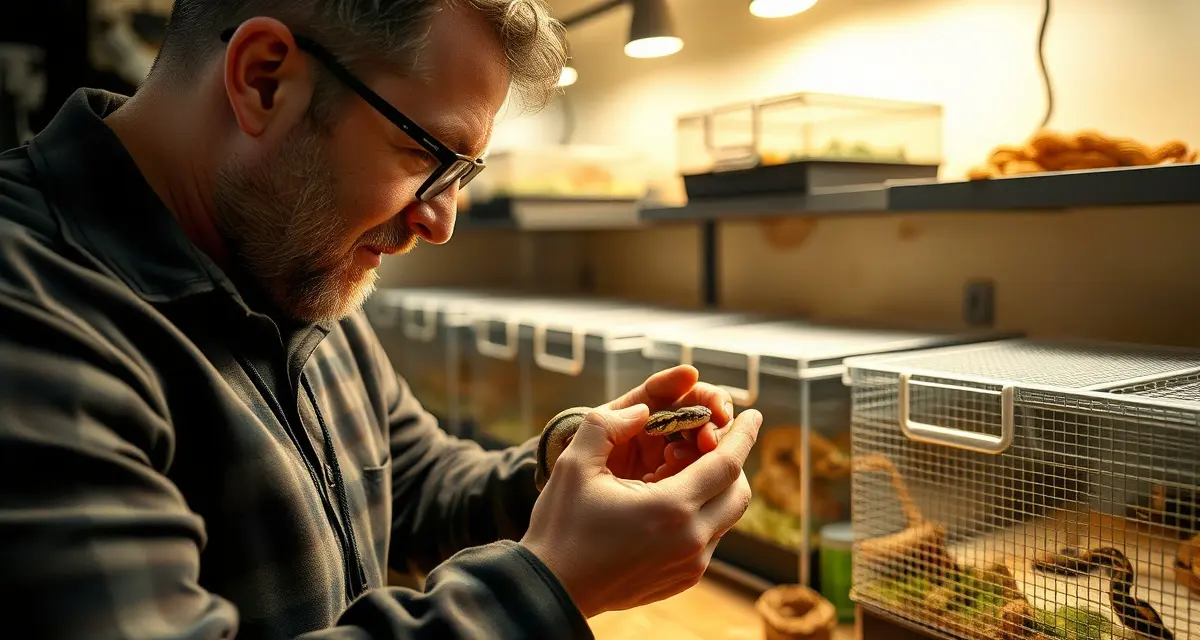
Ball Python Breeding Guide for Hobbyist Breeders
A hobbyist breeder typically has 5 to 15 animals, breeds one to a few clutches per season, and runs the operation primarily for passion rather than income. The hobby more than pays for itself in most years, but it's not a primary income source. This guide addresses the specific challenges and opportunities of hobbyist-scale ball python breeding.
TL;DR
- Reptile breeders benefit most from documentation systems that connect animal records, breeding history, and financial data.
- Genetics claims are only as trustworthy as the records behind them -- parentage documentation is the evidence buyers evaluate.
- Seasonal timing and cooling protocols matter significantly for reproductive success across most captive reptile species.
- Clutch profitability analysis requires knowing actual cost per animal produced, not just gross sale revenue.
- Administrative efficiency through connected records frees time for animal care and the strategic work of project planning.
The Hobbyist Breeder's Unique Position
Hobbyists have an advantage that larger operations sometimes lose: you know every animal individually. You can give each one exactly the attention it needs. You're not rushing through feedings or skimping on health checks because you have too many animals to manage.
That personal attention often produces healthier, better-conditioned breeding stock than larger operations where individual animals can get lost in the volume.
Choosing Projects That Fit Your Scale
At 5 to 15 animals, you can't run every project. Focus on one or two recessive projects, supplemented by co-dominant combinations that generate consistent revenue to fund the patience required for multi-year recessive work.
A good hobbyist portfolio might look like:
- One recessive project (Clown or Pied) with 2 to 4 animals working toward it
- One BEL complex project (Lesser x Mojave) generating accessible revenue
- One or two high-value female breeders paired with premium males each season
This is enough diversity to have animals at different price points without spreading genetics too thin.
Making Hobbyist Financials Work
Hobbyist breeders often have the luxury of not needing the operation to turn a profit. But even if you're not running a business, understanding your economics helps you make better decisions about what to breed and what not to breed.
Know what each clutch cost to produce: feed for the year allocated proportionally to the season, a fair share of the parent animals' cost, incubation supplies. When you sell hatchlings, you know whether you're ahead or behind for that clutch.
Track this in HatchLedger. Even for hobbyists, connecting your production records to your financial records over multiple seasons tells you which pairings have been worth your investment and which ones to retire.
Managing Show Participation at Hobbyist Scale
Many hobbyist breeders sell at one or two local shows per season. This is a solid supplemental channel alongside MorphMarket. At 5 to 10 hatchlings per season, one decent expo table may move enough animals to make the logistics worthwhile.
Consider: table cost, travel cost, your time. For a hobbyist producing 8 to 12 hatchlings per season, one or two shows plus MorphMarket is usually the right balance.
The Long Game for Hobbyists
Hobbyist breeders who persist for 5 to 10 seasons often build collections with genuinely valuable genetics, proven production history, and a network of repeat buyers. The slow build matters. The quality of your animals and your reputation in the community compounds over time.
The ball python business pillar covers the longer-term operational and business considerations that apply even to hobbyist-scale breeders.
Frequently Asked Questions
What is the best approach to ball python breeding for hobbyist breeders?
Focus on one or two recessive projects supplemented by co-dominant combinations, track your costs to understand which pairings are economically worthwhile, sell through a combination of MorphMarket and local expos, and invest in the slow build of reputation and genetics quality.
How do hobbyist breeders balance passion and profitability in ball python breeding?
They run one or two projects they're genuinely excited about, pair those with co-dominant combinations that generate consistent revenue, and treat the operation as a serious hobby that self-funds rather than as a primary business.
What software helps hobbyist ball python breeders manage their records efficiently?
HatchLedger is purpose-built for reptile breeders, connecting animal records, breeding history, clutch outcomes, and financial tracking in one connected system. Unlike general spreadsheets or notes apps, it's designed around the specific workflow of an active breeding season -- from pairing records through hatchling inventory and sales documentation. Free for up to 20 animals.
What records should every reptile breeder maintain per animal?
At minimum: acquisition date and source, morph and genetic documentation, feeding log, weight history, any veterinary treatments, and breeding history including pairing dates, clutch of origin for captive-bred animals, and offspring records. These records serve your own management, buyer documentation, regulatory compliance, and long-term genetic tracking.
How should reptile breeders document genetics for buyers?
A complete genetic record for sale includes the animal's visual morph name, confirmed het genes and their basis (parentage documentation or proven-out production), possible het genes with probability percentages, hatch date, and parent morph information. Including clutch-of-origin records lets buyers independently verify the claims.
Sources
- USARK (United States Association of Reptile Keepers)
- Association of Reptilian and Amphibian Veterinarians (ARAV)
- World of Ball Pythons (WoBP genetics reference database)
- MorphMarket (reptile industry marketplace)
- Reptiles Magazine (Bowtie Inc.)
Get Started with HatchLedger
Reptile breeders who track animal records, breeding history, and financials in a connected system make better decisions each season and provide better documentation to buyers. HatchLedger is built for that workflow. Try it free with up to 20 animals.