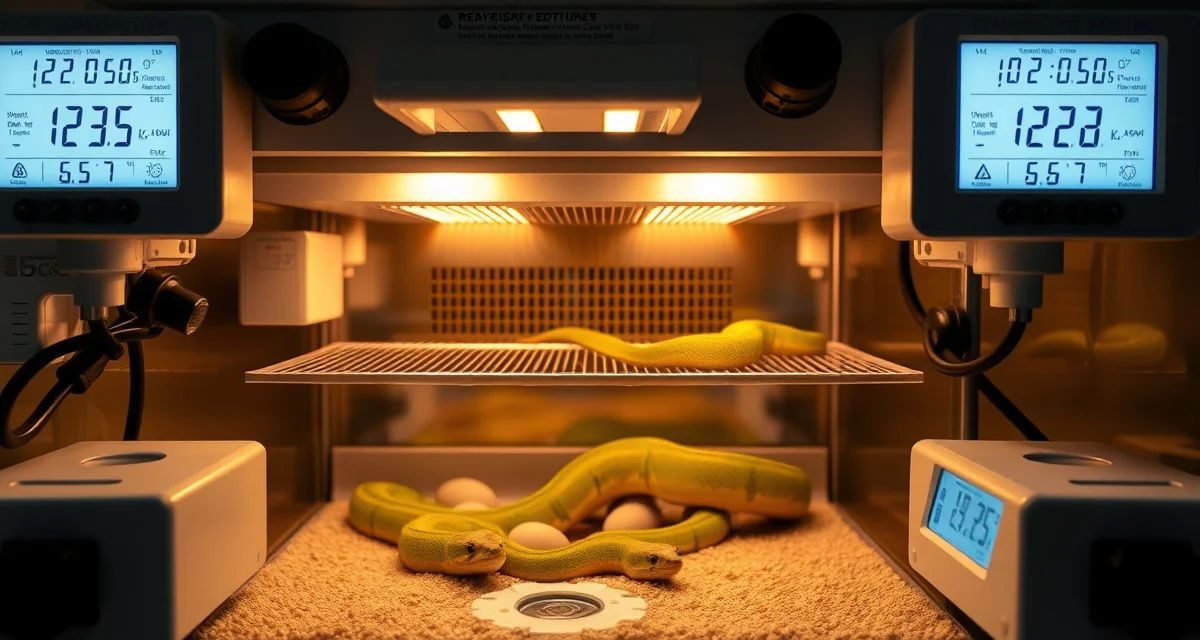
Green Tree Python Incubation Parameters: Complete Breeder Guide
Green tree python incubation parameters are tighter than most colubrids and require more consistent monitoring than ball python eggs. Get the temperature or humidity wrong for too long, and you risk losing a clutch worth thousands of dollars. Getting it right consistently requires accurate equipment, a clear protocol, and detailed logs. Breeders using integrated software report 30% less time on administrative tasks, leaving more time for the hands-on incubation monitoring that protects your clutch.
TL;DR
- Green tree pythons (Morelia viridis) are arboreal specialists requiring perch-based enclosures and husbandry quite different from terrestrial pythons.
- Breeding is triggered by a dry season simulation with reduced humidity and a modest temperature reduction over 6-8 weeks.
- Clutch sizes average 12-25 eggs, with Biak locale animals producing larger clutches than Sorong or Aru.
- Incubation runs 47-52 days at 84-86 degrees Fahrenheit, shorter than most python species at equivalent temperatures.
- Locale documentation is critical: Biak, Sorong, Aru, Kofiau, and locality blends all carry distinct market values and buyer expectations.
GTP incubation isn't difficult once you understand the parameters, but it does require more attention than a set-and-forget approach. This guide covers the core settings, common mistakes, and how to build a monitoring system that catches problems early.
Core Incubation Parameters for Green Tree Pythons
Temperature
The standard incubation temperature for GTP eggs is 84 to 88°F (29 to 31°C). Most breeders target 86°F as a reliable midpoint. Temperature accuracy matters here: sustained temperatures above 90°F can cause developmental defects, while consistent temps below 82°F will extend incubation duration and may increase mortality.
Use a quality digital thermometer with a probe inside your incubator, positioned at egg level, not at the incubator's built-in sensor. These often differ by several degrees. Verify your readings against a second thermometer periodically.
Humidity
GTP eggs require high humidity, typically 90 to 100% relative humidity within the egg container. Most breeders incubate eggs in sealed or semi-sealed containers with a moist substrate such as perlite, vermiculite, or Hatchrite.
Perlite mixed with water at a 1:1 weight ratio is a widely used medium. Pack the eggs partially into the substrate so they sit stable but aren't buried. The moisture in the substrate maintains the microclimate around the eggs without direct contact with excess water.
If you use a container with a lid, you can incubate fully sealed or with small vent holes. Fully sealed containers maintain humidity most consistently but require periodic checking to ensure CO2 doesn't build up. Most breeders open containers briefly every 7 to 10 days to assess eggs and refresh the air.
Incubation Duration
At 86°F, GTP eggs typically hatch in 47 to 52 days. Slightly cooler temperatures will extend incubation; slightly warmer will shorten it. Track your incubation start date and expected hatch window in your clutch log so you can prepare your hatchling setup in advance.
Don't panic if eggs go a few days past the expected window. Hatch timing varies by clutch and individual egg. Watch for the eggs beginning to deflate and sweat as internal gases change near hatch, a sign that pipping is imminent.
Setting Up Your Incubator
Equipment
A quality incubator with good temperature stability is essential. Reptile-specific incubators, converted wine coolers or mini-fridges with a thermostat, and commercial herpetocultural incubators all work well. The key is stable temperature without significant swings.
Avoid incubators that allow temperatures to swing more than 1 to 2 degrees from your set point. Hot spots and cold spots within the incubator can affect different clutches differently, so place a probe at egg level in your specific setup and verify the reading matches your target before adding eggs.
Substrate Preparation
Prepare your incubation substrate before eggs are laid. Mix perlite or vermiculite with water by weight. A 1:1 ratio by weight for vermiculite and 1:0.5 or 1:0.6 for perlite provides appropriate moisture. Substrate should feel slightly damp but not wring out water when squeezed.
Label each container with the clutch ID, lay date, expected hatch window, and pairing information. This becomes part of your permanent clutch record in HatchLedger's reptile breeder hub, where you can access it alongside each animal's full history.
Monitoring Throughout Incubation
Candling
Candle eggs 10 to 14 days after lay using a small flashlight or dedicated candler pressed against the egg in a dark room. Viable eggs will show visible blood vessels and a dark embryo mass. Infertile eggs remain uniformly opaque.
Remove clearly infertile eggs promptly. Rotting eggs can contaminate adjacent viable eggs. If you're uncertain whether an egg is viable, leave it and recheck in another week. Log your candling results with the date and which eggs were retained versus removed.
Weight Monitoring
Weigh individual eggs at lay and every two weeks through incubation. Viable eggs typically lose a small amount of weight as they develop, but significant weight loss suggests too-low humidity. Eggs gaining substantial weight may be sitting in too much moisture.
Note any weight concerns in your incubation log with corrective actions taken. This data is invaluable when troubleshooting a partial-hatch clutch or when comparing incubation conditions across seasons.
Checking for Problems
Check your incubation container every 7 to 10 days. Look for:
- Eggs that appear deflated, discolored, or have collapsed
- Mold growth on eggs (minor surface mold on the shell isn't always fatal, but significant coverage is concerning)
- Substrate drying out, which would require adding a small amount of water around the edges
Log every check-in with date and observations. If you're managing multiple clutches at different stages, your records in reptile breeder software comparison research consistently show that digital logs beat paper notebooks for staying organized across a full breeding season.
Common Incubation Mistakes to Avoid
Temperature swings. If your incubator can't maintain stable temperatures, invest in a better unit or an external thermostat with a reliable probe. Temperature instability is the leading cause of developmental problems in GTP eggs.
Opening containers too often. Every time you open the incubation container, you disrupt the humidity equilibrium. Limit checks to every 7 to 10 days unless you have a specific concern.
Incubating infertile eggs too long. Rotting infertile eggs release gases and bacteria that can affect adjacent viable eggs. Candle early and remove obvious slugs.
Inadequate substrate moisture. GTP eggs need consistent humidity throughout incubation. Check substrate moisture at every check-in and add small amounts of water to the substrate (not directly on eggs) if it's drying out.
Frequently Asked Questions
What is the best approach to green tree python incubation parameters?
Target 86°F with 90 to 100% humidity in a sealed or semi-sealed incubation container using perlite or vermiculite as substrate. Verify your temperature with a probe at egg level rather than relying solely on your incubator's built-in sensor. Candle eggs at 10 to 14 days to assess fertility and remove infertile eggs promptly. Log your temperature, humidity, and egg weight data throughout incubation so you can identify trends and adjust if needed. Consistent monitoring is more important than perfect initial setup, since small problems caught early are usually correctable.
How do professional breeders handle green tree python incubation parameters?
Professional breeders run dedicated incubators with verified temperature accuracy, use calibrated substrate ratios, and log every data point throughout incubation. They candle clutches multiple times during incubation, track individual egg weights, and document every check-in with date and observations. They review their incubation logs after each season to identify correlations between conditions and hatch rates. Many use breeding software to maintain clutch records that link incubation data to pairing records and financial outcomes, giving them a complete view of each season's performance.
What software helps manage green tree python incubation parameters?
HatchLedger is purpose-built for reptile breeders, connecting animal records, breeding history, clutch outcomes, and financial tracking in one system. Unlike generic spreadsheets, it's designed around the specific workflow of an active breeding season. Free for up to 20 animals.
Why is locale documentation so important for green tree pythons?
Buyers of green tree pythons are often very specific about locality. Biak animals are prized for large adult size and a blue ontogenetic coloration phase. Sorong and Aru animals are known for consistent solid green adult coloration. Locality blends from unknown crosses are worth significantly less than documented pure-locale animals. Recording locale information from acquisition through sale is essential.
How long does it take green tree python neonates to change color?
The ontogenetic color change from yellow or red neonate coloration to adult green takes approximately 6-12 months in most locales. Biak animals often go through a blue phase during the transition. Buyers of neonates should understand the timeline. Photographing animals at regular intervals through the color change documents the process and makes for compelling sales content.
Sources
- USARK (United States Association of Reptile Keepers)
- Association of Reptilian and Amphibian Veterinarians (ARAV)
- CITES Appendix II (international trade documentation)
- Herpetofauna (Australian Herpetological Society)
- Green Tree Python Foundation
Get Started with HatchLedger
Green tree python breeding demands locale documentation, seasonal cycling records, and clutch management that generic spreadsheets handle poorly. HatchLedger keeps your locale lineage, breeding history, and per-clutch records connected so buyers get complete documentation and you build a traceable breeding program. Try it free with up to 20 animals.