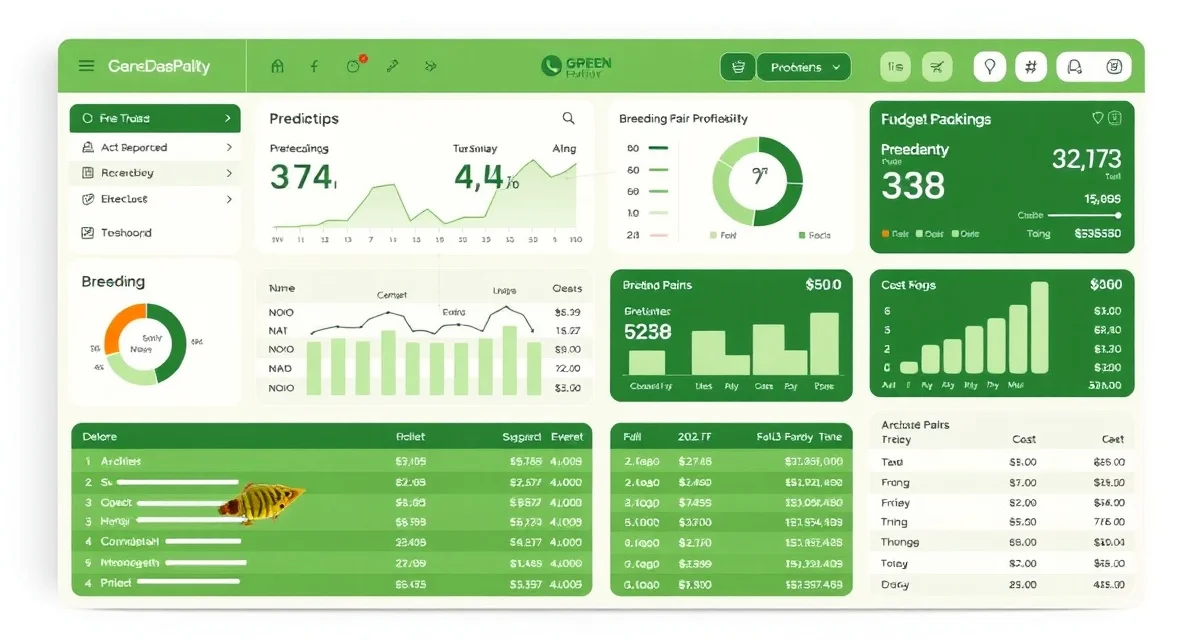
Green Tree Python Financial Tracking: Complete Breeder Guide
Green tree python financial tracking separates breeders who run profitable programs from those who generate revenue without understanding whether they're making money. GTPs involve significant investment in high-value animals, specialized housing, and intensive husbandry. Without accurate financial records, you can't know which breeding pairs are actually profitable, which seasons are succeeding, or whether your program is growing or slowly losing money. Breeders using integrated software report 30% less time on administrative tasks, and that efficiency is especially valuable for the financial record-keeping that drives smart business decisions.
TL;DR
- Green tree pythons (Morelia viridis) are arboreal specialists requiring perch-based enclosures and husbandry quite different from terrestrial pythons.
- Breeding is triggered by a dry season simulation with reduced humidity and a modest temperature reduction over 6-8 weeks.
- Clutch sizes average 12-25 eggs, with Biak locale animals producing larger clutches than Sorong or Aru.
- Incubation runs 47-52 days at 84-86 degrees Fahrenheit, shorter than most python species at equivalent temperatures.
- Locale documentation is critical: Biak, Sorong, Aru, Kofiau, and locality blends all carry distinct market values and buyer expectations.
Why GTP Financial Tracking Is More Complex
GTPs aren't cheap to breed. A quality breeding pair can represent $5,000 to $20,000+ in initial investment. Housing, lighting, humidity systems, and feeding costs for a collection of 10 to 20 adult animals add up to thousands per year in operational expenses. Incubation setup, hatchling enclosures, veterinary care, and selling platform fees layer on additional costs.
On the revenue side, GTPs can sell for significant amounts, but the path from clutch to cash is longer than many breeders plan for. Hatchlings that won't feed for 8 weeks aren't generating revenue during that time, and the cost of their care continues.
Accurate financial tracking shows you whether the business model works for your specific program, which pairs are productive investments, and where your money is actually going.
The Cost Categories You Need to Track
Animal Acquisition Costs
Every animal you add to your breeding collection represents a capital investment. Track the acquisition cost of every breeding animal, including any transport or shipping costs. This cost should be amortized across the breeding seasons you expect that animal to produce. A female you purchased for $3,000 who breeds for 5 seasons has an amortized annual cost of $600 per year.
Annual Care Costs
Calculate the annual cost to maintain your adult collection:
- Food costs (prey items, frequency, cost per feeding)
- Electricity for heating, lighting, and humidity systems
- Enclosure maintenance and replacement costs
- Substrate and incubation supplies
- Veterinary care (routine checks, treatments)
Divide your total annual care cost by the number of breeding animals to get a per-animal annual cost, then allocate this to each breeding pair's P&L.
Clutch Production Costs
For each clutch, track direct costs:
- Incubation supplies allocated to that clutch
- Hatchling enclosures and setup
- Hatchling feeding costs from hatch to sale
- Any veterinary costs specific to the clutch or individual hatchlings
Selling Costs
MorphMarket fees, expo table costs, shipping supplies, and shipping charges all come out of your revenue. Calculate these as a percentage of revenue or as fixed costs per transaction.
Revenue Tracking
Track revenue at the individual animal level, linked back to the clutch. For each hatchling sold, record:
- Sale price
- Deposit amount received and date
- Balance payment received and date
- Buyer information
- Sale platform
These individual sale records aggregate to give you the total revenue for each clutch. Compare that to your clutch production costs and you have your P&L per clutch.
HatchLedger's reptile breeder hub calculates this automatically as you log costs and sales. The P&L per clutch is always current without requiring you to manually reconcile multiple spreadsheet tabs.
Analyzing Profitability by Breeding Pair
Once you have a season's worth of data, compare profitability by breeding pair. Some pairs will consistently produce larger, more viable clutches with hatchlings that sell at premium prices. Others may produce smaller clutches or animals that require more work to sell.
This analysis tells you where to focus your investment. A breeding pair generating $8,000 net revenue per season is worth continuing. A pair that generates $2,000 but costs nearly that much to maintain may not justify the resource allocation.
Without financial records that connect pairing activity to clutch outcomes to sale revenue, this analysis is impossible. Most breeders who haven't tracked their finances carefully are surprised when they do the math for the first time.
Managing Deposits and Cash Flow
GTP buyers often pay deposits to reserve animals from upcoming clutches. Deposits create a liability: you owe that buyer an animal, and they've given you money before the animal is available. Managing this accurately matters for both legal compliance and cash flow planning.
Track every deposit with:
- Buyer name and contact information
- Deposit amount and date received
- Which animal or clutch the deposit applies to
- Expected availability timeline
- Refund policy and terms
Reptile breeder software comparison reviews consistently highlight deposit tracking as a critical gap in basic reptile management tools. HatchLedger includes this tracking alongside your animal and clutch records so you always know your outstanding deposit obligations.
Tax Considerations
If your GTP breeding generates income, that income is taxable. Accurate financial records simplify tax preparation and protect you if questions arise. Track:
- Total revenue from animal sales
- Total expenses (cost of goods sold, operational expenses)
- Capital equipment purchases (incubators, enclosures)
- Home office or dedicated space costs if applicable
Consult a tax professional familiar with hobby income and small business rules in your jurisdiction. The line between hobby income and business income has specific tax implications, and where your program falls affects how you report and deduct expenses.
Monthly and Annual Reviews
Build a habit of reviewing your financial records monthly during active selling seasons. Check:
- Revenue received against expected
- Outstanding deposits and delivery timelines
- Upcoming costs
- Animals sold versus inventory remaining
An annual review at the end of each breeding season is essential. Calculate your total P&L for the season, review which pairs and clutches were most profitable, and plan the next season's investments based on data rather than optimism.
Frequently Asked Questions
What is the best approach to green tree python financial tracking?
Track all costs and revenues at the clutch level so you can calculate actual P&L per clutch and per breeding pair. Record acquisition costs for breeding animals, annual care costs, clutch-specific production costs, and selling costs. Log every sale with individual sale price and payment date. Manage deposits with a separate tracking log that shows outstanding obligations. Review your financial data at least monthly during the selling season and conduct an annual review to assess which breeding pairs are generating the best returns and where costs can be managed more effectively.
How do professional breeders handle green tree python financial tracking?
Professional GTP breeders treat their financial tracking as seriously as their husbandry records. They calculate actual costs per clutch, track revenue at the individual hatchling level, and compare P&L across breeding pairs to make informed decisions about which animals to continue investing in. They manage deposits carefully to avoid cash flow problems and liability issues. Many use dedicated breeding software that connects their animal records directly to financial data, eliminating the need for separate bookkeeping systems and reducing the risk of errors in manual reconciliation.
What software helps manage green tree python financial tracking?
HatchLedger is purpose-built for reptile breeders, connecting animal records, breeding history, clutch outcomes, and financial tracking in one system. Unlike generic spreadsheets, it's designed around the specific workflow of an active breeding season. Free for up to 20 animals.
Why is locale documentation so important for green tree pythons?
Buyers of green tree pythons are often very specific about locality. Biak animals are prized for large adult size and a blue ontogenetic coloration phase. Sorong and Aru animals are known for consistent solid green adult coloration. Locality blends from unknown crosses are worth significantly less than documented pure-locale animals. Recording locale information from acquisition through sale is essential.
How long does it take green tree python neonates to change color?
The ontogenetic color change from yellow or red neonate coloration to adult green takes approximately 6-12 months in most locales. Biak animals often go through a blue phase during the transition. Buyers of neonates should understand the timeline. Photographing animals at regular intervals through the color change documents the process and makes for compelling sales content.
Sources
- USARK (United States Association of Reptile Keepers)
- Association of Reptilian and Amphibian Veterinarians (ARAV)
- CITES Appendix II (international trade documentation)
- Herpetofauna (Australian Herpetological Society)
- Green Tree Python Foundation
Get Started with HatchLedger
Green tree python breeding demands locale documentation, seasonal cycling records, and clutch management that generic spreadsheets handle poorly. HatchLedger keeps your locale lineage, breeding history, and per-clutch records connected so buyers get complete documentation and you build a traceable breeding program. Try it free with up to 20 animals.