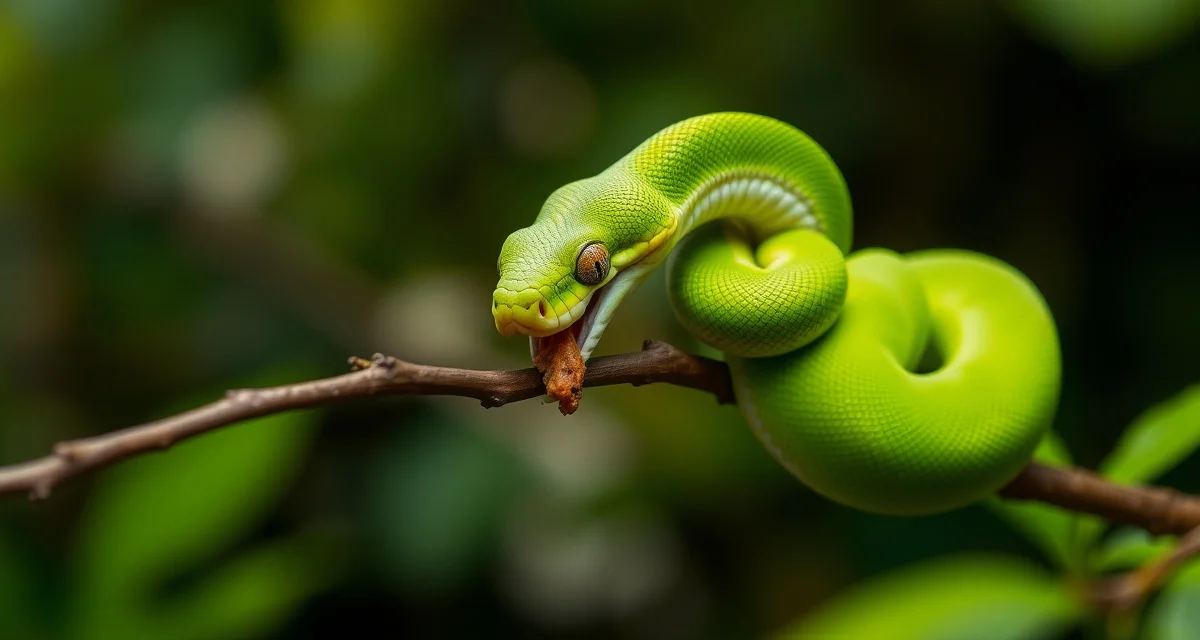
Green Tree Python Feeding Hatchlings: Complete Breeder Guide
Feeding green tree python hatchlings is widely considered the most difficult part of keeping and breeding this species. The hatchlings are naturally predisposed to eating lizards, they're often skeptical of frozen-thawed prey, and some individuals refuse to eat for weeks or months without intervention. Getting a hatchling eating reliably is a critical milestone that determines its future as a healthy, sellable animal. Breeders using integrated software report 30% less time on administrative tasks, and that time matters enormously when you have 10 to 20 hatchlings requiring individual feeding attention.
TL;DR
- Green tree pythons (Morelia viridis) are arboreal specialists requiring perch-based enclosures and husbandry quite different from terrestrial pythons.
- Breeding is triggered by a dry season simulation with reduced humidity and a modest temperature reduction over 6-8 weeks.
- Clutch sizes average 12-25 eggs, with Biak locale animals producing larger clutches than Sorong or Aru.
- Incubation runs 47-52 days at 84-86 degrees Fahrenheit, shorter than most python species at equivalent temperatures.
- Locale documentation is critical: Biak, Sorong, Aru, Kofiau, and locality blends all carry distinct market values and buyer expectations.
The good news: most feeding issues in GTP hatchlings are solvable with patience, the right techniques, and careful tracking of each individual's feeding history.
When to Start Feeding Attempts
Do not attempt to feed a GTP hatchling before its first shed. Hatchlings typically shed 7 to 14 days after hatching. Feeding attempts before this shed almost always result in refusal and can stress the animal unnecessarily.
After the first shed, wait an additional 3 to 5 days before the first feeding attempt. At this point, the hatchling's hunting instincts should be active and it will be more likely to show interest in prey.
Log the hatch date and first shed date for every hatchling immediately. Your first feeding attempt window is easy to calculate from these two dates if they're recorded. Tracking this in HatchLedger's reptile breeder hub means you can see at a glance which hatchlings are ready for their first attempt and which are still waiting for their initial shed.
The Right Prey for GTP Hatchlings
Pinky Mice (Frozen-Thawed)
Pinky mice are the standard first prey item for most captive GTP hatchlings. Choose pinkies that are appropriately sized, roughly the same diameter as the hatchling's mid-body. Too large and the hatchling may strike but won't swallow; too small and there may not be enough feeding stimulus.
Frozen-thawed pinkies should be fully thawed and warmed to approximately 100-105°F before offering. Use a separate container warmed with a heating pad or warm water to heat the prey, not a microwave, which creates uneven hot spots.
Lizard Scenting
Because GTPs evolved eating lizards, lizard-scented prey items trigger a much stronger feeding response in reluctant hatchlings. Rub a freshly killed pinky against a live anole, gecko, or other small lizard for 30 to 60 seconds before offering. The lizard scent transferred to the pinky dramatically increases strike rates in problem feeders.
Some breeders keep a small supply of anoles specifically for scenting duty. It's a low-cost investment that can save a hatchling that would otherwise go weeks without eating.
Live Prey
For persistent refusers that won't take frozen-thawed prey, live pinkies are an option. The movement and warmth of live prey triggers a prey-detection response that frozen prey can't replicate. Use live prey only when necessary and supervise the feeding to prevent injury to the hatchling from an agitated prey item.
Feeding Techniques That Work
Tong Feeding
Present the prey item with feeding tongs, dangling or gently wiggling it near the hatchling's head while it's perched. GTPs are ambush predators and will often strike prey that appears to pass near their position. Don't wave the prey aggressively; a natural, slow drift past the hatchling's field of view is more effective.
Try feeding at dusk or under dim lighting, when GTPs are most active and most likely to hunt.
Leave-In Method
If tong feeding produces no response, leave the warmed prey item in the enclosure on or near the perch for 2 to 3 hours before removing it. Some hatchlings will take prey on their own timeline without the direct interaction of tong feeding.
Remove uneaten prey after a few hours to avoid stress from a decomposing item in the enclosure.
Separate Feeding Container
Some hatchlings feed better in a separate container with minimal stimulation: a clean plastic container with a perch, no substrate, and a single prey item. This removes visual clutter and distraction. After the hatchling strikes and swallows, return it to its main enclosure.
Paper Bag Method
Some breeders place the hatchling and a warmed pinky inside a paper bag, fold the top, and leave it undisturbed for a few hours. The enclosed space and darkened environment can trigger feeding in hatchlings that seem overstimulated in open setups. This is a common last-resort technique before escalating to assist feeding.
Logging Feeding History
Every feeding attempt needs a record, whether successful or not. Log:
- Date of attempt
- Prey type and size
- Method used (tongs, leave-in, bag method, etc.)
- Prey temperature
- Outcome (strike and swallow, strike only, no response)
This feeding log is your troubleshooting tool. If a hatchling refuses tong-fed frozen-thawed for three attempts, your log tells you it's time to try lizard scenting. If it refuses scented prey, your next step is live. If it refuses live, you're looking at assist feeding. The escalation protocol is only useful if your records show exactly what you've tried and when.
Reptile breeder software comparison resources consistently highlight feeding history tracking as a core need for breeding programs managing multiple hatchlings simultaneously. HatchLedger lets you log each feeding event at the individual animal level so you always know where each hatchling stands.
When to Assist Feed
Assist feeding should be a last resort, not a first response to a reluctant feeder. Consider assist feeding when:
- A hatchling has refused 4 or more feeding attempts over 4 to 6 weeks
- The hatchling is visibly losing weight (more than 10% from hatch weight)
- All standard escalation methods have been tried
Assist feeding involves gently opening the hatchling's mouth and positioning a thawed pinky so swallowing instinct takes over. This is stressful for the animal and carries risk if done incorrectly. If you haven't done it before, consult with an experienced GTP breeder or vet before attempting.
After an assist feed, give the hatchling 5 to 7 days of complete calm before the next feeding attempt. Stress after assist feeding can trigger regurgitation.
Frequently Asked Questions
What is the best approach to green tree python feeding hatchlings?
Start with frozen-thawed pinkies after the first shed. Offer them warmed to 100-105°F via tongs at dusk or in dim lighting. If the hatchling refuses twice, try lizard-scented prey by rubbing a pinky against a live gecko or anole. If that fails, try a live pinky or the paper bag method. Log every attempt with date, prey type, method, and outcome. Don't escalate to assist feeding until you've tried multiple techniques over 4 to 6 weeks and the hatchling is showing weight loss. Patience and methodical escalation solve most GTP hatchling feeding problems.
How do professional breeders handle green tree python feeding hatchlings?
Professional breeders start feeding attempts on schedule after the first shed and document every interaction. They don't wait long between attempts: typically every 5 to 7 days. They have a clear escalation protocol and move through it methodically based on each hatchling's feeding log. They keep anoles or geckos on hand specifically for scenting prey. They weigh hatchlings weekly and track weight against feeding history to catch weight loss before it becomes critical. They also share notes with buyers about each animal's feeding history and preferences, which builds buyer confidence and reduces post-sale support issues.
What software helps manage green tree python feeding hatchlings?
HatchLedger is purpose-built for reptile breeders, connecting animal records, breeding history, clutch outcomes, and financial tracking in one system. Unlike generic spreadsheets, it's designed around the specific workflow of an active breeding season. Free for up to 20 animals.
Why is locale documentation so important for green tree pythons?
Buyers of green tree pythons are often very specific about locality. Biak animals are prized for large adult size and a blue ontogenetic coloration phase. Sorong and Aru animals are known for consistent solid green adult coloration. Locality blends from unknown crosses are worth significantly less than documented pure-locale animals. Recording locale information from acquisition through sale is essential.
How long does it take green tree python neonates to change color?
The ontogenetic color change from yellow or red neonate coloration to adult green takes approximately 6-12 months in most locales. Biak animals often go through a blue phase during the transition. Buyers of neonates should understand the timeline. Photographing animals at regular intervals through the color change documents the process and makes for compelling sales content.
Sources
- USARK (United States Association of Reptile Keepers)
- Association of Reptilian and Amphibian Veterinarians (ARAV)
- CITES Appendix II (international trade documentation)
- Herpetofauna (Australian Herpetological Society)
- Green Tree Python Foundation
Get Started with HatchLedger
Green tree python breeding demands locale documentation, seasonal cycling records, and clutch management that generic spreadsheets handle poorly. HatchLedger keeps your locale lineage, breeding history, and per-clutch records connected so buyers get complete documentation and you build a traceable breeding program. Try it free with up to 20 animals.