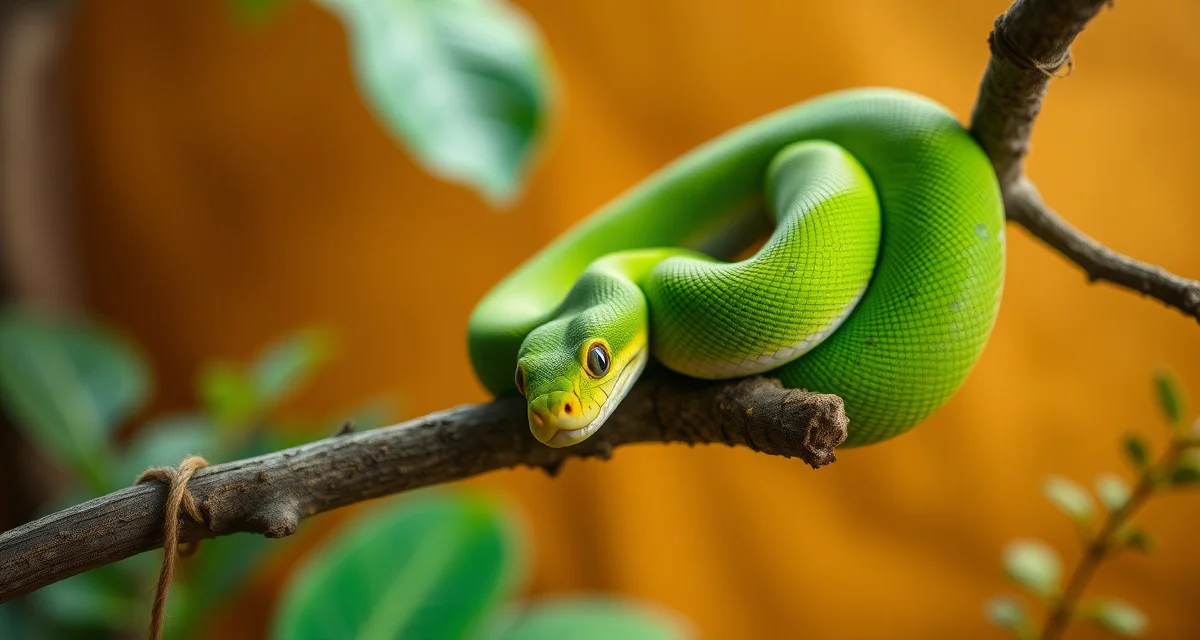
Green Tree Python Common Breeding Issues: Complete Breeder Guide
By HatchLedger Editorial Team · Published 2025-03-05 · Updated Mar 13, 2026
Green tree pythons are one of the most rewarding pythons to breed, but they're also one of the most technically demanding. Breeding failures are common even among experienced breeders, and understanding the root causes is essential for improving season-over-season results. Breeders using integrated software report 30% less time on administrative tasks, which means more time diagnosing and responding to the common breeding issues that can derail a GTP season.
TL;DR
- Green tree pythons (Morelia viridis) are arboreal specialists requiring perch-based enclosures and husbandry quite different from terrestrial pythons.
- Breeding is triggered by a dry season simulation with reduced humidity and a modest temperature reduction over 6-8 weeks.
- Clutch sizes average 12-25 eggs, with Biak locale animals producing larger clutches than Sorong or Aru.
- Incubation runs 47-52 days at 84-86 degrees Fahrenheit, shorter than most python species at equivalent temperatures.
- Locale documentation is critical: Biak, Sorong, Aru, Kofiau, and locality blends all carry distinct market values and buyer expectations.
Most GTP breeding problems fall into a few categories: females that don't cycle properly, pairings that don't result in lock-ups, ovulation issues, or clutch problems after lay. This guide addresses each one with practical troubleshooting steps and record-keeping strategies.
Female Won't Cycle
One of the most common GTP breeding issues is a female that simply doesn't respond to seasonal seasonal cycling attempts. The dry phase doesn't trigger behavioral changes, the female's feeding doesn't shift, and introducing the male produces no interest.
Possible causes and solutions:
Female is not at breeding age or weight. GTPs typically reach sexual maturity at 24 to 36 months, but maturity isn't just age-based. A female needs adequate body weight and condition. If she's underweight or has been stressed by illness or housing issues, she may not cycle regardless of your environmental adjustments.
Cycling protocol was too subtle. GTPs require meaningful environmental shifts to trigger breeding behavior. If your nighttime temperature drops were minor (2 to 3 degrees) or your humidity reduction was minimal, the female may not have registered a seasonal change. Log your exact temperature and humidity values during the cycling attempt so you can assess whether the shift was sufficient.
Female may need a longer cooling period. Some females require 6 to 8 weeks in the dry phase rather than 4. If your first attempt was shorter, extend it before abandoning the season.
Male Won't Engage
Introducing the male is supposed to be the exciting part of breeding season. When he ignores the female entirely or hides, it's frustrating and wastes valuable time.
Possible causes and solutions:
Male isn't conditioned or cycled. Males also need appropriate conditioning before breeding season. A male that's been kept at constant conditions year-round may have lower breeding drive than one that has been through a proper seasonal cycle.
Wrong timing. Introduce the male after the female has been in the wet phase for at least one to two weeks. Introducing too early in the transition may mean the female isn't ready, and an unresponsive female will dampen the male's interest.
Male is stressed. Try the introduction after the male has settled in the enclosure for at least 24 to 48 hours. A freshly moved male may be too stressed to engage.
Log all introduction dates and outcomes in your breeding records. If you're using HatchLedger's reptile breeder hub, you can note each pairing attempt with the date, enclosure setup, and behavioral observations, making it easy to review what preceded successful pairings versus failed introductions.
No Observed Lock-Ups
Even with a cycling female and a responsive male, you may go weeks without observing a confirmed lock-up. GTPs often breed at night, so you may have missed it, but if weeks pass without obvious breeding behavior, something may be off.
Consider overnight video monitoring. A simple USB camera on a timer can record overnight enclosure activity. Many breeders have been surprised to discover their animals were breeding regularly, just not when they were watching.
Check for aggression. Sometimes what looks like male disinterest is actually the female refusing the male. If the female is repeatedly striking at the male when he approaches, separate them. Forced pairings in GTPs can result in injury. Wait a week and try again.
Try a different male. If possible, attempt an introduction with a different male. Some pairings simply don't click, even between appropriately conditioned adults.
Ovulation Issues
After successful lock-ups, the next milestone is ovulation and follicle development. GTPs don't have the dramatic ovulation event that ball pythons display. Instead, you'll notice the female becoming visibly heavier, spending more time at lower enclosure positions, and eventually going off feed.
If the female fails to progress to ovulation after multiple confirmed lock-ups, review her condition, cycling quality, and feeding history. A female that was underfed during conditioning may not have developed sufficient follicles regardless of breeding activity.
If the female ovulates but then reabsorbs follicles, this is a more serious issue often tied to stress, inadequate temperatures, or health problems. Log the timeline of events in your records and consult with a reptile vet. Document when you first noticed follicle development and any environmental or husbandry changes that preceded the reabsorption.
Infertile Clutches and High Slug Rates
A clutch with 50% or more infertile eggs when you had confirmed lock-ups points to either insufficient reproductive access or a fertility problem with one of the animals.
Review your lock-up documentation. Were the lock-ups observed, or assumed? A single brief observed lock-up is less reliable than multiple confirmed sessions over several weeks.
Consider the male's history. Has this male successfully fertilized clutches before? If not, his fertility is unproven. If he has a successful breeding history, the issue may be with the female, the timing, or the number of pairings.
Track fertility rates per pairing over multiple seasons. This is where digital records pay off. In reptile breeder software comparison evaluations, breeders consistently rate the ability to compare fertility rates across pairings over time as a top feature need. HatchLedger lets you pull this data without manually hunting through years of notebooks.
Post-Lay Complications
Female weight loss. Females lose significant weight after laying and may be reluctant to resume feeding. Offer smaller prey than usual and allow several weeks before expecting a normal feeding response.
Egg problems during incubation. Even a healthy clutch can have issues during incubation. High slug rates from a viable-looking clutch may point to incubation temperature or humidity problems rather than breeding issues.
Log post-lay female weight, first post-lay feeding date, and any incubation complications alongside the clutch record. This gives you a complete picture of the breeding season's outcome for each female.
Frequently Asked Questions
What is the best approach to green tree python common breeding issues?
Systematic documentation is the best approach. Log your cycling parameters, every pairing attempt and outcome, lock-up dates and durations, ovulation timeline, clutch data, and post-lay female recovery. When problems arise, your records tell you what changed. Most GTP breeding issues trace back to insufficient female conditioning, inadequate environmental cycling, or timing mismatches. Addressing these root causes with documented evidence rather than guessing produces better results than random protocol changes. Use overnight monitoring to verify breeding behavior you may be missing.
How do professional breeders handle green tree python common breeding issues?
Professional breeders approach GTP breeding with a troubleshooting framework built on data. They maintain detailed records for every breeding season, track which pairings produce which fertility rates, and compare conditions across successful and unsuccessful seasons. When a problem emerges, they look at documented evidence first: what did the cycling protocol look like, how many lock-ups were confirmed, what was the female's condition at breeding time. They also build relationships with other experienced GTP breeders and with reptile vets who can assist with reproductive health concerns.
What software helps manage green tree python common breeding issues?
HatchLedger is purpose-built for reptile breeders, connecting animal records, breeding history, clutch outcomes, and financial tracking in one system. Unlike generic spreadsheets, it's designed around the specific workflow of an active breeding season. Free for up to 20 animals.
Why is locale documentation so important for green tree pythons?
Buyers of green tree pythons are often very specific about locality. Biak animals are prized for large adult size and a blue ontogenetic coloration phase. Sorong and Aru animals are known for consistent solid green adult coloration. Locality blends from unknown crosses are worth significantly less than documented pure-locale animals. Recording locale information from acquisition through sale is essential.
How long does it take green tree python neonates to change color?
The ontogenetic color change from yellow or red neonate coloration to adult green takes approximately 6-12 months in most locales. Biak animals often go through a blue phase during the transition. Buyers of neonates should understand the timeline. Photographing animals at regular intervals through the color change documents the process and makes for compelling sales content.
What is Green Tree Python Common Breeding Issues: Complete Breeder Guide?
This guide covers the most common breeding failures in Green Tree Pythons (Morelia viridis), including cycling issues, failed lock-ups, ovulation problems, and incubation complications. It walks breeders through locale-specific considerations for Biak, Sorong, Aru, and Kofiau animals, and explains how to diagnose and correct problems across each stage of the breeding season to improve clutch success rates year over year.
How much does Green Tree Python Common Breeding Issues: Complete Breeder Guide cost?
The guide is free to read on HatchLedger. There is no purchase required. HatchLedger does offer breeding management software that breeders can use to track pairings, clutches, and incubation data, which complements the guidance in this article and is available through HatchLedger's standard subscription plans.
How does Green Tree Python Common Breeding Issues: Complete Breeder Guide work?
The guide walks through GTP breeding in sequential stages: triggering a dry season cycle, introducing pairs, confirming ovulation, managing gravid females, and incubating eggs at 84-86°F for 47-52 days. Each section identifies what can go wrong and why, giving breeders a diagnostic framework rather than just a care sheet, so they can identify root causes and adjust husbandry mid-season.
What are the benefits of Green Tree Python Common Breeding Issues: Complete Breeder Guide?
Breeders gain a structured understanding of why GTP seasons fail and how to prevent repeat mistakes. The guide covers locale-specific clutch expectations, recognizing ovulation, and incubation parameters unique to this species. Combined with breeding management tools, breeders can reduce administrative overhead by around 30%, freeing time to monitor animals more closely during critical windows.
Who needs Green Tree Python Common Breeding Issues: Complete Breeder Guide?
This guide is written for intermediate to advanced reptile breeders who already keep Green Tree Pythons and are attempting or planning to breed them. It assumes baseline husbandry knowledge and focuses on the technical nuances that separate successful seasons from failed ones, making it especially useful for breeders who have experienced unexplained failures or inconsistent results.
How long does Green Tree Python Common Breeding Issues: Complete Breeder Guide take?
A full GTP breeding season spans roughly 5-7 months from cycle initiation to hatchling emergence. The dry season simulation runs 6-8 weeks, followed by pairing, a gestation period of several weeks post-ovulation, and incubation of 47-52 days. Reading and applying this guide takes under an hour, but the protocols described play out across an entire breeding season.
Related Articles
Sources
- USARK (United States Association of Reptile Keepers)
- Association of Reptilian and Amphibian Veterinarians (ARAV)
- CITES Appendix II (international trade documentation)
- Herpetofauna (Australian Herpetological Society)
- Green Tree Python Foundation
Get Started with HatchLedger
Green tree python breeding demands locale documentation, cycling records, and clutch management that generic spreadsheets handle poorly. HatchLedger keeps your locale lineage, breeding history, and per-clutch records connected so buyers get complete documentation and you build a traceable breeding program. Try it free with up to 20 animals.