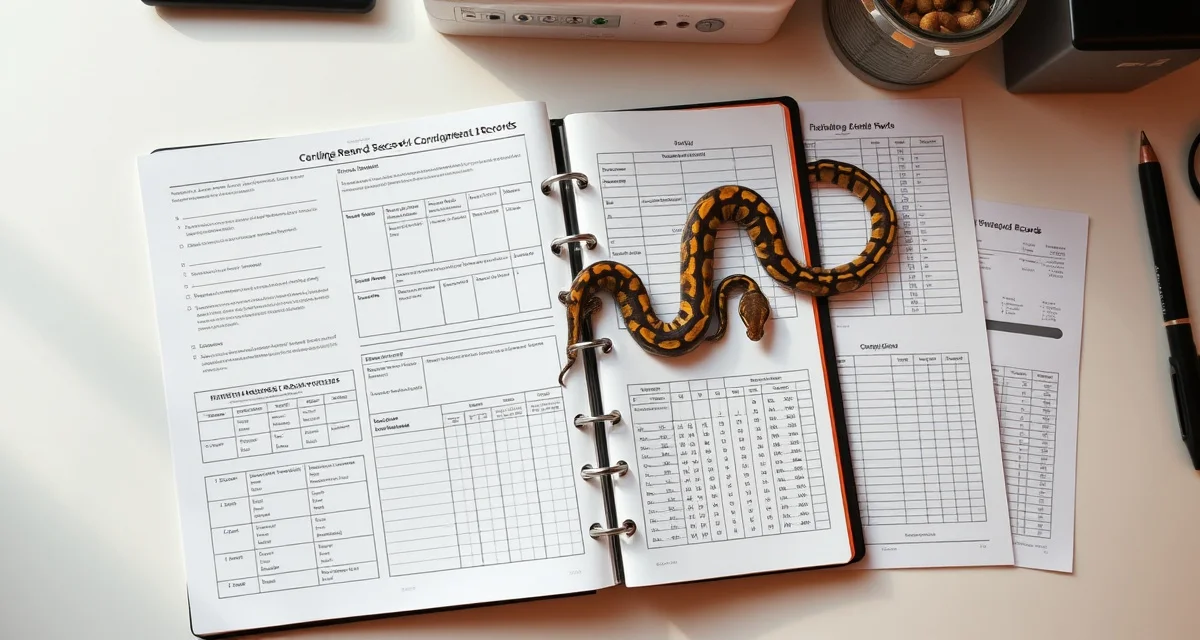
Corn Snake Record Keeping for Breeders: Complete Breeder Guide
Corn snake record keeping is the backbone of a well-run breeding program. Even though corn snakes are a forgiving species to breed, the data you maintain about your animals, pairings, clutches, and sales determines how well you can make decisions, document genetics for buyers, and grow your program profitably. Breeders using integrated software report 30% less time on administrative tasks, a direct result of having records that are organized and accessible rather than scattered across notebooks and spreadsheets.
TL;DR
- Corn snakes (Pantherophis guttatus) are the most widely bred colubrid in captivity, with hundreds of documented morphs spanning all three major inheritance patterns.
- Seasonal cycling of 60-90 days at 50-60 degrees Fahrenheit is the standard cycling protocol for reliable spring breeding.
- Clutch sizes average 12-24 eggs for adult females, with experienced breeders often producing 2 clutches per season from well-conditioned females.
- Incubation setup runs 55-65 days at 78-82 degrees Fahrenheit, cooler than most python species.
- Corn snake morph genetics include multiple allelic series, including the amelanistic and anerythristic pathways, that interact in non-obvious ways.
What Records Matter Most
Individual Animal Records
Every corn snake in your breeding collection needs an individual record. At a minimum, this should include:
- Unique animal ID
- Species and morph identification
- Genetic status (visual, confirmed het, possible het, normal)
- Sex (confirmed or suspected)
- Date acquired or hatched
- Breeder of origin if purchased
- Acquisition price
- Weight history (monthly at minimum)
- Feeding history
- Shed dates
- Health events
For animals you bred yourself, add parent IDs and clutch ID so lineage is traceable.
Breeding and Cooling Records
Document your cooling protocol for each season:
- Start date and end date of cooling period
- Temperature during cooling
- Any animals that weren't cooled (and why)
For breeding:
- Pairing dates and male/female IDs
- Observed pairing behavior or confirmed lock-ups
- Date introduced and date separated
These records connect directly to your clutch outcomes. When a female produces a large, highly fertile clutch, your records show exactly what conditions preceded it.
clutch size records
When a female lays, record:
- Clutch ID
- Lay date and total egg count
- Visible fertility assessment at lay
- Incubation parameters (temperature, substrate, container details)
- Candling dates and results
- Hatch date and hatchling count
Connect each hatchling to the clutch record immediately at hatch so lineage documentation starts on day one.
Hatchling Records
Individual hatchling records from hatch to sale:
- Hatchling ID linked to clutch
- Hatch date and weight
- Morph identification (confirmed and probable het status)
- Feeding history
- Weight timeline
- Sale date, price, and buyer information
This hatchling documentation is what buyers receive when they ask about the animal's history. HatchLedger's reptile breeder hub connects all of these records automatically, so hatchling documentation includes full lineage without you having to manually compile it from multiple sources.
Financial Records
Track costs and revenue per clutch:
- Production costs allocated to each clutch
- Individual hatchling sale prices and dates
- Platform fees and shipping costs
- Net P&L per clutch
Reviewing profitability by breeding pair and by morph project tells you where your program is generating returns and where it's underperforming.
Practical Record-Keeping Habits
Log events at the time they occur. A feeding record logged immediately is accurate. A feeding record written from memory two weeks later has errors. Build the habit of logging before you put the animal back.
Use consistent IDs from day one. A naming convention you apply consistently from the start of your program prevents the confusion that develops when records grow and naming is inconsistent. Changing your system after 200 animals is painful.
Review records before each breeding season. Before you cool your first animal, review what you did last year and what the outcomes were. Let your records guide your decisions rather than starting fresh each season.
Connect animal records to financial records. Records that treat husbandry and finances as separate systems create reconciliation work and missed insights. When your animal's feeding history, breeding activity, and revenue are in the same system, patterns emerge that separate systems would miss.
Reptile breeder software comparison resources consistently highlight this integrated view as a key differentiator between dedicated breeding software and general-purpose tools.
Frequently Asked Questions
What is the best approach to corn snake record keeping for breeders?
Create individual records for every animal with a consistent ID scheme applied from day one. Log events at the time they occur, not from memory later. Connect individual animal records to clutch records and through those to financial records so your data is connected, not fragmented. Review your records before each breeding season to let past outcomes guide current decisions. A digital system is essential for collections beyond 15 to 20 animals; paper records simply can't be searched, sorted, or analyzed at the scale a productive corn snake program generates.
How do professional breeders handle corn snake record keeping for breeders?
Professional corn snake breeders treat record keeping as a non-negotiable part of their operation. They have established ID conventions for animals, clutches, and pairings. They log every feeding, every shed, and every health event at the time it occurs. They maintain complete genetic documentation for every animal so buyers receive accurate morph and het status information. Their records are organized in a way that supports both buyer documentation and their own season-over-season analysis. Most use dedicated breeding software rather than spreadsheets to maintain record quality as their collection grows.
What software helps manage corn snake record keeping for breeders?
HatchLedger is purpose-built for reptile breeders, connecting animal records, breeding history, clutch outcomes, and financial tracking in one system. Unlike generic spreadsheets, it's designed around the specific workflow of an active breeding season. Free for up to 20 animals.
Can corn snakes produce two clutches in a single breeding season?
Yes, many adult corn snake females will double-clutch reliably, especially when kept at ideal temperatures and fed aggressively between clutches. Allow females at least 4-6 weeks of heavy feeding between the first and second clutch. Tracking body weight before and after each clutch helps assess whether a female is in condition for a second clutch that season.
What temperature should corn snake eggs be incubated at?
Corn snake eggs incubate best at 78-82 degrees Fahrenheit. Higher temperatures up to 84 degrees accelerate development but reduce the hatch window and can increase developmental problems. Below 75 degrees slows development significantly. Unlike ball python eggs, corn snake eggs tolerate a wider temperature range reasonably well.
What are the most profitable corn snake morphs for breeders?
Multi-gene combination morphs command the highest prices. Motley, Tessera, and Scaleless are structural genes that add significant value to color morph animals. Scaleless corn snakes in particular fetch $300-800 or more depending on color morph combination. Single-gene morphs like Amelanistic and Anerythristic are common and prices are compressed; combinations including structural genes maintain stronger margins.
Sources
- USARK (United States Association of Reptile Keepers)
- Association of Reptilian and Amphibian Veterinarians (ARAV)
- Herpetological Review (Society for the Study of Amphibians and Reptiles)
- Reptiles Magazine (Bowtie Inc.)
- Society for the Study of Amphibians and Reptiles (SSAR)
Get Started with HatchLedger
Corn snake breeders managing multiple morphs, double-clutching females, and complex genetic documentation benefit from a system that links animal records to clutch outcomes and keeps morph genetics traceable across generations. HatchLedger handles all of this, free for up to 20 animals.