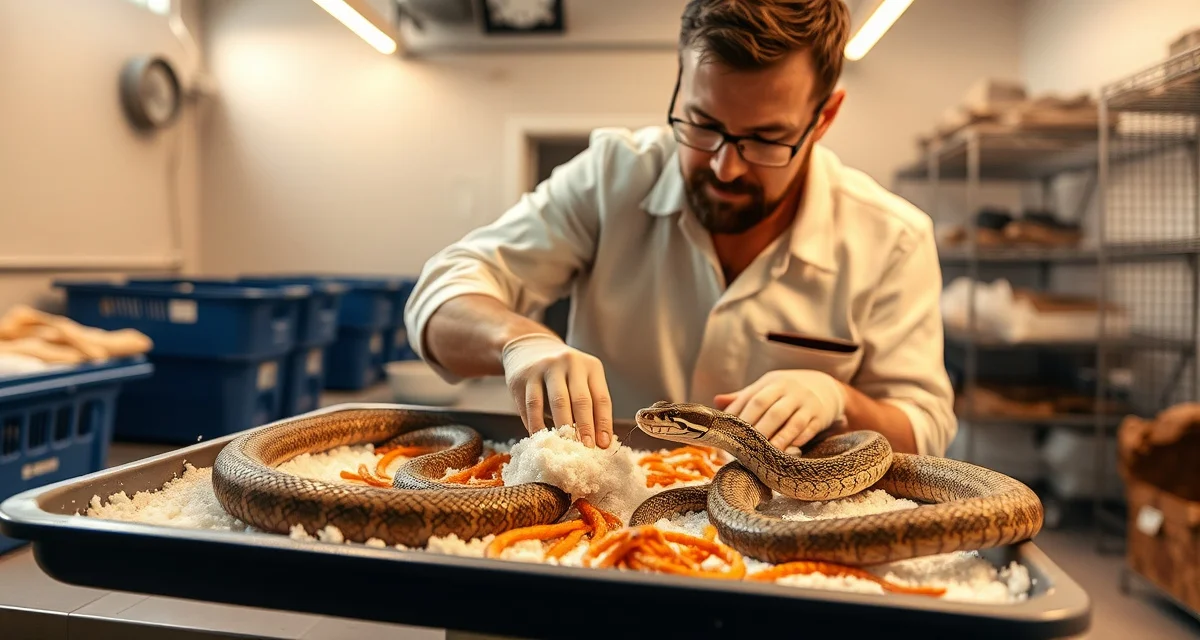
Converting Snakes to Frozen/Thawed Prey
Feeding live prey to reptiles carries real risks: bites and scratches from prey animals cause injuries that require vet treatment, live prey can gnaw on a snake if left unattended, and the logistics of maintaining live feeders are considerably more complicated than keeping frozen ones on hand. Most serious breeders feed frozen/thawed (F/T) as standard practice. Getting snakes onto F/T who won't initially accept it is a skill worth developing.
Why Some Snakes Refuse F/T
The core issue is that a frozen/thawed prey item lacks the sensory cues that trigger a feeding response in many snakes. A live mouse moves, radiates body heat, and has fresh scent. A frozen/thawed mouse delivered improperly is cold, motionless, and may smell of freezer or thawing.
Ball pythons in particular are heat-seekers. Their pit organs detect infrared radiation from warm prey. A mouse thawed to room temperature may not trigger the same response as a live animal at 100°F+ body temperature.
Thawing and Presentation
The single biggest improvement most breeders can make is proper thawing and warming:
Thaw completely before warming: A frozen mouse thawed in hot water has a cold center and hot exterior. Thaw overnight in the refrigerator or in cool water until fully defrosted.
Warm to appropriate temperature: After thawing, warm the prey in warm (not boiling) water until it reaches approximately 100-105°F surface temperature. A laser thermometer is useful here. The warmth is a significant trigger for reluctant feeders.
Check for dampness: Pat prey items dry before offering. Many snakes refuse wet prey.
Offer in the dark: Ball pythons are nocturnal feeders. Offering prey at night or in a darkened environment reduces stress and improves acceptance rates.
Use tongs: Dangling prey with tongs and giving it slight movement can trigger feeding responses in reluctant animals.
Scenting Techniques
If warming and presentation adjustments don't work, scenting the prey is often the next step:
Live prey scent rub: Briefly rub the thawed prey item against a live feeder of the same species to transfer scent. Even minimal live prey contact can make a significant difference.
Chick scent: Some reptiles respond to day-old chick scent. Brain the prey item (a small cut exposing brain matter) and rub in chick scent. This sounds unpleasant but is a standard technique.
Gerbil or hamster scent: Some ball pythons that refuse mouse scent will accept gerbil-scented prey. Rub the F/T mouse in used gerbil bedding.
Quail or lizard scent: For hatchling ball pythons that won't accept mice, scenting with feeder quail or a shed lizard skin sometimes initiates the feeding response.
Tracking the Conversion Process
Keep a feeding log for every animal you're converting. Record:
- Date of every feeding attempt
- Prey type, size, and preparation method
- Whether the animal struck, constricted, or refused
- Any technique modifications tried
This log tells you whether you're making progress and which techniques have been most effective. Without records, it's easy to underestimate how many attempts you've made or to repeat unsuccessful approaches. It also helps you identify patterns, some snakes will accept on attempt 3, others on attempt 20.
When Conversion Is Most Difficult
Certain situations make conversion harder:
Newly acquired wild-caught animals: Many WC ball pythons are reluctant feeders in general and converting them to F/T adds another layer of difficulty. Address feeding establishment first, then consider conversion.
Animals with established live prey habits: A snake that has eaten live prey for years may be harder to convert than a younger animal. Hunger is a useful tool, a longer fast before offering F/T increases motivation.
During breeding season: Breeding females often fast anyway. Don't try to convert a female that's in active breeding cycle or incubating. Do it after the season when she's receptive to eating.
Hatchling Feeding from the Start
The easiest approach is to never start on live prey at all. Hatchlings that get their first meal as a properly warmed frozen/thawed pinkie don't develop a live prey preference. This is standard practice for most experienced breeders. Your hatchling feeding records should note what the animal's first prey type was so you know what feeding history you're working with if issues arise later.