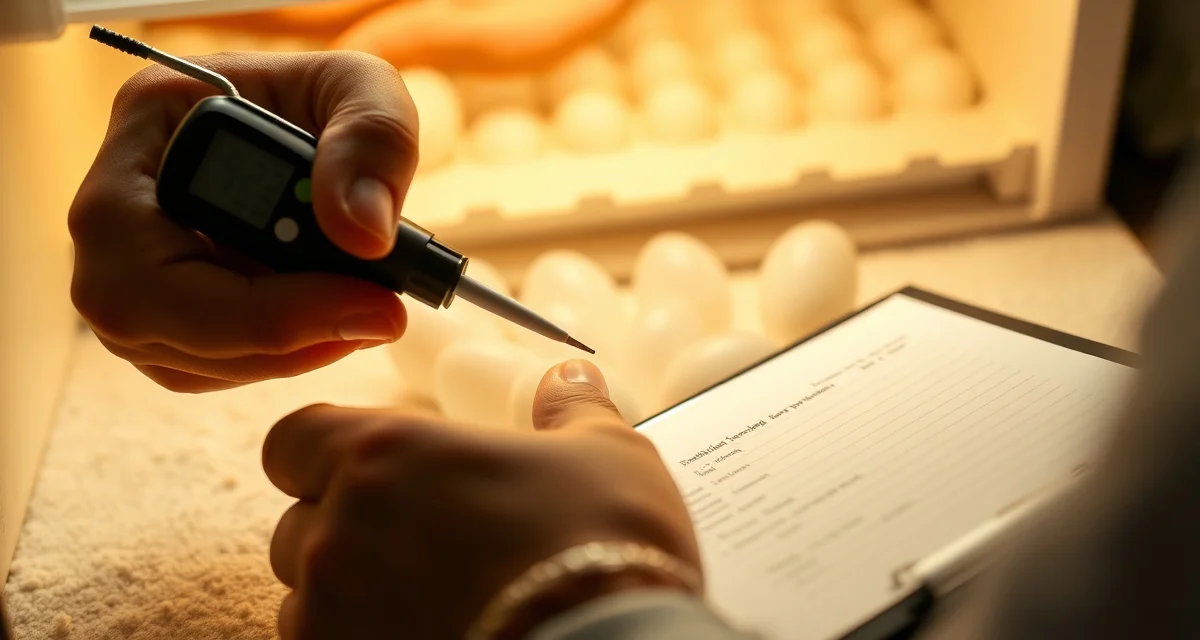
Clutch Monitoring Records: Tracking Eggs Through Incubation
Incubation is not a set-it-and-forget-it process. Conditions shift, eggs change, problems develop. Breeders who check their clutches regularly and keep records of what they observe catch problems early and maintain the data needed to understand outcomes after hatch.
What to Record at Each Inspection
Regular clutch inspections should generate notes, not just eyeball assessments. For each check, record:
Date and time: Gives you a timeline to reference if something changes between inspections.
Temperature and humidity readings: Pull actual readings from your probe, not just what the thermostat is set to. Probes drift. Thermostats malfunction. Knowing what the incubator actually ran at is crucial when investigating a poor hatch.
Egg condition: Color, firmness, and size. Healthy ball python eggs stay white to cream and remain firm throughout incubation. Sweating (condensation on the egg surface) is normal and indicates appropriate humidity. Denting indicates moisture loss.
Any eggs of concern: Flag specific eggs that show changes. Track them individually at subsequent inspections to see whether the condition worsens or stabilizes.
Mold: If present, note which eggs are affected and what action you took. Small amounts of mold on the egg surface can sometimes be treated with a damp cloth or a dilute betadine solution. Eggs with mold penetrating the shell are generally not recoverable.
Inspection Frequency
For a standard ball python clutch at 88-90°F, weekly inspections are adequate during the first month. In the second month, as pip date approaches, every 2-3 days is reasonable. Some breeders check daily in the final week.
The goal is to catch problems in time to intervene, not to hover unnecessarily. Opening the incubator too frequently introduces temperature and humidity fluctuations. Find a rhythm that keeps you informed without disrupting the environment.
Individual Egg Tracking
In clutches with any variation in egg appearance, number each egg in the container and track them individually. This is particularly important when:
- One or more eggs appear borderline viable
- You want to correlate hatchling outcomes with individual egg development
- You're troubleshooting a clutch with multiple problem eggs
Numbering eggs with a soft pencil (not marker) on the top surface allows you to track which end is up (important for some species) and correlate your notes to specific eggs throughout incubation.
Temperature Records and Probe Placement
Incubator temperature fluctuates, especially in ambient-dependent setups or during extreme outdoor weather. If your incubation room drops 10 degrees during a cold snap, your incubator's performance changes. Record actual temperature readings at each inspection and note any unusual ambient conditions.
Probe placement matters. The temperature at the probe location may differ from the temperature at the egg level. If you're seeing poor hatch rates, experimenting with probe placement while keeping careful records lets you identify whether temperature variance is a contributing factor. Your clutch hatch tracking history over multiple seasons will show whether outcomes correlate with temperature data.
Problem Egg Documentation
When an egg fails, document it thoroughly:
- Which egg (by number or position)
- When the problem first appeared
- What the egg looked like at each subsequent inspection
- Whether you intervened and how
- Final outcome (dead-in-egg, slug, contaminated)
This documentation isn't just for the current season. When you're reviewing a year of clutch records and notice that one incubator has more failures than the other, or that a particular female's clutches have a higher failure rate, you need this detail to understand why.
Connecting to the Broader Record
Clutch monitoring records live within the larger context of the clutch's history. The female's female health tracking records provide background on her condition before lay. The breeding season records show you when she was paired, when she ovulated, and what the timeline looked like.
All of this connects in HatchLedger so you're never looking at incubation data in isolation. When a clutch goes wrong, you have the full picture: the female's health, the pairing history, the incubation environment, and the progression of egg changes through the incubation period. That's what allows you to actually learn from the outcome rather than just cataloging the loss.