Burmese Python Health and Disease Prevention: Complete Breeder Guide
By HatchLedger Editorial Team · Published 2025-04-28 · Updated Mar 13, 2026
Health management in a Burmese python breeding collection requires the same vigilance as any reptile collection, but the stakes are higher -- these animals represent significant capital investment and years of breeding program development. A disease outbreak that affects multiple animals can set a morph project back years. Breeders using integrated software report 30% less time on administrative tasks, freeing up time for the consistent observation that's the foundation of effective health management.
TL;DR
- Burmese pythons (Python bivittatus) are among the largest constrictors in captivity, with breeding females commonly exceeding 100-200 lbs.
- Clutch sizes average 25-50 eggs, making Burmese pythons among the most productive large constrictors in captive breeding.
- Cycling typically involves a 4-8 week period of reduced temperatures (dropping 8-12 degrees Fahrenheit) and reduced feeding frequency.
- Incubation parameters runs 60-65 days at 88-90 degrees Fahrenheit, with females capable of thermoregulating eggs by muscular shivering.
- Compliance requirements requirements for Burmese python ownership and interstate transport vary by state, with federal protections under the Lacey Act applying in some jurisdictions.
The most effective health care is preventive. Animals that are properly conditioned, housed in appropriate environments, and monitored consistently develop fewer serious health issues than those managed reactively.
Respiratory Infections
Respiratory infections are common in large constrictors kept in suboptimal conditions. Signs include wheezing or bubbling breath sounds, mucus from the mouth or nares, open-mouth breathing, and lethargy. Mild cases may respond to correcting husbandry -- particularly raising temperatures if the animal has been kept too cool.
Moderate to severe respiratory infections require veterinary diagnosis and typically antibiotic treatment. A culture and sensitivity test helps identify the causative bacteria and ensures the prescribed antibiotic is effective against the specific pathogen. Empiric treatment without culture sometimes works but risks treating with an ineffective antibiotic.
Prevention centers on consistent temperature maintenance and good ventilation. Large Burmese kept at temperatures below 75F ambient for extended periods are at elevated respiratory risk. Humidity that's excessive without adequate ventilation also promotes bacterial growth in the respiratory tract.
Retained Sheds
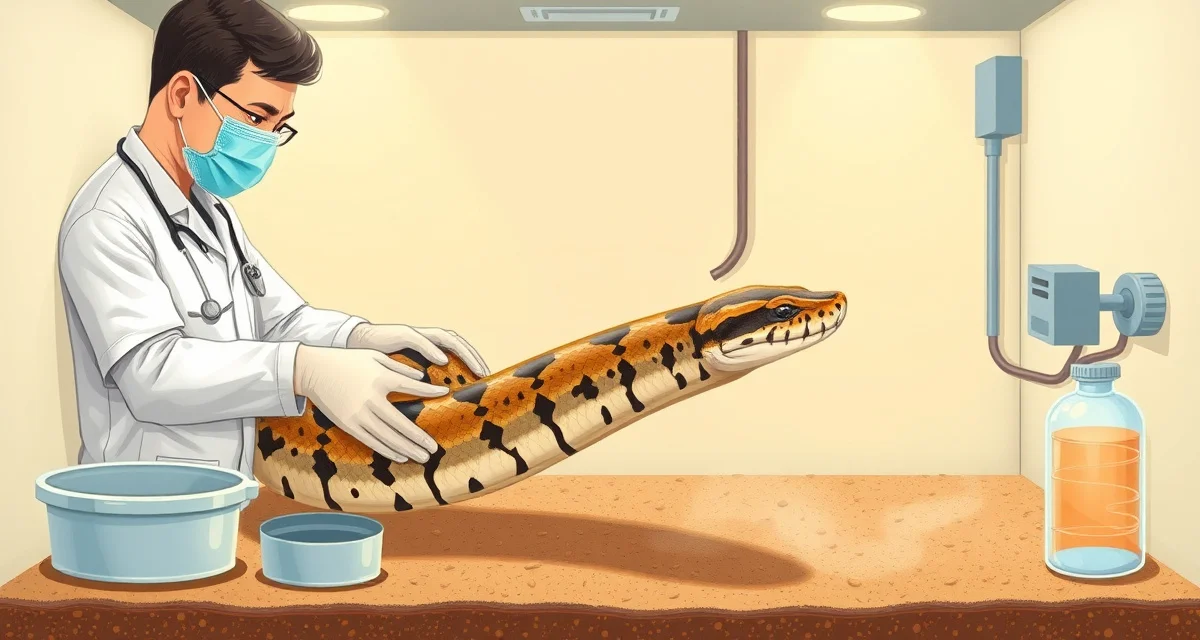
Retained sheds in adult Burmese pythons can cover extensive body areas when incomplete. A large Burmese that retains shed over a significant portion of its body needs intervention. Soak the animal in a clean, shallow container of 85-90F water for 30-45 minutes, then gently rub along the retained skin in the direction of scale overlap with a damp washcloth. Retained spectacles (eye caps) require veterinary assistance if they don't release after soaking.
Frequent retained sheds are usually a husbandry signal -- inadequate humidity is the most common cause. Monitor actual enclosure humidity rather than estimating by eye, and provide a large humid area or soaking opportunity during pre-shed periods.
Parasites
Both internal and external parasites occur in captive Burmese pythons. Snake mites are visible and manageable with appropriate treatment. Internal parasites -- roundworms, ascarids, hookworms -- are common in animals with any wild-caught ancestry and should be screened for with annual fecal exams.
Parasites in a large python can cause significant anemia, weight loss, and immune suppression, making the animal more vulnerable to secondary infections. Annual fecal exams are cost-effective prevention compared to treating a heavily parasitized animal that's also developed secondary health issues.
Inclusion Body Disease
IBD, caused by an arenavirus, affects boas and pythons including Burmese. Signs include neurological symptoms (stargazing, inability to right itself), regurgitation, respiratory infection, and progressive weakness. There's no effective cure. IBD in a Burmese collection can be catastrophic because of the long time investment each animal represents.
Quarantine all new animals for at least 60-90 days before introduction to your main collection. Eliminate mites aggressively -- mites are known transmission vectors for IBD. Separate equipment and gloves between collection areas. These precautions aren't excessive given what's at stake.
Veterinary Care Planning
Annual veterinary exams for breeding animals are worth the investment. A reptile vet can assess body condition, check for parasites, evaluate respiratory health, and identify early signs of problems that you might miss during routine observation. Large, expensive breeding animals should have established veterinary relationships rather than being treated only in emergencies.
HatchLedger tracks health events, veterinary visits, treatments, and outcomes for every animal in your collection. When your vet asks for a history, pulling it up takes seconds rather than minutes of searching.
HatchLedger connects veterinary costs to each animal's record and to your overall P&L, so you can see exactly what each animal costs to maintain, including healthcare.
Frequently Asked Questions
What is the best approach to Burmese python health and disease prevention?
Maintain appropriate temperatures and humidity, enforce strict quarantine for new animals, conduct annual fecal exams for breeding animals, and control mites aggressively. Daily observation is your primary health monitoring tool -- changes in behavior, posture, or feeding response are early warning signs. Keep health records for every animal so your veterinarian has context when problems arise. Establish a working relationship with a reptile-experienced vet before you have an emergency.
How do professional breeders handle Burmese python disease prevention?
Professional Burmese breeders invest in prevention rather than treatment. Strict quarantine, mite management, and annual parasite screening are non-negotiable parts of their programs. They also build veterinary relationships with reptile vets who understand large constrictors, rather than working with general-practice vets who may lack the species-specific knowledge needed for accurate diagnosis. Health event records help them identify patterns and evaluate whether specific animals require more medical resources than their breeding value justifies.
What software helps manage Burmese python health records?
HatchLedger tracks every animal, clutch, and sale record for Burmese python breeders, with documentation that supports regulatory compliance and buyer confidence. When managing large clutches and compliance requirements simultaneously, a connected system prevents the record-keeping gaps that create problems at sale. Free for up to 20 animals.
Are Burmese pythons legal to own and breed in all US states?
No. Burmese pythons are listed as an injurious species under the Lacey Act, which restricts interstate transport. Several states have additional bans on ownership entirely. Check current state and federal regulations before acquiring or transporting animals. USARK maintains updated resources on applicable regulations.
How large should a Burmese python enclosure be for a breeding pair?
Breeding females typically require enclosures of at least 8x4 feet and often larger for full-grown adults. Dedicated breeding rooms or custom builds are standard at scale. Thermal gradient with hot spots at 88-92 degrees Fahrenheit and ambient temperatures in the mid-70s allows proper thermoregulation.
What is Burmese Python Health and Disease Prevention: Complete Breeder Guide?
This is a comprehensive resource for Burmese python breeders covering disease prevention, health monitoring, and collection management. It addresses the unique challenges of maintaining large constrictors (Python bivittatus), which represent significant capital investment. Topics include recognizing illness, quarantine protocols, cycling and incubation best practices, and compliance with federal and state regulations like the Lacey Act that govern ownership and interstate transport.
How much does Burmese Python Health and Disease Prevention: Complete Breeder Guide cost?
This guide is freely available as an educational article on HatchLedger. There is no purchase required. HatchLedger does offer breeding management software that breeders reference throughout the guide, with subscription pricing available on their website. The software helps reduce administrative overhead by approximately 30%, giving breeders more time for the consistent animal observation that underpins effective health management.
How does Burmese Python Health and Disease Prevention: Complete Breeder Guide work?
The guide walks breeders through a systematic approach to Burmese python health: establishing quarantine procedures, monitoring animals during cycling (a 4-8 week temperature drop of 8-12°F), managing incubation at 88-90°F for 60-65 days, and identifying early signs of disease. It integrates recordkeeping software recommendations to track health events across large collections where clutches average 25-50 eggs.
What are the benefits of Burmese Python Health and Disease Prevention: Complete Breeder Guide?
Key benefits include reduced disease outbreak risk across valuable breeding collections, structured quarantine and observation protocols, and time savings through integrated recordkeeping. Because Burmese python females commonly exceed 100-200 lbs and represent years of morph project development, catching illness early has outsized financial and programmatic impact. Breeders using recommended software report 30% less time on administrative tasks.
Who needs Burmese Python Health and Disease Prevention: Complete Breeder Guide?
This guide is intended for serious Burmese python breeders managing established collections, particularly those running morph projects where a disease outbreak could set programs back years. It is also relevant to keepers new to large constrictors who need foundational health and compliance knowledge, and to anyone navigating the complex state-by-state ownership regulations and federal Lacey Act requirements that apply to this species.
How long does Burmese Python Health and Disease Prevention: Complete Breeder Guide take?
Reading the guide takes 15-30 minutes. Implementing the health management framework it describes is an ongoing commitment tied to your breeding calendar: cycling runs 4-8 weeks, incubation 60-65 days, and quarantine protocols apply continuously when introducing new animals. Building consistent observation habits and a functioning recordkeeping system typically takes one full breeding season to establish effectively across a collection.
Related Articles
- Reticulated Python Health and Disease Prevention: Complete Breeder Guide
- Boa Constrictor Health and Disease Prevention: Complete Breeder Guide
- Corn Snake Health and Disease Prevention: Complete Breeder Guide
- Hognose Snake Health and Disease Prevention: Complete Breeder Guide
Sources
- USARK (United States Association of Reptile Keepers)
- Association of Reptilian and Amphibian Veterinarians (ARAV)
- US Fish and Wildlife Service (Injurious Wildlife regulations)
- Journal of Herpetology (Society for the Study of Amphibians and Reptiles)
- Florida Fish and Wildlife Conservation Commission
Get Started with HatchLedger
Burmese python breeding involves large animals, large clutches, and compliance documentation that is difficult to manage without a dedicated system. HatchLedger tracks every animal, clutch, and sale record in one place, giving you the documentation you need for regulatory compliance and buyer confidence. Try it free with up to 20 animals.