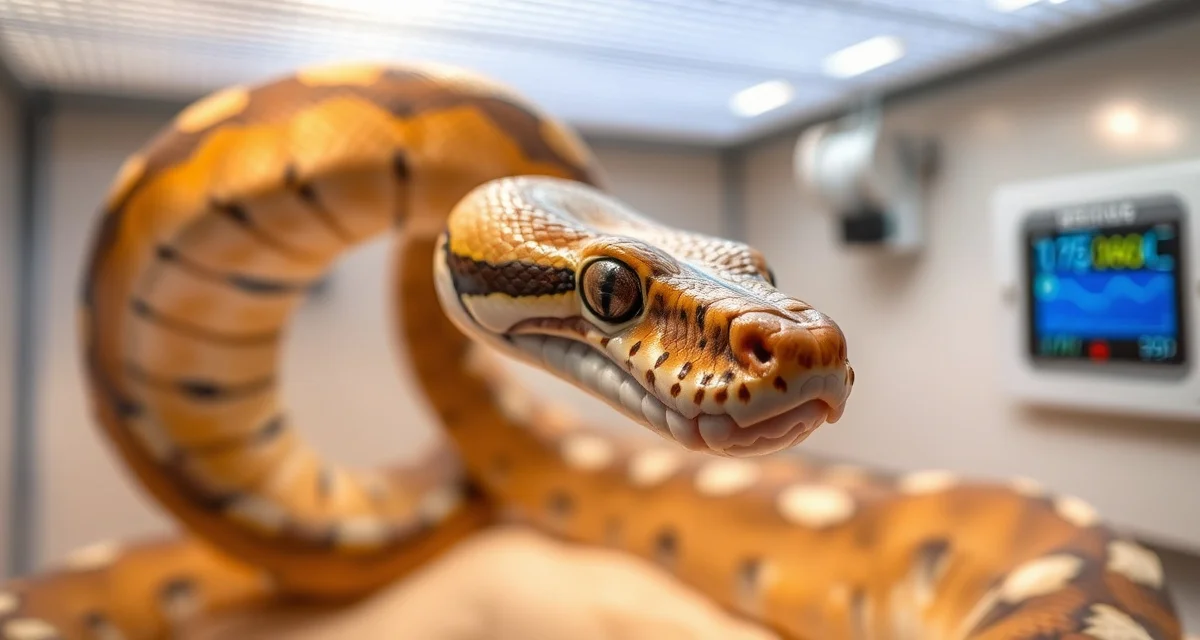
Burmese Python Common Breeding Issues: Complete Breeder Guide
Burmese python breeding at scale introduces challenges that don't appear in single-pair or casual breeding setups. The size of the animals, the scale of the clutches, and the physical demands of managing large egg incubation parameters all create failure points that experienced breeders have learned to anticipate. Breeders using integrated software report 30% less time on administrative tasks, giving you more capacity to troubleshoot problems as they develop rather than after they've become serious.
TL;DR
- Burmese pythons (Python bivittatus) are among the largest constrictors in captivity, with breeding females commonly exceeding 100-200 lbs.
- Clutch sizes average 25-50 eggs, making Burmese pythons among the most productive large constrictors in captive breeding.
- Cycling typically involves a 4-8 week period of reduced temperatures (dropping 8-12 degrees Fahrenheit) and reduced feeding frequency.
- Incubation runs 60-65 days at 88-90 degrees Fahrenheit, with females capable of thermoregulating eggs by muscular shivering.
- Compliance requirements requirements for Burmese python ownership and interstate transport vary by state, with federal protections under the Lacey Act applying in some jurisdictions.
Most breeding failures in Burmese pythons trace back to a predictable set of causes: inadequate conditioning of breeding animals, insufficient cycling, physical challenges with introductions and pairings, incubation problems, or hatchling management gaps. Understanding where failures typically occur helps you implement preventive measures before a season goes wrong.
Failure to Breed: Animal Readiness Issues
Burmese pythons that don't breed often weren't properly prepared going into the season. The two most common readiness failures are inadequate cycling and poor body condition.
A male that hasn't been properly cooled won't show reliable breeding behavior even if introduced to a fully receptive female. Verify that your cycling protocol actually achieved the target temperature drop and was maintained for the appropriate duration (4-6 weeks minimum). If you're cycling a new male for the first time, he may not respond as predictably as a proven breeder.
Female body condition at the start of cycling determines her reproductive capacity for the season. Females significantly below breeding weight may cycle and show breeding behavior but fail to develop eggs of adequate quality. Females that are obese may have impaired ovarian function. Aim for lean-to-moderate condition before cycling begins.
High Slug Rates
Slug rates above 15-20% usually indicate a problem with the breeding process rather than random variation. The most common causes are:
Insufficient copulation. Just because a male and female were housed together doesn't mean successful breeding occurred. Observed copulation events matter. If you have no confirmed copulation observations for a specific female during the season, your options are to run additional introductions or accept that the season may not produce a viable clutch.
Male fertility issues. A male that's bred multiple females in a season may show declining fertility in later pairings. Males that consistently produce high slug rates across multiple females in a single season need a fertility evaluation from a reptile vet.
Incubation problems. Eggs that were fertile but died early in development due to temperature spikes, humidity problems, or mechanical damage may be indistinguishable from unfertilized slugs at hatch time. Review your incubation temperature logs if you see unexpectedly high apparent slug rates.
Egg Laying Problems: Retained Eggs and Dystocia
Some females experience difficulty laying their full clutch. Dystocia (retained eggs) is more common in overweight females, first-time breeders, or animals with underlying health conditions. Signs include a female that has clearly been through ovulation and follicle development but hasn't laid a clutch on the expected timeline (typically 25-40 days post-ovulation), or a female that laid part of her clutch but appears to have retained additional eggs.
Dystocia in large constrictors is a veterinary emergency. Calcium injections and/or oxytocin may be used by a vet to stimulate contractions, but surgical intervention (ovariosalpingectomy) may be required in severe cases. Don't delay seeking veterinary help if you suspect retained eggs.
Incubation Failures
Failed incubation is heartbreaking and financially significant when you've invested an entire season in producing a clutch. The most common causes are:
- Temperature spikes from thermostat failure or power outages
- Excessive humidity causing egg mold
- Inadequate humidity causing egg desiccation
- Container oxygen depletion in sealed incubation setups
Use a temperature alarm in your incubation area that alerts you to significant temperature deviations. Check on incubating eggs every 2-3 days. A well-monitored incubation setup catches problems early enough to intervene.
HatchLedger lets you log incubation temperature observations and any issues encountered throughout the incubation period, building a record that helps you diagnose causes of hatch failure.
HatchLedger tracks failed clutches against your financial records so the impact of a poor season shows clearly in your annual P&L.
Frequently Asked Questions
What is the best approach to troubleshooting Burmese python breeding issues?
Work backward from the failure point. If no eggs were produced, investigate cycling protocol adequacy and female body condition. If eggs were produced but slug rates are high, review pairing records for confirmed copulation events and evaluate male fertility. If eggs were fertile but incubation failed, review temperature and humidity logs for the incubation period. Systematic records at every stage make this diagnostic process much more efficient than trying to reconstruct what happened from memory.
How do professional breeders handle Burmese python breeding problems?
Professionals anticipate failure points and implement preventive measures before they become problems. They verify cycling protocol effectiveness, document confirmed copulation events, monitor egg condition throughout incubation, and plan for dystocia risk in females known to have difficult laying history. When problems do occur, their records provide the data needed for rapid diagnosis. They also recognize when a breeding animal is consistently underperforming and make deliberate decisions about whether to continue working with that animal.
What software helps manage Burmese python breeding issue tracking?
HatchLedger tracks every animal, clutch, and sale record for Burmese python breeders, with documentation that supports regulatory compliance and buyer confidence. When managing large clutches and compliance requirements simultaneously, a connected system prevents the record-keeping gaps that create problems at sale. Free for up to 20 animals.
Are Burmese pythons legal to own and breed in all US states?
No. Burmese pythons are listed as an injurious species under the Lacey Act, which restricts interstate transport. Several states have additional bans on ownership entirely. Check current state and federal regulations before acquiring or transporting animals. USARK maintains updated resources on applicable regulations.
How large should a Burmese python enclosure be for a breeding pair?
Breeding females typically require enclosures of at least 8x4 feet and often larger for full-grown adults. Dedicated breeding rooms or custom builds are standard at scale. Thermal gradient with hot spots at 88-92 degrees Fahrenheit and ambient temperatures in the mid-70s allows proper thermoregulation.
Sources
- USARK (United States Association of Reptile Keepers)
- Association of Reptilian and Amphibian Veterinarians (ARAV)
- US Fish and Wildlife Service (Injurious Wildlife regulations)
- Journal of Herpetology (Society for the Study of Amphibians and Reptiles)
- Florida Fish and Wildlife Conservation Commission
Get Started with HatchLedger
Burmese python breeding involves large animals, large clutches, and compliance documentation that is difficult to manage without a dedicated system. HatchLedger tracks every animal, clutch, and sale record in one place, giving you the documentation you need for regulatory compliance and buyer confidence. Try it free with up to 20 animals.