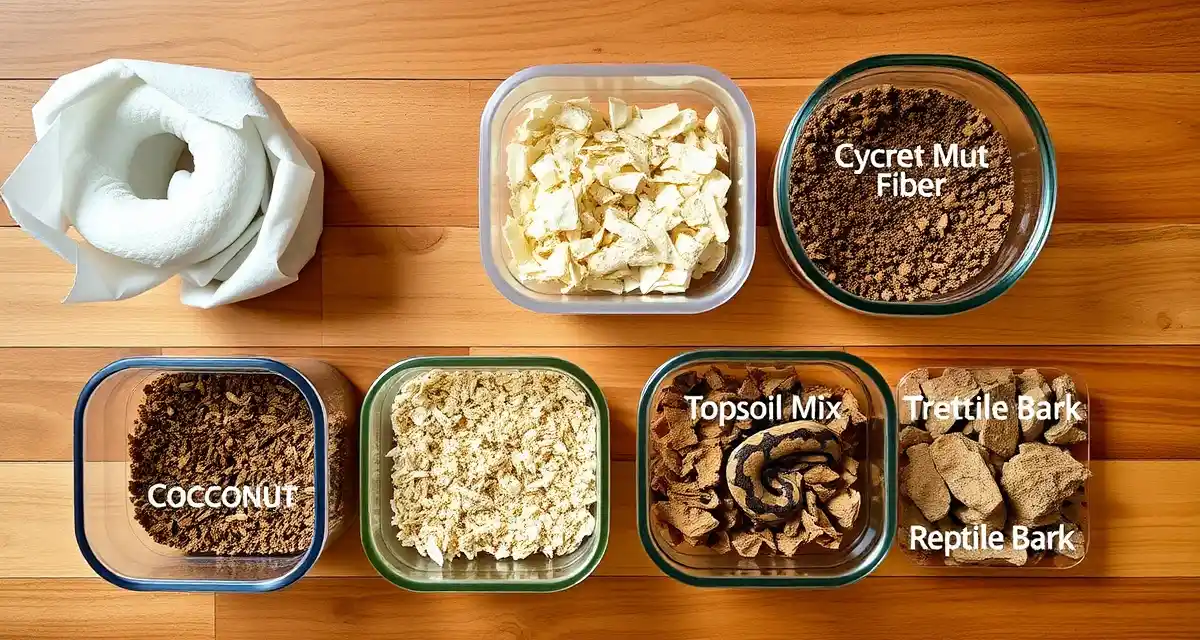
Best Substrate for Ball Pythons: Breeder Comparison
Substrate is one of those decisions that looks straightforward until you're actually running a collection. Then it gets complicated: cost per tub, humidity retention, ease of spot cleaning, mold risk, availability in bulk, and compatibility with your enclosure type all matter. What works great in a bioactive 4x2 enclosure might be completely impractical in a 200-tub rack system.
TL;DR
- Ball python breeding operations require systematic record-keeping from pre-season preparation through end-of-season sales.
- Females at 1,200-1,500g or more are the target weight before introducing them to a breeding male.
- Ovulation detection is the key event that anchors pre-lay shed and lay date calculations.
- Clutch profitability guide depends on understanding actual cost basis per animal, not just gross sale revenue.
- Well-documented animals with complete feeding histories and clear genetic records consistently sell faster and at higher prices.
This comparison covers the main options used by working breeders, with an honest look at the tradeoffs in each.
Paper Towels and Newspaper
Paper products are the default substrate in most commercial-scale rack systems. They're cheap, easy to replace entirely on a regular schedule, and allow instant visual inspection of waste and any health indicators.
Pros:
- Extremely low cost at bulk pricing
- Easy to do full changes quickly
- Allows clear observation of urates, feces, and regurgitation
- No mold risk
- Easy to monitor for mites
Cons:
- Zero humidity retention
- Looks sterile and unenriched
- Requires additional humid hide to support shedding
- Some animals seem to prefer more textured substrate
Most large-scale breeders with 100+ animals default to paper for the practical tub sections of their collection and reserve natural substrates for display or special enclosures. The efficiency argument wins at scale.
Coconut Fiber (Coco Coir)
Pressed or loose coconut fiber is one of the most versatile substrates for ball pythons. It holds humidity well, has some natural antimicrobial properties, and is available in bulk at reasonable cost.
Pros:
- Good humidity retention
- Relatively affordable in bulk
- Natural appearance
- Forgiving to spot-clean
- Supports burrowing behavior
Cons:
- Can develop mold if kept too wet
- Dusty when dry
- Full changes more labor-intensive than paper
- Some suppliers have inconsistent quality
Coco coir works well in individual enclosures and in rack systems where you're willing to do substrate changes every 4-6 weeks. For breeders running under 50 animals in individual enclosures, it's a practical choice.
Cypress Mulch
Cypress mulch is a long-standing favorite in the ball python community for good reason. It's naturally resistant to mold and bacteria, holds humidity without becoming waterlogged, and has a pleasant appearance.
Pros:
- Natural mold and bacteria resistance
- Excellent humidity retention
- Good texture for natural behavior
- Available in large bags
- Widely available at garden centers
Cons:
- More expensive per volume than coco coir
- Can be inconsistent in particle size
- Some bags contain treated wood that can be harmful
- Not practical for very large rack systems
Buy from reptile suppliers or verified untreated sources. General garden store mulch sometimes contains pesticide treatments or wood species that aren't safe for reptiles.
Topsoil Mixes
A blend of topsoil, coco coir, and sand (sometimes called bioactive base or ABG mix) is the go-to for bioactive setups. These mixes support live plants and microfauna and are essentially self-maintaining in a true bioactive system.
Pros:
- Supports bioactive setups with live plants and cleanup crews
- Excellent humidity retention
- Natural and aesthetically pleasing
- Self-cleaning with proper microfauna balance
Cons:
- High initial setup cost
- Time investment to establish
- Not practical for rack systems
- Requires more careful monitoring to stay balanced
Bioactive setups make the most sense for display animals, special projects, or breeders who enjoy the aesthetic and have time to maintain them. They're not a realistic option across a 200-tub breeding operation.
Reptile Bark and Orchid Bark
Bark products give a natural forest-floor appearance and hold decent humidity. They're popular in the reptile hobby broadly and work adequately for ball pythons in individual enclosures.
Pros:
- Natural appearance
- Good for visual inspection
- Holds some humidity
Cons:
- Not as efficient at humidity retention as coco coir or cypress
- Can harbor mites if pieces are too large
- Inconsistent particle size in some products
- More expensive per volume than alternative options
Bark works but isn't a first choice for most dedicated ball python breeders compared to cypress mulch or coco coir.
Paper Pulp Bedding (e.g., Carefresh)
Paper pulp products are sometimes used for ball pythons, particularly for hatchlings or animals recovering from health issues where cleanliness and observability matter.
Pros:
- Very absorbent
- Easy to spot check
- Soft, good for recovery setups
Cons:
- Expensive for large collections
- Doesn't hold humidity well without extra moisture management
- Not ideal for long-term use due to cost
Sand and Tile
Sand and tile are occasionally used but are generally not recommended for ball pythons. Sand doesn't hold humidity and creates impaction risk. Tile works for temperature retention but needs humid hides and doesn't allow natural burrowing behavior.
These aren't common in serious ball python breeding programs and are mostly seen in enclosures where aesthetics are prioritized over animal needs.
Choosing the Right Substrate for Your Operation
The honest answer is that substrate choice depends on your operation type:
Large rack systems (100+ tubs): Paper or paper pulp for practical efficiency. Add a humid hide in every tub. Budget for bulk paper towels on subscription if possible.
Mid-size collections (20-100 animals, mixed setup): Coco coir or cypress mulch in individual enclosures, paper in rack tubs. Balance of cost and humidity management.
Small display collections (under 20 animals): Bioactive, cypress mulch, or coco coir. You can invest more per enclosure when you have fewer of them.
Special projects or breeding pairs: Whatever substrate those animals thrive on. Some breeders find specific animals have strong substrate preferences that correlate with feeding and behavior.
Tracking Substrate Changes in Your Records
Substrate type and change schedule are worth logging, especially if you're troubleshooting health issues. Respiratory infections, mites, and scale rot are all linked to substrate management. When an animal develops a problem, knowing when you last did a full substrate change and what substrate you used helps narrow the cause.
HatchLedger makes it easy to log these husbandry details against individual animal records, creating a searchable history that proves far more useful than hand-written notes. Breeders using integrated software report 30% less time on administrative tasks, partly because everything lives in one searchable place.
For a breakdown of how tracking tools compare across all aspects of collection management, the reptile breeder software comparison covers this in detail.
Frequently Asked Questions
What is the best approach to best substrate for ball pythons breeders?
For large rack-based operations, paper is the most practical choice for efficiency and health monitoring. For individual enclosures, coco coir or cypress mulch offer better humidity retention and a more natural environment. Match your substrate choice to your operation type rather than picking one solution for every setup.
How do professional breeders handle best substrate for ball pythons breeders?
Most professional breeders use paper in their rack tubs for efficiency at scale, with humid hides to compensate for the lack of humidity retention. They reserve natural substrates like coconut fiber or cypress mulch for individual enclosures used for display animals or special projects, and they track substrate changes in their records to help troubleshoot any health issues that arise.
What records should every reptile breeder maintain per animal?
At minimum: acquisition date and source, morph and genetic documentation, feeding log, weight history, any veterinary treatments, and breeding history including pairing dates, clutch of origin for captive-bred animals, and offspring records. These records serve your own management, buyer documentation, regulatory compliance, and long-term genetic tracking.
How should reptile breeders document genetics for buyers?
A complete genetic record for sale includes the animal's visual morph name, confirmed het genes and their basis (parentage documentation or proven-out production), possible het genes with probability percentages, hatch date, and parent morph information. Including clutch-of-origin records lets buyers independently verify the claims.
Sources
- USARK (United States Association of Reptile Keepers)
- Association of Reptilian and Amphibian Veterinarians (ARAV)
- World of Ball Pythons (WoBP genetics reference database)
- MorphMarket (reptile industry marketplace)
- Reptiles Magazine (Bowtie Inc.)
Get Started with HatchLedger
Every part of a ball python breeding operation -- from pairing records to clutch documentation to financial tracking -- works better when the data is connected rather than scattered across notebooks and spreadsheets. HatchLedger is built for exactly that. Try it free with up to 20 animals.