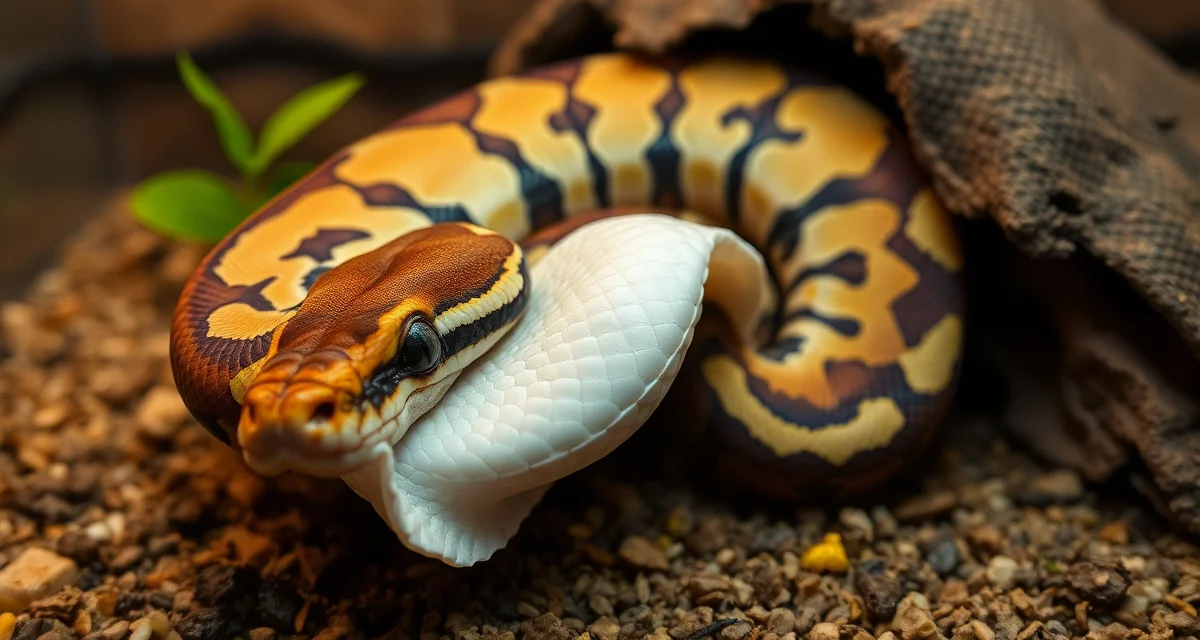
Ball Python Shedding Problems and Solutions
A clean shed is a health indicator. When your ball python peels off in one piece from nose to tail tip, everything is working right: humidity, nutrition, hydration, enclosure setup. When sheds come off in pieces, or chunks get left behind, or you find retained eye caps, something needs to be fixed.
TL;DR
- Ball python breeding operations require systematic record-keeping from pre-season preparation through end-of-season sales.
- Females at 1,200-1,500g or more are the target weight before introducing them to a breeding male.
- Ovulation detection is the key event that anchors pre-lay shed and lay date calculations.
- Clutch profitability guide depends on understanding actual cost basis per animal, not just gross sale revenue.
- Well-documented animals with complete feeding histories and clear genetic records consistently sell faster and at higher prices.
For breeders running large collections, shed problems can also signal systemic husbandry issues that affect many animals at once, making it worth understanding the causes rather than just managing the symptoms.
How Ball Python Shedding Works
Ball pythons, like all snakes, periodically shed their outer layer of skin as they grow. The technical term is ecdysis. In the days before a shed, you'll notice the animal's eyes take on a blue-grey, cloudy appearance ("in blue") as the new skin layer forms and lymphatic fluid accumulates between the old and new skin. The eyes usually clear a day or two before the actual shed.
During this pre-shed period, many ball pythons refuse food, become more defensive, and spend more time in their hide. This is all normal. Don't push feeding during this window.
A healthy shed typically takes place over 1-3 days once the animal begins actively peeling. Young, healthy animals in good conditions often shed in one long piece. Older animals or those with more complex scale patterns sometimes shed in fewer, larger pieces that are still considered a good shed.
What Counts as a Problem Shed
Retained eye caps. This is the most serious retained shed issue. Eye caps (the spectacle scales covering the eyes) retained from previous sheds stack up and can cause permanent vision damage. Retained caps give the eyes a dull, milky, or layered appearance outside of the normal pre-shed blue period.
Stuck shed on the tail tip. Retained shed at the tail tip constricts circulation and can cause necrosis and tail loss within days. Check tail tips carefully after every shed, especially on hatchlings.
Incomplete shed in large sections. A shed that comes off in many small, irregular pieces instead of large intact sections usually indicates low humidity.
Shed retained around heat pits, labial scales, or heat sensors. Less commonly noted but worth checking, especially in animals that had previous incomplete sheds.
Causes of Incomplete or Retained Shed
Low Humidity
This is the most common cause by a notable margin. Ball pythons need 60-80% relative humidity to shed cleanly. When ambient humidity drops below 50%, the old skin dries out before the animal can fully loosen it, causing it to tear into pieces or adhere in sections.
Solutions:
- Increase ambient room humidity with a humidifier
- Add a humid hide with damp sphagnum moss
- Adjust enclosure ventilation to reduce moisture loss
- Use a humidity-retaining substrate (coco coir, cypress mulch) rather than paper if in an individual enclosure
Dehydration
An animal that isn't adequately hydrated can't produce the lymphatic fluid needed to separate old skin properly. Always provide a water bowl large enough for the animal to soak in. Most ball pythons will self-soak before a shed if given the option.
Dehydration shows up in the skin between sheds too: skin that tents or doesn't spring back quickly when gently pinched indicates an animal that needs more access to water.
Injury, Scars, or Scale Damage
Old injuries, burn scars, and scale damage from mite infestations or previous bacterial infections can cause shed to stick locally. An animal with a healed scar will often have shed problems at that location for the rest of its life to some degree. Managing the overall humidity and providing soaking opportunities helps compensate.
Mites
Active mite infestations cause intense irritation and interfere with shedding. Check for mites if you see an otherwise healthy, well-hydrated animal having persistent shed problems. Mites are visible as tiny moving dark dots, especially around eye scales and under chin scales. The water bowl is also a giveaway: drowned mites collect in it.
Health Issues
Chronically ill animals shed poorly. Animals with notable parasitic loads, systemic bacterial infections, or nutritional deficiencies often have poor shed quality. Recurring shed problems in an animal with otherwise appropriate husbandry warrant a vet visit.
Treating Retained Shed
Soak first, always. Place the animal in a shallow container of lukewarm water (85-88°F) for 20-30 minutes. The retained shed will usually soften and can then be gently rolled off with a damp cloth or your fingers.
Don't pull retained eye caps dry. This risks pulling the spectacle (the actual eye covering) along with the retained cap. Soak first, then very gently use a damp cotton swab to loosen the cap. If it doesn't come easily after soaking, a vet may need to remove it with proper tools.
Check the full body after every shed. Run a damp cloth down the animal's length and check the tail tip, eye area, and any scarred sections. Catching retained pieces immediately is far easier than dealing with them after they've dried down further.
Tracking Shed History
Shed quality is worth documenting. An animal that consistently sheds cleanly versus one with recurring problems is a meaningful health distinction. Over time, you might notice that an animal's shed quality declined when you changed substrates, after a respiratory infection, or during a period of low room humidity in winter.
The HatchLedger platform lets you log shed dates, quality observations, and any retained shed incidents against individual animal records. When a pattern emerges, like three animals in the same rack section having incomplete sheds simultaneously in January, you can quickly correlate that with a humidity event rather than assuming individual health issues. Breeders using integrated software report 30% less time on administrative tasks because data like this is searchable and actionable.
The reptile breeder software comparison covers how different tracking tools handle health event logging across collections.
Prevention at Scale
For breeders managing large collections, preventing shed problems is more efficient than treating them. A few systematic steps:
- Monitor room humidity, not just individual enclosures, with a standalone hygrometer
- Conduct a shed check after every known shed event for every animal in the collection
- Keep a damp sphagnum moss humid hide in every tub or enclosure
- Do a system-wide humidity check in fall and winter when indoor heating reduces ambient moisture
An ounce of prevention in your husbandry setup is worth a lot of individual treatment sessions across a 100-animal collection.
Frequently Asked Questions
What is the best approach to ball python shedding problems?
Address the root cause rather than just treating individual instances. Low humidity is responsible for most shed problems, so evaluate room and enclosure humidity levels first. Provide a humid hide with damp sphagnum moss for every animal, ensure adequate hydration, and check the full body after every shed to catch retained pieces immediately before they dry down.
How do professional breeders handle ball python shedding problems?
Professional breeders build shed checks into their regular collection care routine and log shed quality against individual animal records. This lets them catch systemic husbandry issues, like a drop in room humidity that affects multiple animals, quickly. They treat retained sheds immediately with warm water soaking rather than waiting to see if the animal resolves it independently.
What records should every reptile breeder maintain per animal?
At minimum: acquisition date and source, morph and genetic documentation, feeding log, weight history, any veterinary treatments, and breeding history including pairing dates, clutch of origin for captive-bred animals, and offspring records. These records serve your own management, buyer documentation, regulatory compliance, and long-term genetic tracking.
How should reptile breeders document genetics for buyers?
A complete genetic record for sale includes the animal's visual morph name, confirmed het genes and their basis (parentage documentation or proven-out production), possible het genes with probability percentages, hatch date, and parent morph information. Including clutch-of-origin records lets buyers independently verify the claims.
Sources
- USARK (United States Association of Reptile Keepers)
- Association of Reptilian and Amphibian Veterinarians (ARAV)
- World of Ball Pythons (WoBP genetics reference database)
- MorphMarket (reptile industry marketplace)
- Reptiles Magazine (Bowtie Inc.)
Get Started with HatchLedger
Every part of a ball python breeding operation -- from pairing records to clutch documentation to financial tracking -- works better when the data is connected rather than scattered across notebooks and spreadsheets. HatchLedger is built for exactly that. Try it free with up to 20 animals.