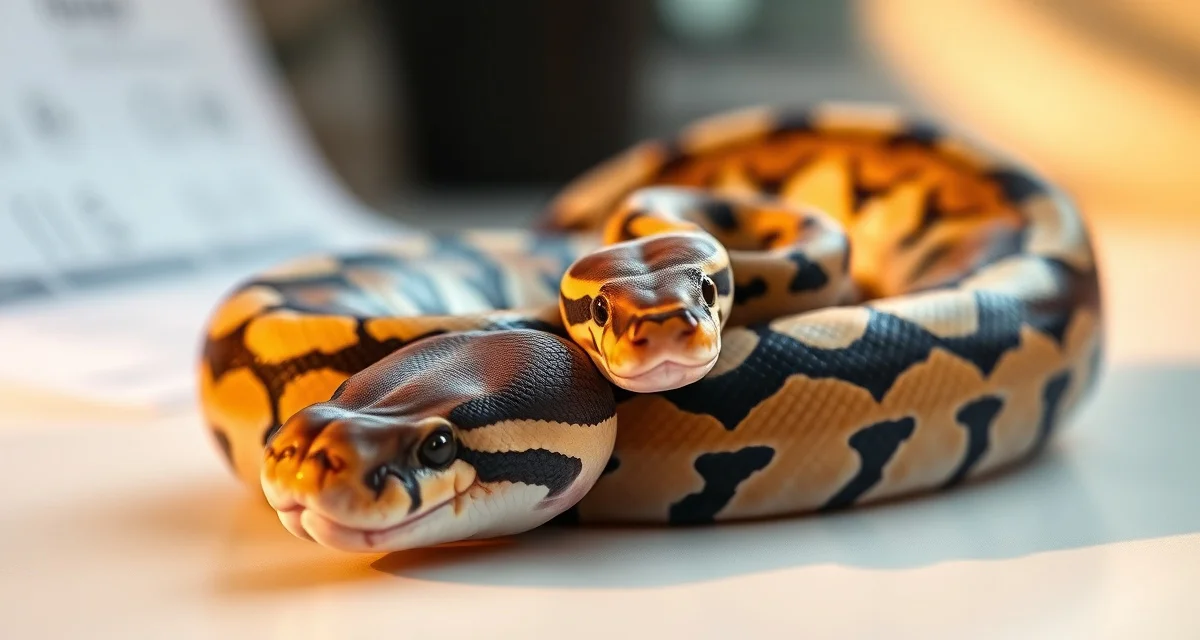
How to Prove Out Het Ball Pythons
Proving out a het ball python means breeding it and confirming it carries the recessive gene by producing visual offspring. It's the only way to move a "possible het" to a "confirmed het" or to verify that an undocumented animal actually carries what the seller claimed.
TL;DR
- Ball python breeding operations require systematic record-keeping from pre-season preparation through end-of-season sales.
- Females at 1,200-1,500g or more are the target weight before introducing them to a breeding male.
- Ovulation detection is the key event that anchors pre-lay shed and lay date calculations.
- Clutch profitability guide depends on understanding actual cost basis per animal, not just gross sale revenue.
- Well-documented animals with complete feeding histories and clear genetic records consistently sell faster and at higher prices.
This guide covers the process, the math, what counts as proof, and when you've proven enough.
Why Proving Out Matters
A "possible het Clown" sells for $150. A "100% het Clown" sells for $350. A "confirmed breeding het Clown, visual offspring documented" commands a premium and buyer confidence that undocumented hets can't match.
Beyond sales value, proving out hets clarifies your own breeding program. If you acquired a female as "66% het Pied" and she breeds out as a confirmed Pied het, you can build that certainty into every subsequent pairing and sale involving her offspring. If she proves out negative (not a het), you save seasons of resources on a non-producing animal.
The Proving Out Pairing
To prove out a possible het, breed the animal to a visual of the same recessive gene.
- To prove out a possible het Clown: breed to a visual Clown
- To prove out a possible het Pied: breed to a visual Pied
- To prove out a possible het Albino: breed to a visual Albino
Why a visual? Because breeding possible het × visual gives you 50% visual offspring if the animal is a het (vs. 0% if it's not a het). This gives you the fastest path to statistical confirmation.
If you breed possible het × possible het instead, visual offspring still confirm both animals are hets, but the 25% probability vs. 50% means you need larger sample sizes to be confident.
What Counts as Proof
Positive proof: Any visual offspring from the pairing confirms the possible het is a confirmed het. One visual Clown in a clutch from a possible het Clown × visual Clown pairing = the possible het is confirmed.
Negative proof: This is more complicated. If you produce a clutch from possible het × visual and get no visuals, what does that tell you?
The math:
- If the animal IS a het: probability of getting zero visuals from 1 clutch of 6 = (0.5)^6 = 1.6%
- If the animal IS NOT a het: probability of zero visuals = 100%
After one clutch of 6 with no visuals, you still can't be certain the animal lacks the gene. But you've reduced the probability significantly.
Practical proving out thresholds:
| Clutch size | No visuals | Remaining probability of being a het |
|---|---|---|
| 1 animal | 0 visuals | 50% (no information) |
| 4 hatchlings | 0 visuals | (0.5)^4 = 6.25% |
| 6 hatchlings | 0 visuals | (0.5)^6 = 1.6% |
| 8 hatchlings | 0 visuals | (0.5)^8 = 0.4% |
| 10+ hatchlings | 0 visuals | <0.1% |
After 8-10 hatchlings with no visuals from a possible het × visual pairing, you can confidently call the animal "proven normal" for practical purposes. The statistical probability of being a het becomes so small it's not worth continuing.
Multiple Clutch Strategy
One clutch is not always enough for confident negative proving. Two clutches (total 10-12 hatchlings) from possible het × visual with no visuals essentially confirms the animal as a non-het.
Breeders proving out multiple possible het animals simultaneously can be more efficient:
- Breed each possible het female to your visual male in separate clutches
- Track hatchling counts and any visual offspring per pairing
- Any clutch that produces a visual ends that animal's proving-out phase
Proving Out Without a Visual Partner
If you don't have a visual animal of the recessive gene in question, you have two options:
Breed to another possible het:
- Both animals produce visuals if both are hets (25% probability)
- One animal is a het but not the other: no visuals possible
- Neither animal is a het: no visuals
- Positive results confirm both animals are hets, but negative results are harder to interpret
Borrow or purchase a male visual:
Many breeders who specialize in particular recessives are willing to loan a visual male for a season in exchange for pick-of-clutch, a stud fee, or future animal trades. This is a common practice in the hobby.
Proving Out and Record-Keeping
Every proving-out pairing and result should be documented:
For each clutch from a proving-out pairing, record:
- Which possible het animal was paired to which visual
- Hatch date and hatchling count
- Number of visual offspring produced (0 or more)
- Updated confidence status for the possible het
After producing visual offspring:
- Update the animal's het status from "possible" to "confirmed breeding het"
- Note the confirming clutch, date, and which offspring were visual
- This documentation becomes part of the animal's record and buyers' documentation
HatchLedger links proving-out clutch records directly to the original animal's genetics guide record. When a visual offspring is produced from a proving-out pairing, you update the parent's status from "possible het" to "confirmed het", and that update flows through to all future documentation.
Proving Out Axanthic (Multiple Lines)
Axanthic has a specific complication: multiple unrelated genetic lines. If you have a "possible het Axanthic" from an unknown line, proving out is only informative if your visual partner is from the same line.
VPI het × VPI visual: conclusive
VPI possible het × TSK visual: inconclusive even if no visuals produced
Always confirm which Axanthic line you're working with before planning a proving-out pairing.
FAQ
What is the best approach to proving out het ball pythons?
Breed the possible het to a visual of the same recessive gene. Any visual offspring in the first clutch confirms the het. No visuals after 8-10 total hatchlings provides practical (though not absolute) evidence that the animal is not a het. Document every proving-out result, these records support het status claims in future sales and breeding decisions.
How do professional breeders handle proving out het ball pythons?
Professional breeders systematically prove out possible het animals, particularly valuable females they plan to hold in their program. They track proving-out results per animal and update het confidence levels accordingly. Many breeders run proving-out pairings as a standard part of acquiring new animals with claimed het status from unverified sources.
What software helps manage proving out het ball pythons?
HatchLedger is purpose-built for reptile breeders, connecting animal records, breeding history, clutch outcomes, and financial tracking in one connected system. Unlike general spreadsheets or notes apps, it's designed around the specific workflow of an active breeding season -- from pairing records through hatchling inventory and sales documentation. Free for up to 20 animals.
Sources
- USARK (United States Association of Reptile Keepers)
- Association of Reptilian and Amphibian Veterinarians (ARAV)
- World of Ball Pythons (WoBP genetics reference database)
- MorphMarket (reptile industry marketplace)
- Reptiles Magazine (Bowtie Inc.)
Get Started with HatchLedger
Every part of a ball python breeding operation -- from pairing records to clutch documentation to financial tracking -- works better when the data is connected rather than scattered across notebooks and spreadsheets. HatchLedger is built for exactly that. Try it free with up to 20 animals.