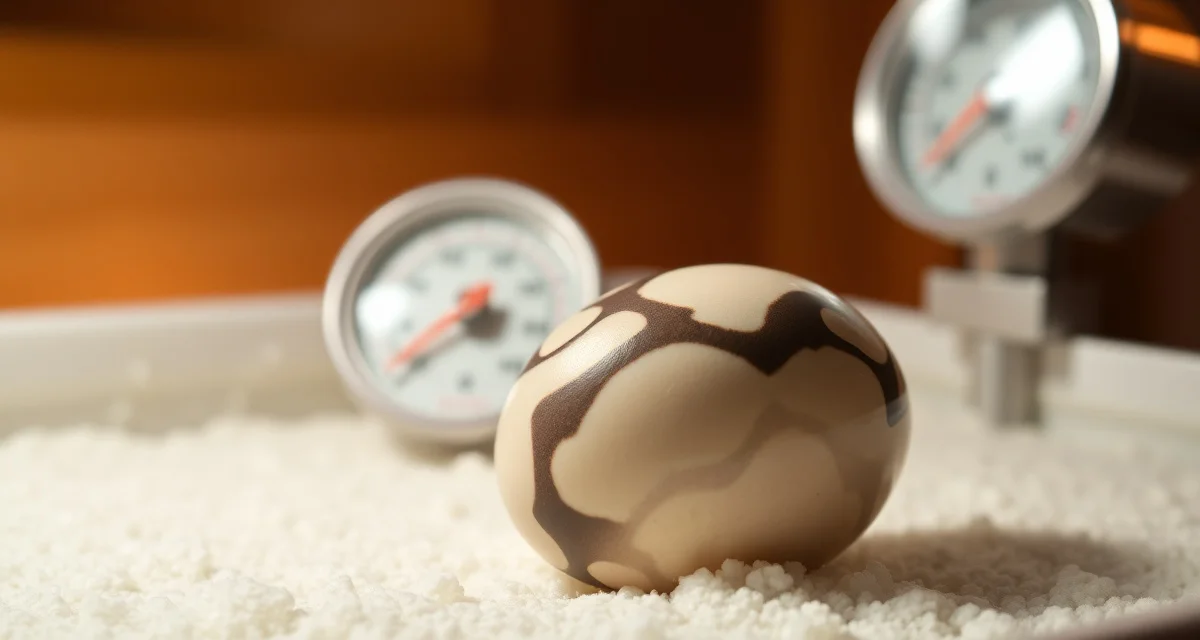
7 Ball Python Incubation Mistakes That Kill Clutches
Incubation runs for roughly 60 days. That's 60 days where equipment failures, humidity errors, temperature spikes, and simple inattention can cost you an entire clutch. These seven mistakes are responsible for the majority of avoidable incubation losses.
TL;DR
- Ball python breeding operations require systematic record-keeping from pre-season preparation through end-of-season sales.
- Females at 1,200-1,500g or more are the target weight before introducing them to a breeding male.
- Ovulation detection is the key event that anchors pre-lay shed and lay date calculations.
- Clutch profitability guide depends on understanding actual cost basis per animal, not just gross sale revenue.
- Well-documented animals with complete feeding histories and clear genetic records consistently sell faster and at higher prices.
1. Not Calibrating Your Thermometer Before the Season
Incubator displays lie. Not maliciously, but regularly. A display reading 89°F may be delivering 91.5°F or 86.5°F at actual egg level. A two or three degree error at ball python incubation temps isn't just a slight deviation, it's a meaningful risk.
Before eggs go in, verify your displayed temperature against a calibrated secondary probe. Ideally, use a digital thermometer with a probe you've confirmed against a reference. Do this before the season, not after your first clutch is already in the box.
2. Only Using One Temperature Probe
Even if your probe is accurate today, a single failure point is a problem. Probes go bad. Wires get kinked. Sensors drift. Running a second independent probe inside your incubation container at egg level gives you a backup reading and immediately flags if something goes wrong.
Two probes that agree gives you confidence. Two probes that disagree tells you there's a problem to investigate immediately.
3. Incorrect Incubation Substrate Moisture
Too dry and your eggs desiccate, dimpling and losing mass. Too wet and you risk bacterial and fungal growth on the shells. The substrate should feel like a wrung-out sponge: moist but not actively dripping.
Different substrates require different water ratios. Perlite is typically mixed 1:1 by weight with water. Hatchrite comes pre-mixed and is more forgiving. Vermiculite varies by grade. Know your substrate and measure, don't eyeball it on a clutch-by-clutch basis.
4. Disturbing Eggs Unnecessarily
Ball python eggs do not need to be checked every day. Frequent handling increases the risk of accidentally rotating an egg (which can kill an embryo if the embryo has attached to the upper shell surface), introduces temperature fluctuations each time you open the container, and creates unnecessary stress to the development environment.
Open the incubation container once or twice a week for a quick visual check. If nothing looks wrong, close it back up. Trust your equipment.
5. Not Separating Slugs from Viable Eggs
Infertile eggs, or slugs, will eventually collapse and mold. When they do, that mold can spread to adjacent viable eggs. If you can clearly identify slugs at time of lay, carefully separate them from the viable eggs.
Candling helps confirm which eggs are fertile early in incubation. If you're unsure, err on the side of leaving eggs in contact, but once a slug clearly begins to collapse and weep fluid, separation is necessary to protect the viable clutch.
6. Power Outages and Temperature Drops With No Recovery Plan
Summer thunderstorms take out power. Breaker trips happen. If your incubator loses power for hours during incubation, the temperature inside will drop notably, especially if ambient temps in the room are also affected.
Have a plan. Know how long your incubator retains heat after power loss. Have a secondary heat source or generator you can bring in if needed. Know your local temperature risk calendar for the incubation window.
Eggs that experience a brief cool down (to 75 to 80°F for a few hours) are usually okay. Extended cooling or drop to room temperature in winter conditions can cause developmental problems or embryo death.
7. Intervening Too Early at Pip
When you see the first pip, the instinct is to help. Don't. Hatchlings that pip are still often partially attached to their yolk and need time to fully absorb it before emerging. A hatchling that's pulled from its egg too early may not have completed yolk absorption, which leads to umbilical complications and often death.
Let hatchlings emerge on their own timeline. If an animal has pipped and is clearly struggling or stuck after 48 to 72 hours, then careful intervention is appropriate. Otherwise, patience is the right call.
Documenting Incubation Data
Every clutch should have a documented incubation log: lay date, substrate type and moisture ratio, incubation temperatures at key points, pip date, and hatch date. When something goes wrong, that log tells you where to look.
The ball python breeding hub covers the full breeding cycle in depth. In HatchLedger, you can attach incubation notes to every clutch record and track outcomes against the reptile breeder software comparison data that helps you evaluate equipment and process choices over time.
Frequently Asked Questions
What are the most common ball python incubation mistakes?
Uncalibrated temperature probes, incorrect substrate moisture, disturbing eggs too frequently, and intervening too early at pip are the most common. Each is preventable with basic protocol discipline.
How do professional breeders handle ball python incubation to avoid losing clutches?
They calibrate equipment before the season, run dual temperature probes, use proven substrate moisture ratios, minimize egg disturbance, have power contingency plans, and document incubation conditions for every clutch.
What software helps manage ball python incubation records?
HatchLedger is purpose-built for reptile breeders, connecting animal records, breeding history, clutch outcomes, and financial tracking in one system. Unlike generic spreadsheets, it's designed around the specific workflow of an active breeding season. Free for up to 20 animals.
What records should every reptile breeder maintain per animal?
At minimum: acquisition date and source, morph and genetic documentation, feeding log, weight history, any veterinary treatments, and breeding history including pairing dates, clutch of origin for captive-bred animals, and offspring records. These records serve your own management, buyer documentation, regulatory compliance, and long-term genetic tracking.
How should reptile breeders document genetics for buyers?
A complete genetic record for sale includes the animal's visual morph name, confirmed het genes and their basis (parentage documentation or proven-out production), possible het genes with probability percentages, hatch date, and parent morph information. Including clutch-of-origin records lets buyers independently verify the claims.
Sources
- USARK (United States Association of Reptile Keepers)
- Association of Reptilian and Amphibian Veterinarians (ARAV)
- World of Ball Pythons (WoBP genetics reference database)
- MorphMarket (reptile industry marketplace)
- Reptiles Magazine (Bowtie Inc.)
Get Started with HatchLedger
Every part of a ball python breeding operation -- from pairing records to clutch documentation to financial tracking -- works better when the data is connected rather than scattered across notebooks and spreadsheets. HatchLedger is built for exactly that. Try it free with up to 20 animals.