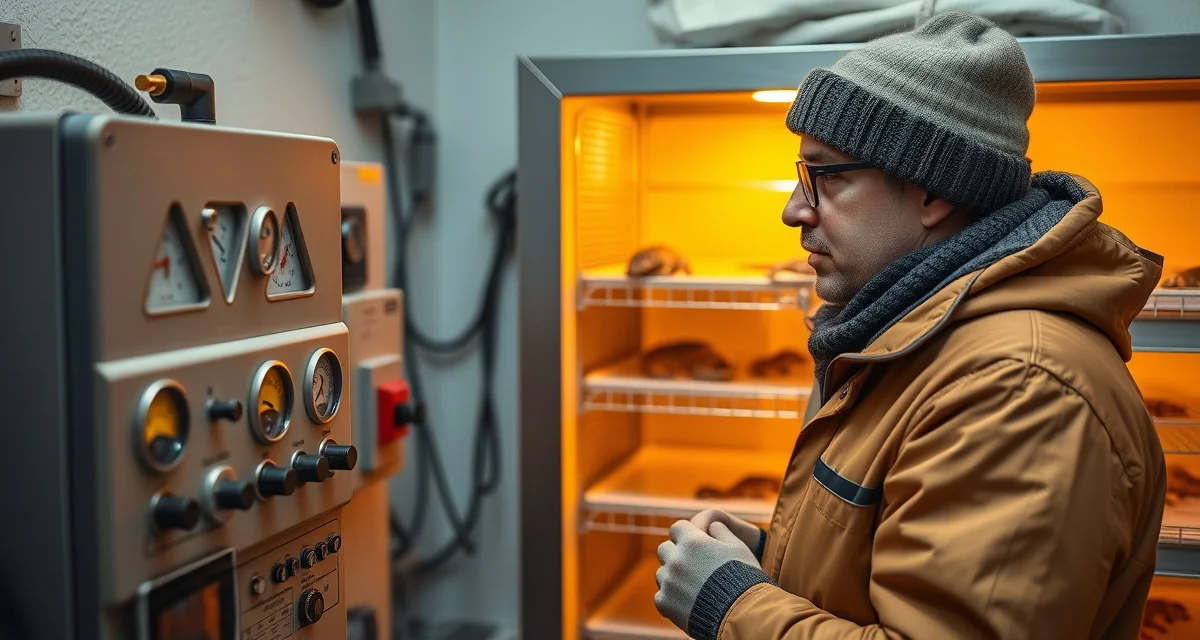
Ball Python Overwintering and Cold-Weather Husbandry: Keeping Your Operation Running Through Winter
Breeders using integrated software report 30% less time on administrative tasks, and that efficiency matters in winter when heating costs rise, shipping windows close, and breeding season management is at its most demanding. Getting your facility through winter reliably is fundamental operational management.
TL;DR
- Ball python breeding operations require systematic record-keeping from pre-season preparation through end-of-season sales.
- Females at 1,200-1,500g or more are the target weight before introducing them to a breeding male.
- Ovulation detection is the key event that anchors pre-lay shed and lay date calculations.
- Clutch profitability guide depends on understanding actual cost basis per animal, not just gross sale revenue.
- Well-documented animals with complete feeding histories and clear genetic records consistently sell faster and at higher prices.
Ball python breeding is deliberate year-round work, but winter presents specific challenges: cold weather affects your facility's ability to maintain thermal targets, active breeding season is underway, and shipping restrictions mean any animals that need to move (purchases, sales) face weather-dependent windows.
Heating System Management in Cold Weather
Your reptile room heating system that handles temperatures adequately in spring or fall may struggle in winter. Key points:
Supplemental room heating: Most reptile rooms use a combination of rack-level heat tape controlled by thermostats plus room-level climate control. In winter, if the room ambient temperature drops, the rack thermostats work harder to maintain the target belly heat temperature. Verify that your room heating can maintain adequate ambient temperature for your specific rack configuration.
HVAC limitations: Central HVAC in a home doesn't provide adequate independent climate control for a reptile room in most cases. A dedicated supplemental heater (space heater with thermostat, mini-split, or similar) for the reptile room is more reliable than depending on whole-house climate control.
Cold spots: In winter, check for cold spots in your rack that weren't present in warmer months. Areas near exterior walls, windows, or vents can develop notably lower ambient temperatures that affect animals even when the belly heat is maintained.
Heat tape and thermostat behavior: Proportional thermostats (like Herpstat units) modulate heat tape output based on how far the actual temperature is from the set point. In very cold ambient conditions, they'll run heat tape at higher duty cycles than in temperate conditions. This is normal but it's worth verifying that your heat tape and thermostat are functioning correctly under increased load.
Breeding Season Overlap with Cold Weather
In the Northern Hemisphere, active breeding season (introducing pairs, running cooling protocols) overlaps almost entirely with winter. The temperature cycling that induces breeding behavior requires lower temperatures than your maintenance setpoint. This is intentional but requires management:
Cooling temperature targets: Most breeders cool rack ambient temperatures to 70-75F (from a normal maintenance temperature of 78-82F) to stimulate breeding behavior. This is a modest cooling from maintenance temps, not extreme cold.
Don't over-cool: It's tempting to think that colder = more breeding stimulus. This is not true and cold stress is a real risk. Ball pythons in cooling should still have access to their normal belly heat temperature (85-88F hot spot). Only the ambient (cool side) temperature is reduced.
Simultaneous incubation: If you have clutches from earlier pairings in incubation while running winter breeding with other females, make sure your incubator is isolated from ambient temperature fluctuations. A cold reptile room is acceptable for your breeding pairs; incubation temperature stability is non-negotiable.
Winter Shipping Considerations
Cold weather restricts your ability to ship animals:
When not to ship: Most experienced breeders and reptile shipping protocols specify a minimum overnight low temperature at both origin and destination above 40F. Below that threshold, even with heat packs, overnight shipments face unacceptable risk.
Heat packs: Standard 40-hour heat packs are used for winter shipments, placed under the deli cup or box but not in direct contact with the animal. Using the right size heat pack for the box size is important; too large a heat pack can overheat a small shipment.
Insulation: Winter shipments need more insulation than summer shipments. An added layer of insulation foam or newspaper in the box buffer temperature swings.
Buyer communication: Be transparent with waiting list buyers about winter shipping delays. "This animal will ship when the weather allows" is acceptable and expected in the hobby. Shipping an animal in risky conditions to meet a timeline is not.
Equipment Failure Risk in Winter
Cold weather increases the consequences of heating equipment failure. An animal at 60F ambient for 12 hours in summer (when room temperatures might still be 70F) is a different situation than the same failure in winter when rooms can drop to 55F or lower.
Contingency heating: Have a backup heat source available: a spare electric space heater, extra heat tape, spare thermostats. Winter is when you want to have verified that your backup equipment works before you need it.
Monitoring: Temperature data loggers in your reptile room catch overnight fluctuations that you'd otherwise miss. A logger showing that room temperature drops to 62F between 2-5am every time the outside temperature drops below 20F is information you need before animals are affected.
HatchLedger's records maintain continuous documentation through the winter breeding season, connecting cold-weather observations to animal health records.
The HatchLedger reptile breeder software keeps your breeding season records current so winter's administrative demands don't create backlogs.
Frequently Asked Questions
What is the best approach to ball python operation management through winter?
Verify your reptile room heating can maintain adequate ambient temperature independently of whole-house climate control, check for cold spots near exterior walls, maintain heat tape and thermostat monitoring under increased winter load, and restrict animal shipping to days when overnight lows at origin and destination are above 40F.
How do professional breeders handle cold-weather ball python husbandry?
Production breeders install dedicated climate control for their reptile rooms rather than depending on household HVAC, use temperature data loggers to monitor overnight fluctuations, keep backup heating equipment on hand, and communicate transparently with buyers about weather-dependent shipping windows during winter months.
What records should every reptile breeder maintain per animal?
At minimum: acquisition date and source, morph and genetic documentation, feeding log, weight history, any veterinary treatments, and breeding history including pairing dates, clutch of origin for captive-bred animals, and offspring records. These records serve your own management, buyer documentation, regulatory compliance, and long-term genetic tracking.
How should reptile breeders document genetics for buyers?
A complete genetic record for sale includes the animal's visual morph name, confirmed het genes and their basis (parentage documentation or proven-out production), possible het genes with probability percentages, hatch date, and parent morph information. Including clutch-of-origin records lets buyers independently verify the claims.
Sources
- USARK (United States Association of Reptile Keepers)
- Association of Reptilian and Amphibian Veterinarians (ARAV)
- World of Ball Pythons (WoBP genetics reference database)
- MorphMarket (reptile industry marketplace)
- Reptiles Magazine (Bowtie Inc.)
Get Started with HatchLedger
Every part of a ball python breeding operation -- from pairing records to clutch documentation to financial tracking -- works better when the data is connected rather than scattered across notebooks and spreadsheets. HatchLedger is built for exactly that. Try it free with up to 20 animals.