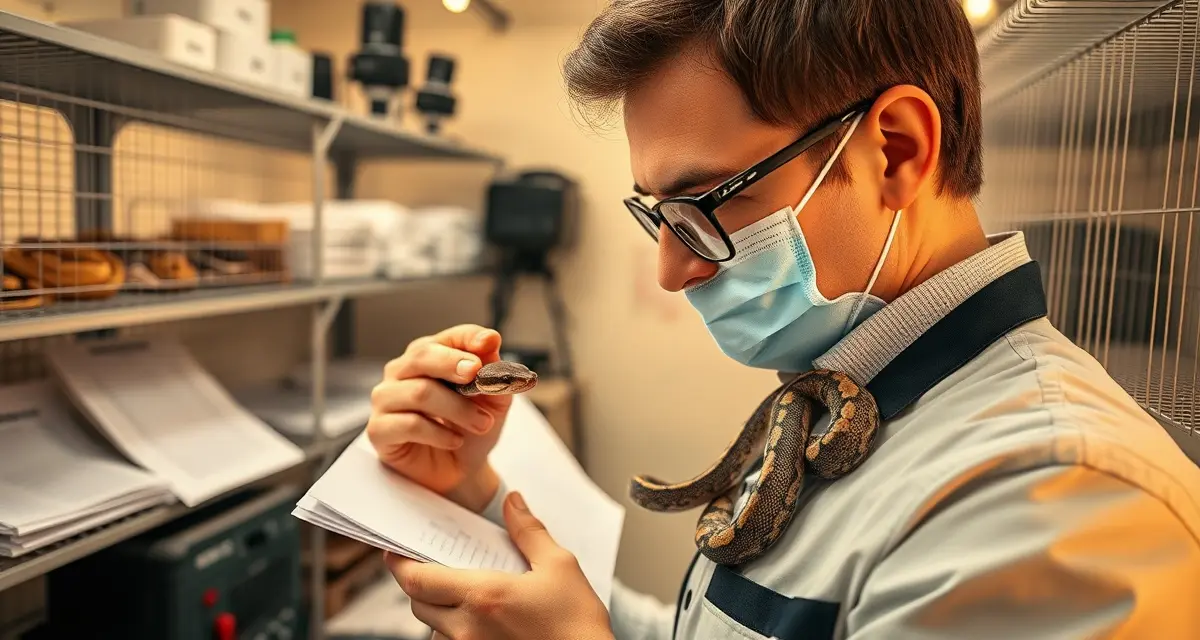
Ball Python First-Year Breeder Mistakes: What to Avoid and How to Succeed
Breeders using integrated software report 30% less time on administrative tasks, and first-year breeders who start with good records from day one avoid the painful experience of trying to reconstruct what happened after something goes wrong. Most first-season mistakes are avoidable with preparation; the ones that aren't are survivable with documentation.
TL;DR
- Ball python breeding operations require systematic record-keeping from pre-season preparation through end-of-season sales.
- Females at 1,200-1,500g or more are the target weight before introducing them to a breeding male.
- Ovulation detection is the key event that anchors pre-lay shed and lay date calculations.
- Clutch profitability guide depends on understanding actual cost basis per animal, not just gross sale revenue.
- Well-documented animals with complete feeding histories and clear genetic records consistently sell faster and at higher prices.
Here's what first-year breeders consistently get wrong, and what to do instead.
Starting with Animals That Aren't Ready
The most common mistake: breeding a female who isn't at the right size or condition because she's the female you happen to have and you don't want to wait.
A female ball python should be at minimum 1,500g before her first breeding season, and 1,600-1,800g is more conservative and more likely to produce good outcomes. Breeding an undersized female puts her health at risk (the metabolic demand of producing a clutch is notable), typically produces a smaller clutch, and can cause lasting reproductive damage.
Similarly, breeding a female who's at adequate weight but poor body condition (thin muscle, visible spine, low fat reserves) produces poor outcomes. BCS 3-3.5 entering the season is the minimum; 3.5-4 is better.
What to do instead: Weigh your intended female in September or October when you're planning the breeding season. If she's not at target weight and condition, she waits one year. A skipped season for an undersized female is the responsible choice, not a setback.
Not Observing Locks
First-year breeders often introduce animals and assume breeding is occurring. Locks may or may not be happening, and the breeder doesn't know because they're not watching.
Without confirmed lock observations, you don't know whether fertilization occurred. An ovulation without confirmed sperm transfer is a recipe for an all-slug clutch. First-year breeders who produce their first clutch and find 8 slugs often discover they never actually confirmed pairing success.
What to do instead: Observe introductions whenever possible. Note the time introduced, check at 1-2 hour intervals, document any observed locks with start and end times. Even if you can't observe every pairing, make a deliberate effort to observe and confirm locks at least several times per female per season.
Misreading Ovulation
Ovulation detection takes practice. The characteristic mid-body swelling of ovulation is distinct, but first-year breeders often miss it or confuse a large meal with ovulation.
Missing ovulation means you don't have a post-OV date, which means you don't know when to expect the pre-lay shed, which means you may miss the lay box window and find a female who's been looking for a lay site without one.
What to do instead: Palpate actively breeding females every 7-10 days during the pairing window. Photograph the body profile of females so you have a baseline to compare against when you suspect ovulation. When you're unsure, note the date and watch for the pre-lay shed, which confirms ovulation happened.
Incorrect Incubation Temperature
First-year breeders frequently run incubation temperatures either too high (from the mistaken belief that hotter = faster = better) or vary notably because their incubator hasn't been verified.
Ball python eggs incubate best at 88-90F. Above 92F causes deformities and mortality. Below 85F causes extended incubation and poor outcomes. A thermostat that reads 88F but is actually delivering 91-92F is a common first-year incubation failure point.
What to do instead: Verify your incubator temperature with a separate probe thermometer inside the egg container, not just inside the incubator box. Set up and verify the incubator weeks before your first expected clutch. Run it empty at target temperature for at least a week to confirm it's stable.
Not Keeping Records from Day One
By far the most impactful mistake: not recording what happens as it happens. First-year breeders think they'll remember. They don't. Pairing dates blur together; lock observations that weren't written down get lost. By the time the clutch is in the incubator, you can't reconstruct a reliable history.
What to do instead: Start your record system before you introduce any pairs. Every introduction, every lock observation, every weight, every feeding, every health note goes in immediately. The specific record-keeping app or system matters less than the habit.
Panic-Selling Hatchlings Too Early
First-year breeders often list hatchlings immediately after hatch, before they've established as feeders. Buyers who receive hatchlings that won't eat return them, leave negative reviews, and create problems that damage your reputation from the start.
What to do instead: Establish hatchlings on frozen/thawed prey through 3-5 successful feeds before listing. A hatchling with a documented feeding record is worth more, sells more easily, and has happier buyers.
HatchLedger's breeding and hatchling records let you track first-year pairings, clutch outcomes, and hatchling development from the very beginning of your breeding program.
The HatchLedger reptile breeder software builds the record-keeping habit into your workflow from day one, so your first-year records are as useful as your fifth-year records.
Frequently Asked Questions
What is the best approach to avoiding first-year ball python breeding mistakes?
Verify female size and condition before breeding (not after you've already planned the season), observe and document lock activity rather than assuming pairings are productive, verify incubator temperature independently with a calibrated probe thermometer, and start keeping detailed records from the first pairing introduction.
How do professional breeders handle their first breeding seasons?
Experienced breeders who've seen first-year operations succeed and fail consistently identify the same factors: starting with properly sized and conditioned females, confirming pairing success through lock observation, running accurate incubation temperatures verified by independent thermometers, and keeping records of every relevant event from day one. The breeders who start with these habits have better first seasons than those who learn them through failure.
What records should every reptile breeder maintain per animal?
At minimum: acquisition date and source, morph and genetic documentation, feeding log, weight history, any veterinary treatments, and breeding history including pairing dates, clutch of origin for captive-bred animals, and offspring records. These records serve your own management, buyer documentation, regulatory compliance, and long-term genetic tracking.
How should reptile breeders document genetics for buyers?
A complete genetic record for sale includes the animal's visual morph name, confirmed het genes and their basis (parentage documentation or proven-out production), possible het genes with probability percentages, hatch date, and parent morph information. Including clutch-of-origin records lets buyers independently verify the claims.
Sources
- USARK (United States Association of Reptile Keepers)
- Association of Reptilian and Amphibian Veterinarians (ARAV)
- World of Ball Pythons (WoBP genetics reference database)
- MorphMarket (reptile industry marketplace)
- Reptiles Magazine (Bowtie Inc.)
Get Started with HatchLedger
Every part of a ball python breeding operation -- from pairing records to clutch documentation to financial tracking -- works better when the data is connected rather than scattered across notebooks and spreadsheets. HatchLedger is built for exactly that. Try it free with up to 20 animals.